Our group was assigned to design a portable safety bed that would also act as a comfortable yet secure environment to keep the child throughout the night.
Our client’s child has been known to climb out of bed and has even gotten out of the house, which puts him at serious risk at night. The family is concerned deeply with these problems and has asked for a safety bed that keeps him securely inside throughout the night while also feeling like a comfortable environment he would enjoy staying in. The bed must be durable and hard to escape from with a way to easily monitor him from outside the room. The family plans to move in the future, so the bed also needs to come apart and go back together easily. Additionally, the child loves enclosed spaces and the ocean, making a enclosed, ocean-themed design with light and sound sensory inputs a good esthetic design choice.
Bed size: must fit a full-size mattress (54 in × 75 in)
Security: Must be fully enclosed and securely locked from the outside, with a visual monitor for parents.
Safety: Must have padding on any hard exposed surfaces
Portability: Must be easily assembled and disassembled for moving
Durability/Cleanliness: Durable, tear-resistant and easy to clean materials.
Comfortability: Ocean themed, light and sound and other sensory inputs
Background Research:
We started by looking at standard enclosed safety beds on the market, to see what features of work are compatible with our client’s design specifications. We analyzed three different products.
SleepSafer Extension Bed:
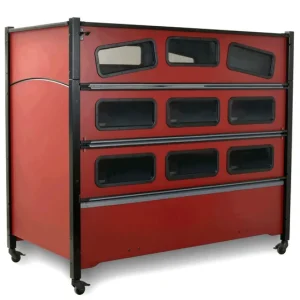
This product is a solid wood frame with locking side rails that reach up to 52 in above the mattress. It is very secure, but it is a fixed piece of furniture that isn’t made to move but could be made modular to fit our specifications.
Safety Sleeper Model 200: 
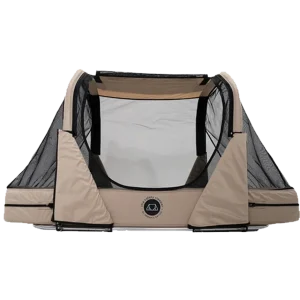
This frame is a fabric-and-mesh enclosure with a tool-free assembly that fits most standard beds, and it packs into a suitcase-style travel case. However, it is not as durable and could possibly allow the child to escape.
Safe Place Bedding 300:
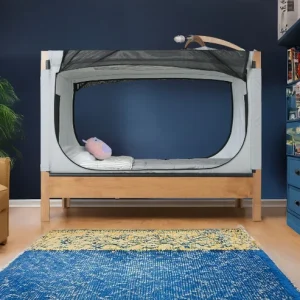
This is a padded hardwood bed available in full size (77 in × 56 in × 60 in). Its height lets the child sit up but not stand being enclosed as specified. It includes a built-in camera mount and an optional video monitor that doesn’t need Wi-Fi, which fits the family’s need to watch their son remotely. However, this product isn’t as portable as we’d like and also has mesh walls allowing the possibility of escape.
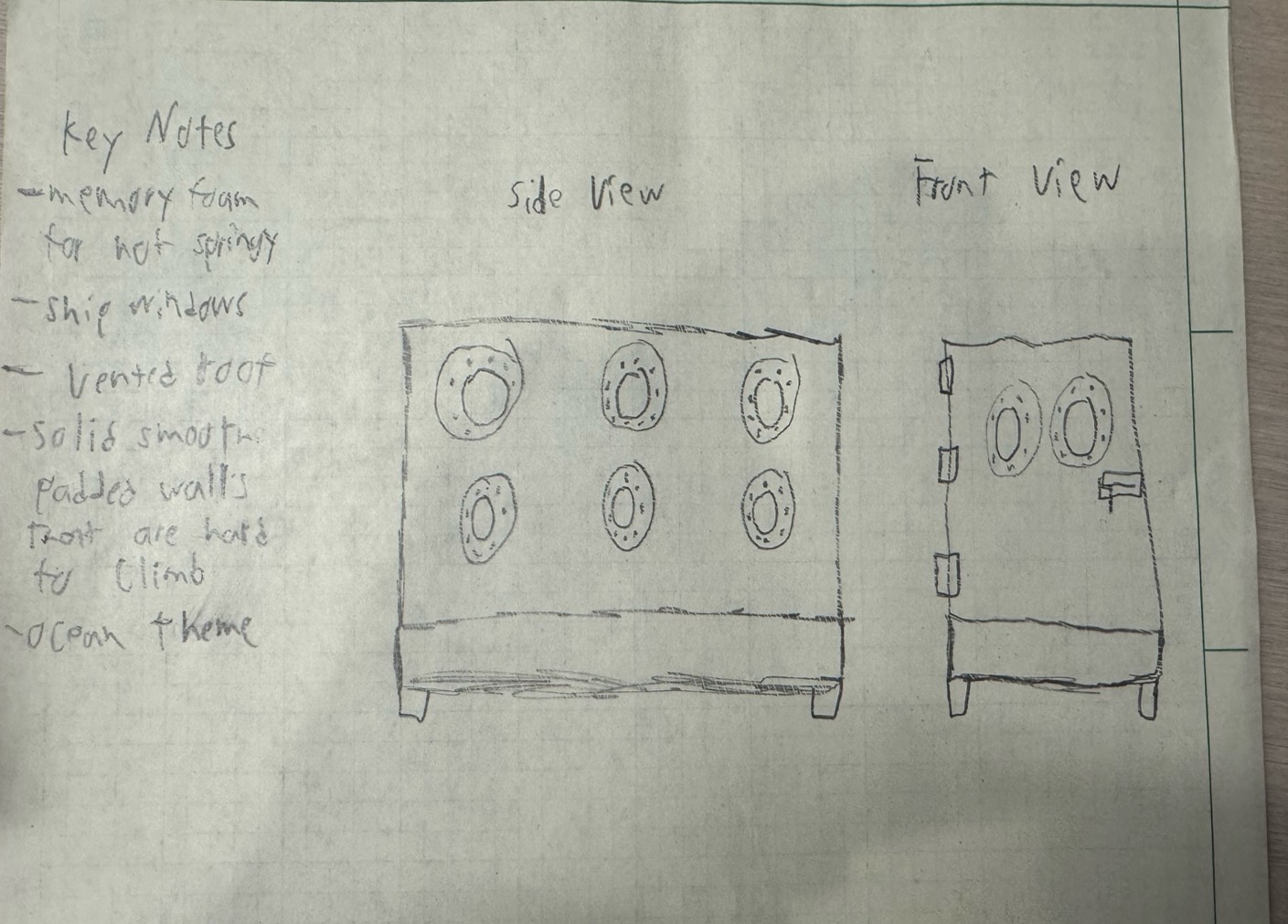
Concept Design 1 includes many features for maximum safety and comfort of the child. A memory foam matress is used to reduce potential injuries to the child as a result of jumping on the bed. Multiple port style windows are employed on the front and sides for increased visibility into the sleeping area. Smooth and solid padded walls make climbing difficult and further reduce risk of injury. A ventilated roof allows for proper airflow into the enclosure. An ocean themed interior and exterior provide comfort and enjoyment to the child. The latched side opening door allow easy and secure access.
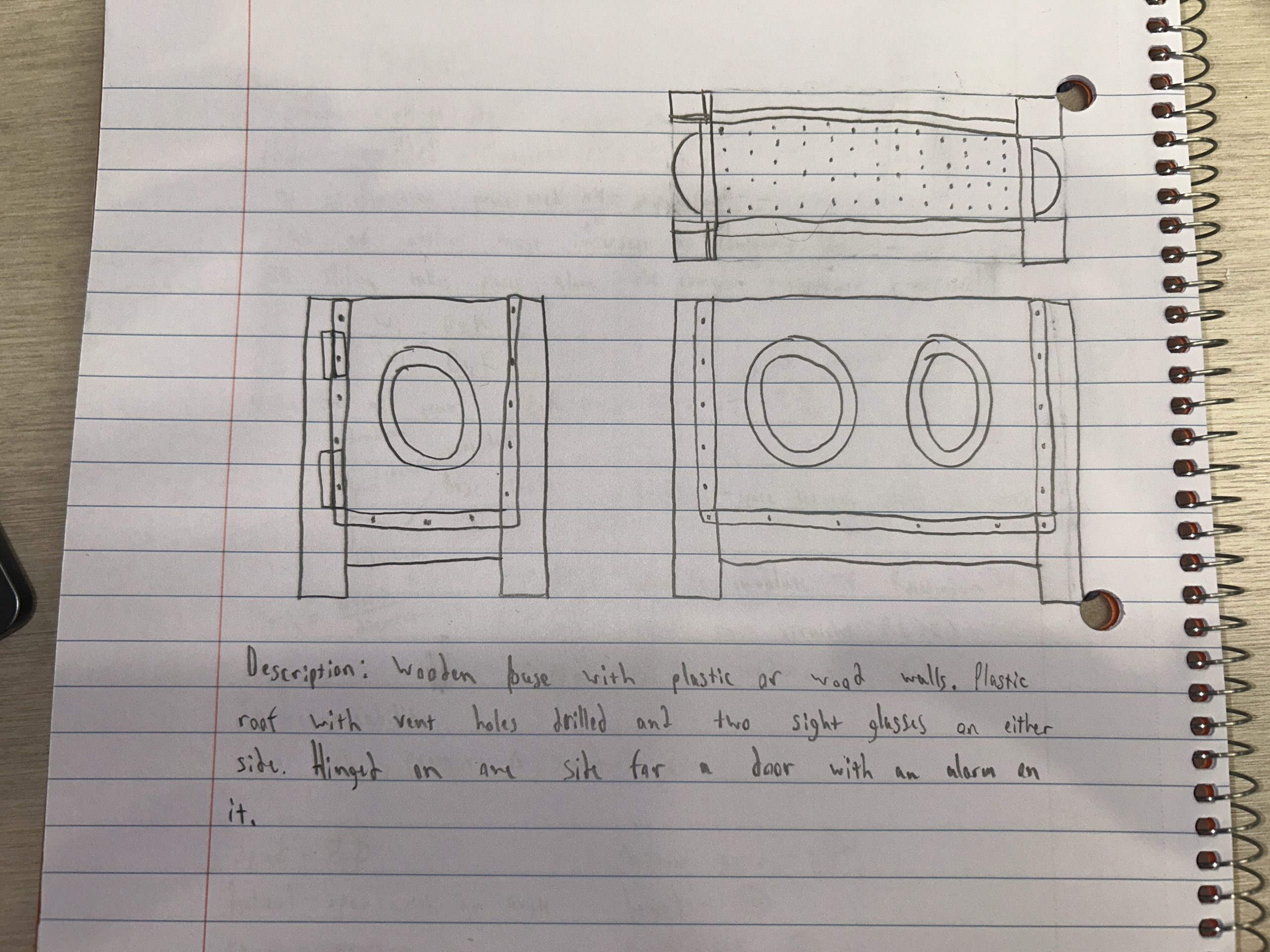
Concept Design 2 features 4×4 wooden bed posts for stability and either wood slat or polycarbonate walls. Ventilation is accomplished by way of a small drill holes in an acrylic sheet that forms the roof of the enclosure, small enough to prevent finger injuries. In keeping with the childs preference for an ocean theme submarine style domed acrylic port holes are integrated into the side to provide visibility into the enclosure. In contrast to concept 3, the entrance to the enclosure is placed on the side of the enclosure and is fitted with a door alarm to alert the parents of opening.
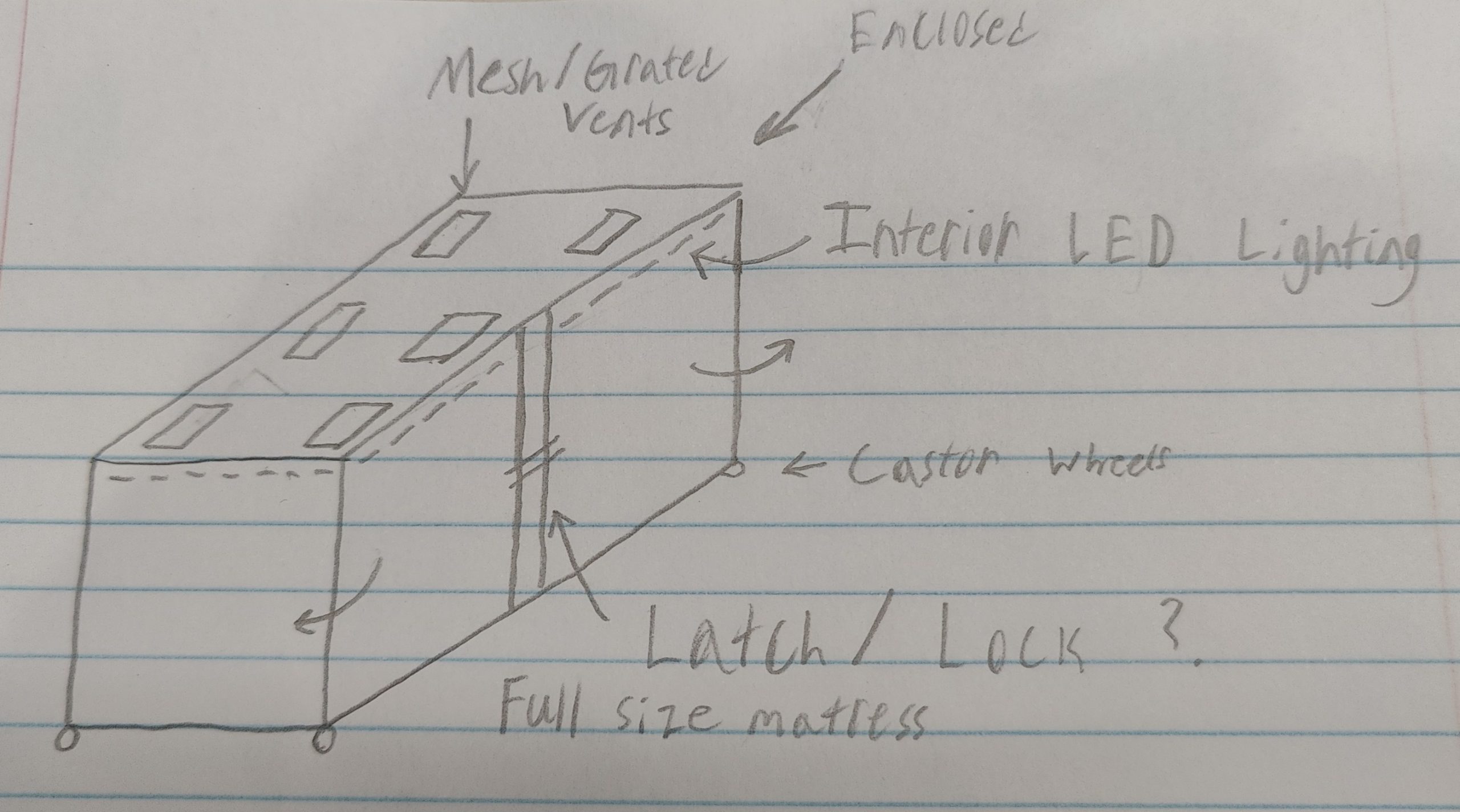
Concept Design 3 includes multiple features relating to portability, child safety, and comfort. The door mechanism opens horizontally to aid in ease of opening and includes a safety latch to prevent wandering. Heavy duty castor wheels provide an easy method of moving the safety bed within the home. Mesh covered ventilation ports along the top provide airflow while discouraging climbing. Finally, programmable diffused LED light strips can provide calming light to the child as well as a brighter and more natural light for improved visibility while cleaning.
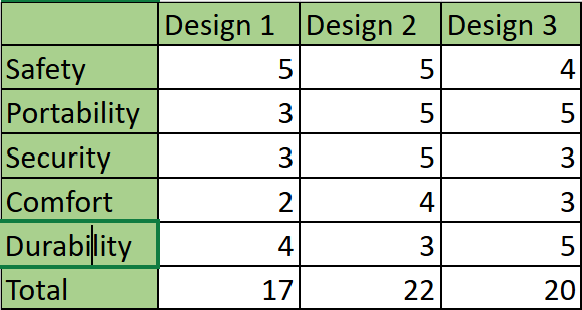
After discussing the features of each design and completing our decision matrix, our group selected Concept 2 as the most viable. This decision was made with respect to its superior portability, security, and comfort. While it’s durability is marginally lower than the competing Concepts 1 and 3 it should provide more structural stability than is needed for its expected use. The security afforded by the integrated door alarm system is of paramount importance to the parents and as a result also factored heavily into our selection process.