Conventional wheelchairs provide a means of transportation for those who are paralyzed or otherwide disabled, but often lack capability for use on unpaved surfaces. Our solution is to create a motorized wheelchair that can traverse difficult terrain that would otherwise not be accessible.
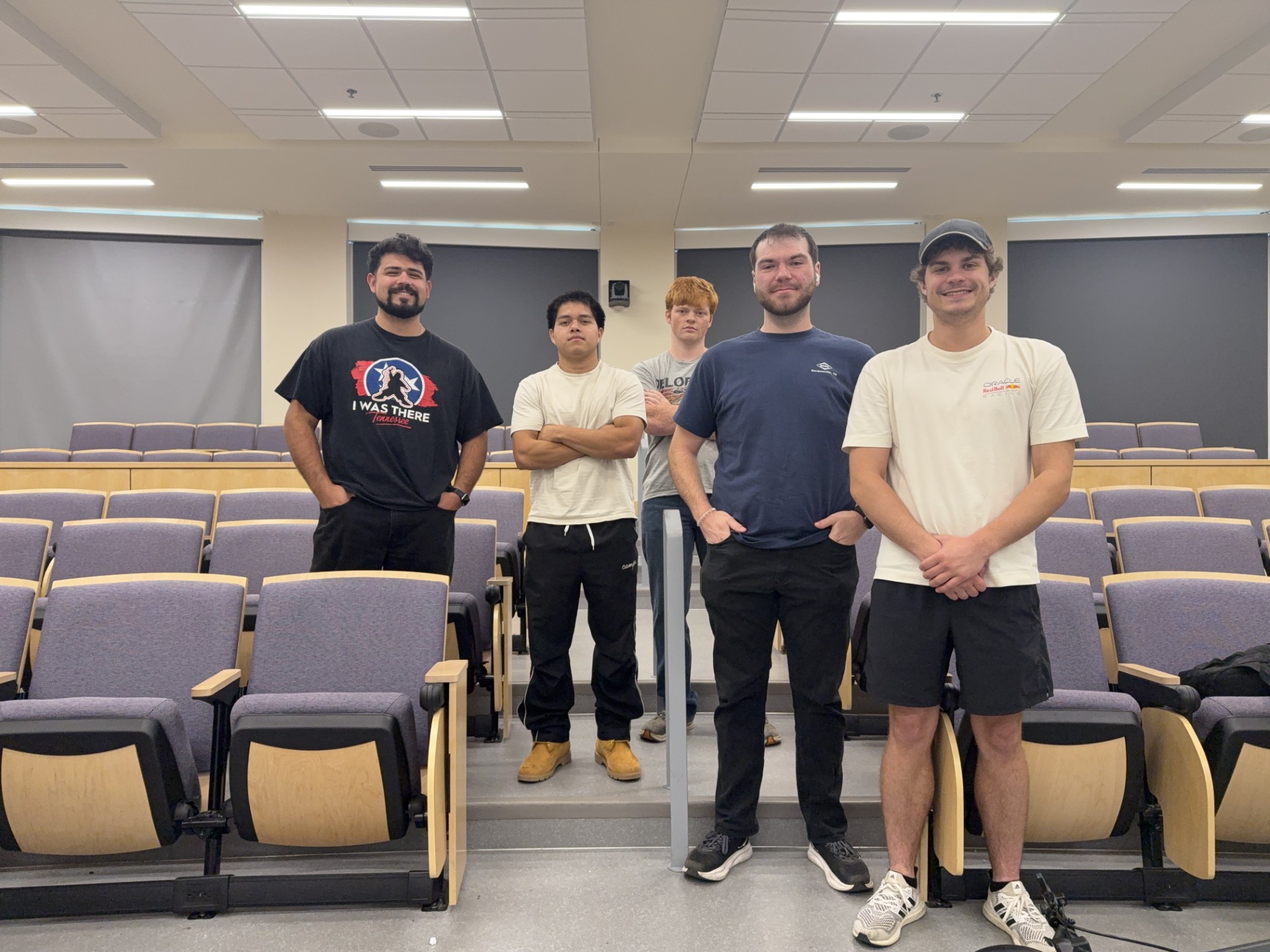
Joshua Billingham, Jordan Gutierrez, Aleksander Shyblosky, Christopher Stach, Ismael King
Problem Statement
The family we are supporting faces a significant mobility challenge with their child, who is paralyzed from the waist down and relies on a wheelchair for daily movement. While their current equipment allows for basic transportation, it severely limits the child’s ability to navigate uneven ground, grass, and other rough terrain. This restriction has created ongoing difficulties for the family, especially during outdoor activities, community events, and routine travel across non‑paved areas. As a result, the child’s independence, comfort, and ability to participate fully in everyday experiences are greatly reduced.
The need for an off‑road, motorized wheelchair is both practical and deeply meaningful. The family has expressed their problem with the limitations of traditional wheelchairs and has reached out specifically for a solution that expands mobility beyond smooth indoor surfaces. By designing a durable, terrain‑capable, and user‑controlled wheelchair, we aim to give the child greater autonomy and reduce the physical strain placed on caregivers. This project addresses not only a technical challenge but also a quality‑of‑life gap, providing the family with a reliable way to access outdoor environments safely and confidently.
Design Specifications
Needs to have access to all terrain.
Portable, can be transported in the back of a Honda Oddessey and Toyota Tundra.
75lb target weight-This allows for less strain on the motors, better battery efficiency, and ease of transportation.
Suspension on at least one set of wheels
Safety!!
Background Research
Our background Research consisted of researching tires, and materials, allowing us to make the wheelchair lighter, and ride better on an unpaved surface. Next, we looked at battery life and brainstorming different concepts for 4×4. We also researched how suspensions work and fit the chair, as well as researching existing examples capable of traversing difficult terrain.
Concept Design 1
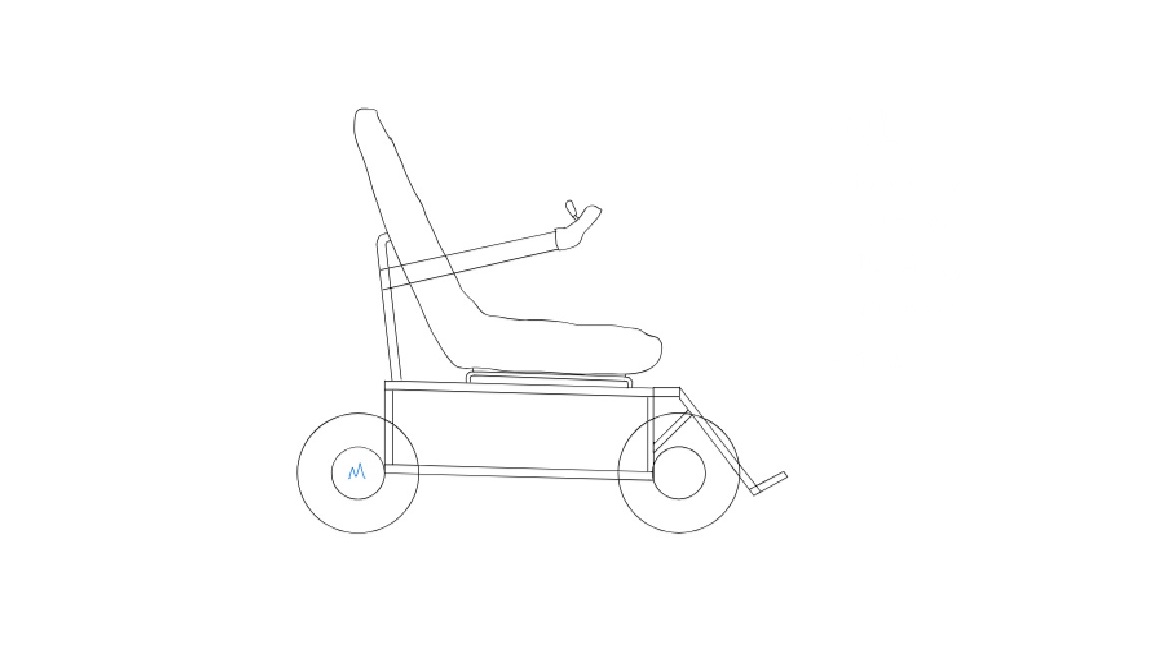
Our first concept uses a 2 wheel drive system similar to many electric wheelchair products on the market. The design idea is to modify either to a hub motor setup or use a gear reduction to increase torque output if necessary. This concept has the lowest cost and complexity, but may not give the all-terrain capability the customer is looking for.
Concept Design 2
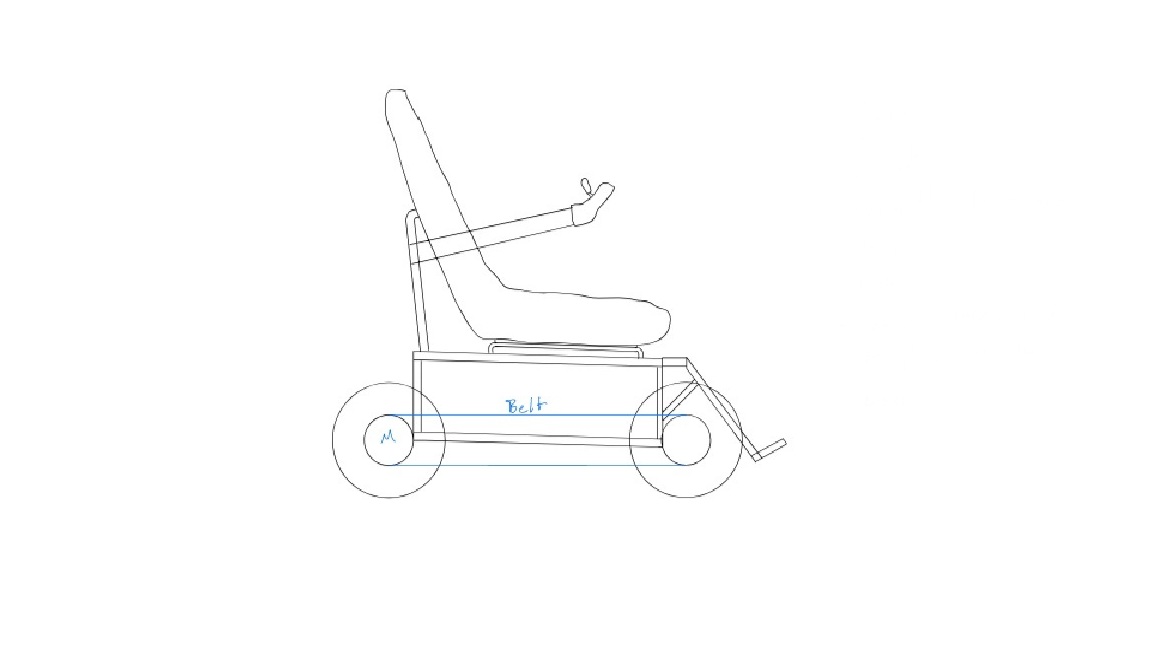
This concept uses a similar setup to the 2 wheel drive method, but utilizes a belt system to connect the wheels on each side. This would effectively give us 4 wheel drive while only requiring 2 motors. A toothed, rubber belt with a tensioner attached to the frame, we can ensure proper engagement with the gears attached to each wheel hub. This does not add much in cost and complexity, but the belt system becomes a failure point. To mitigate the risk of failure, we would still have the motors directly attached to one axle so the wheelchair can maintain a level of mobility even if the belt snaps.
Concept Design 3
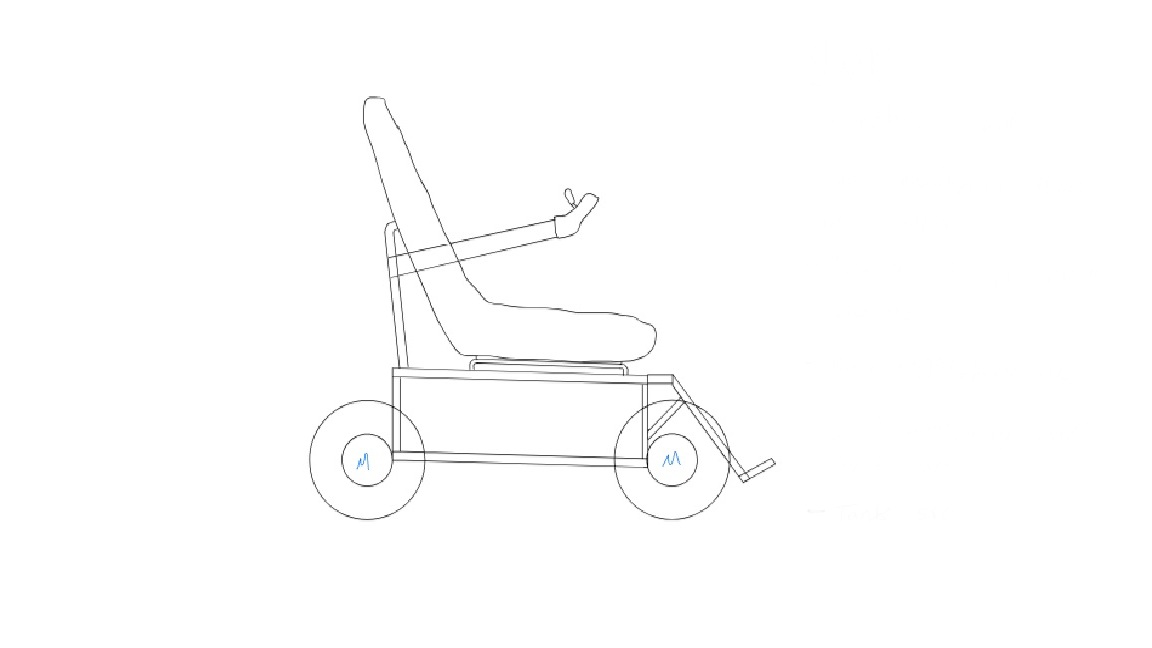
This concept uses a motor on each wheel for a total of 4. In terms of capability, this would give us the most versatility for motor tuning and crossing rough terrain. This design has the highest cost due to 2 additional motors and may negatively impact battery life because of the extra power draw. The additional cost comes from either buying 2 of the same 2WD wheelchair to get 4 identical motors or finding a 4 wheel drive wheelchair with independent motors. We may also have to modify the electrical system in order to utilize 4 electric motors which is something we are trying to avoid in the name of electrical safety and reliability.
Selected Concept Design
Our best concept was buying a wheelchair and modifying it. We will modify the chassis to handle the 4×4, the bigger tires, as well as letting us put suspension on it. We plan on keeping the controls and motors, but do plan on using a belt to make the 4×4 possible.