Our goal is to make a twin size bed with adjustable height settings, safety rails, a monitoring system, an incorporated feeding holder, built-in sensory items, and appropriate decoration.
Problem Statement
Our problem is that the parents need an easier way to transfer and position the child in bed while being able to monitor for seizures and vomiting episodes overnight as well as needing a way to keep the child safe and comfortable in the bed; another requirement is that we must incorporate a feeding bad holder into the frame for easy exchanges. The family would also love if we included built-in sensory toys and a design theme for the bed so that the child feels more relaxed while in bed.
Design Specifications
Twin size bed
Must be able to raise to countertop height and lower back down safely
Must include a monitoring system for seizures and vomiting
Must include feeding bag holder
Head of mattress must tilt up and down
Easily removable, solid safety rails
Mesh siding
Built-in sensory toys
Appropriate theme
Background Research
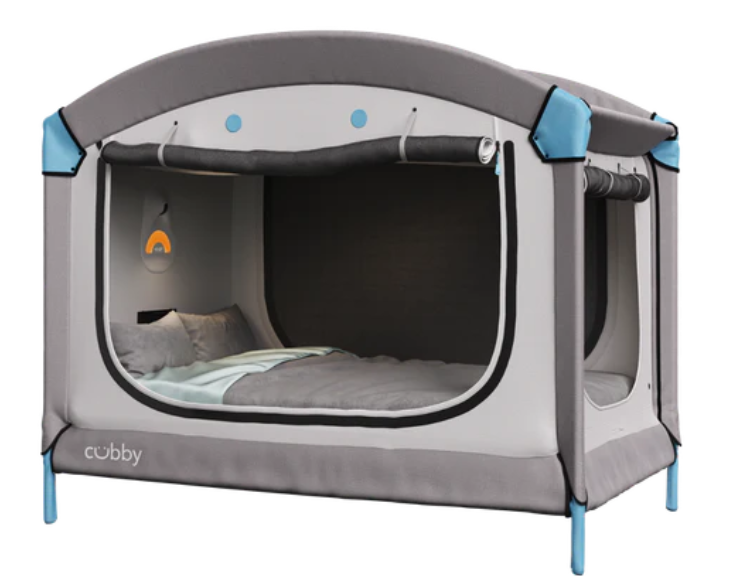
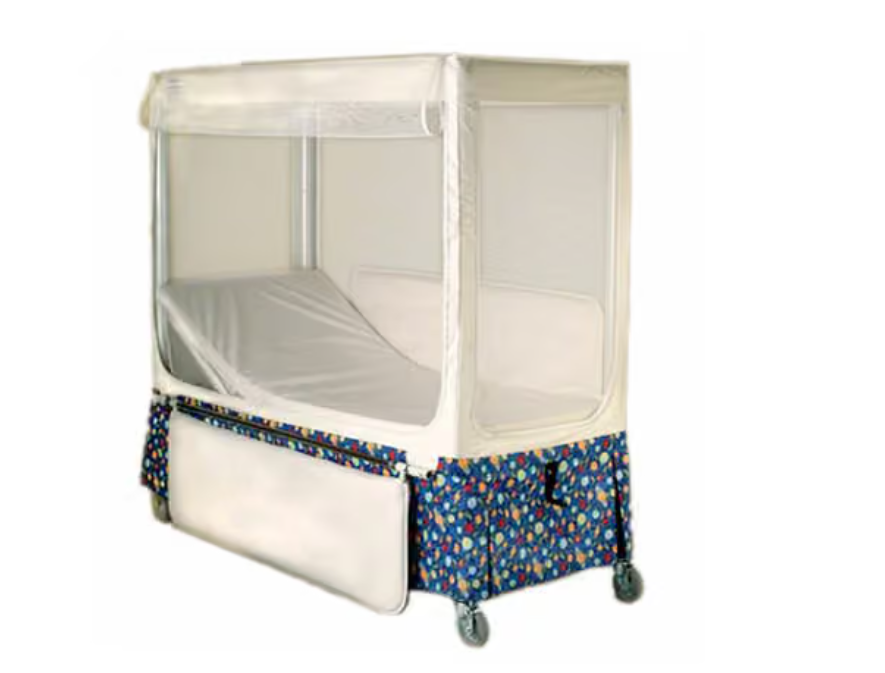
The family provided us with a few safety beds they had previously considered for us to draw inspiration from. The most notable were:
Cubby Bed
The family noted how they really like the monitoring system included with the Cubby Bed as well as the mesh sides and built-in lighting/speakers.
Pedicraft Canopy Bed
The big appeal of the Pedicraft bed was the ability to tilt the head of the mattress up and down as well as being enclosed by mesh.
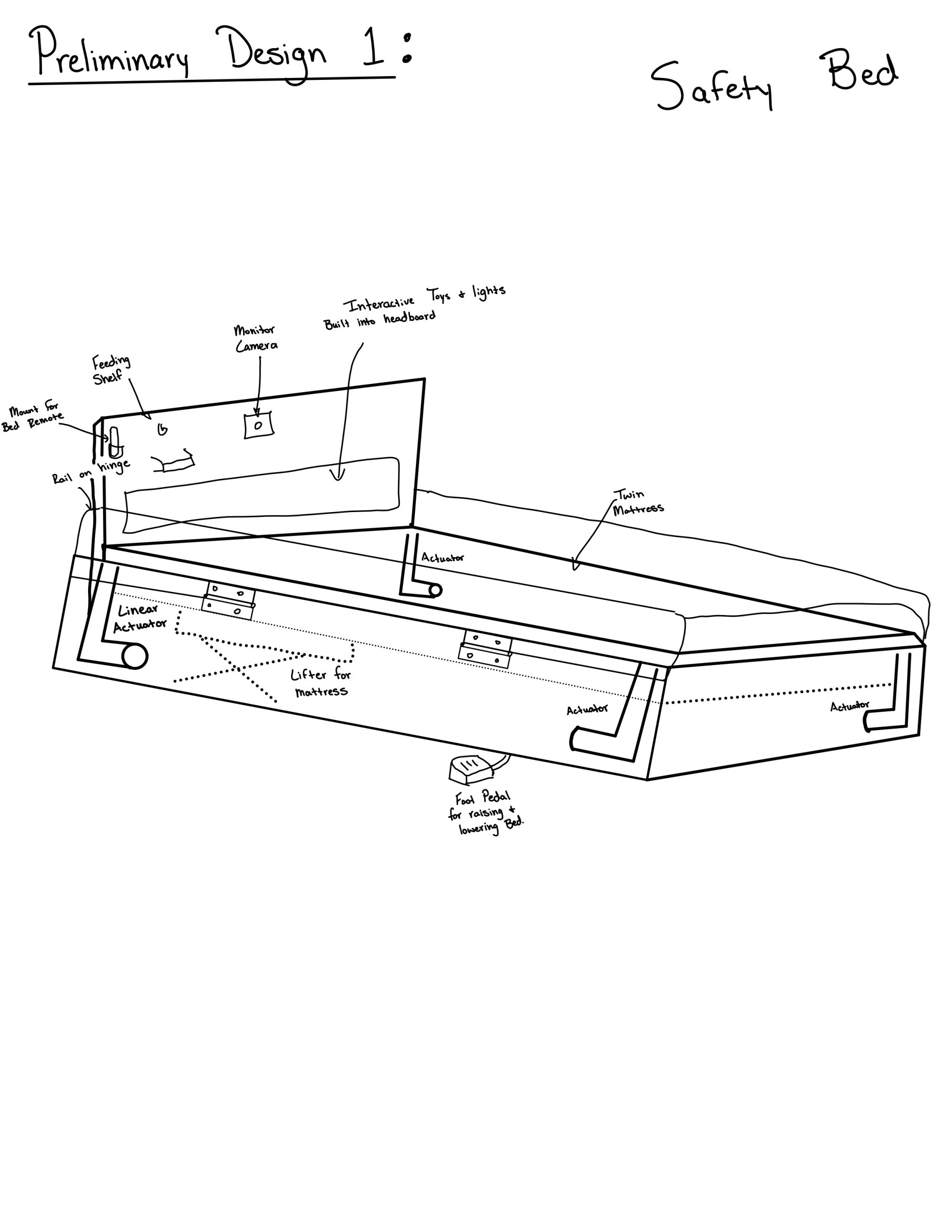
Concept Design 1
The basis of this design is to construct the bed frame ourselves and provide the raising/lowering function through electrically powered linear actuators attached to each leg of the bed; this provides a straightforward way to satisfy the requirement. The actuators would be connected to a main controller board and power supply to be controlled remotely. This design includes removable side railing, a monitoring system mounted on the headboard, built-in sensory toys, and a mount for the feeding bags attached directly to the bed.
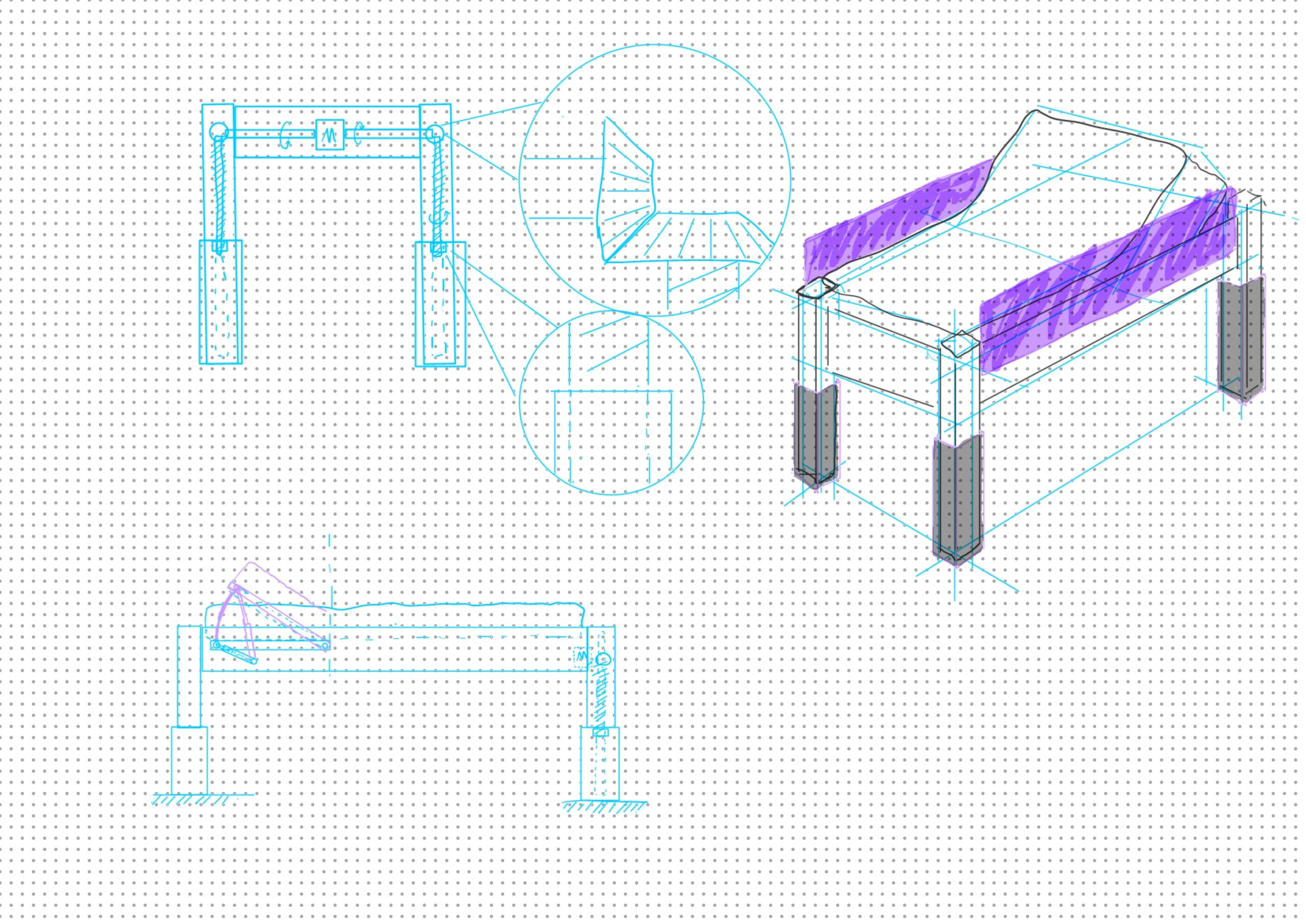
Concept Design 2
This design showcases another method of raising/lowering the bed utilizing telescoping legs similar to those commonly seen in standing desks. This option would provide more security in the incident of a power outage by keeping the bed elevated without a constant power supply at the cost of being more complex and expensive. A majority of design elements from the previous concept also apply to this design as well.
Concept Design 3
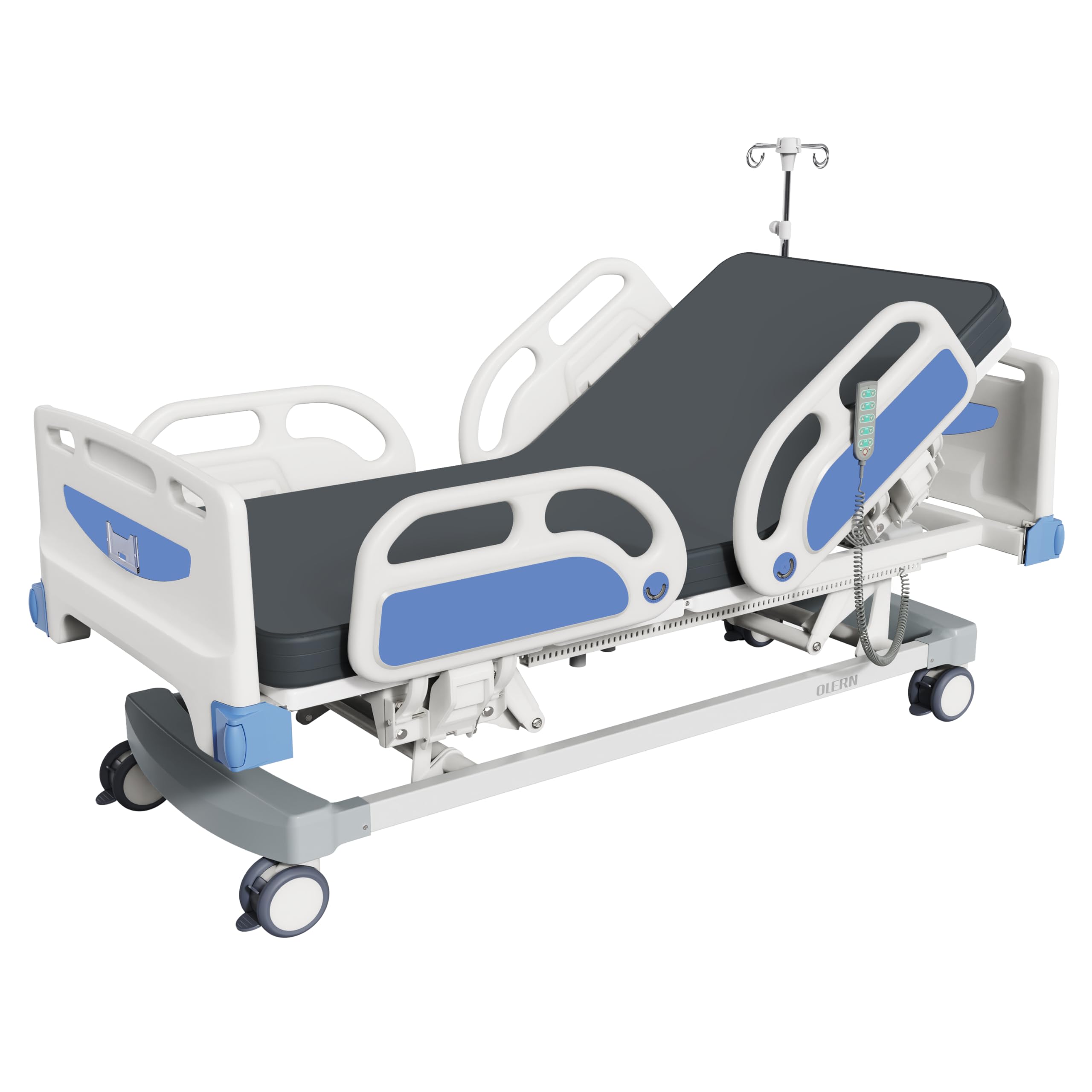
Our third design involves purchasing an existing hospital bed and modifying it to match the needs we need to meet. These modifications would include new a new headboard, new railing, possibly a new footboard to match, an incorporated monitoring system and feeding bag holder, and a new color scheme to make the bed more inviting. This concept would ease the time constraints for the project and allow us to rest assured that the raising/lowering mechanism is reliable. The only caveat to this design is the cost of a new hospital bed that provides these functions, so the bed would need to be sourced second-hand.
Selected Concept Design
To decide which of the concepts would be the best approach for this project, we first set our criteria for judgement: safety, manufacturability, price, accessibility, and reliability. These 5 criteria were what we felt best represented our goals for what would satisfy the family’s needs as well as our budget/time constraints.
Decision Matrix
Overview of Selected Design
We decided to go with concept 3 because it best met all of our criteria compared to our other concepts. The biggest attraction to modifying a pre-existing bed is that it makes the time constraint of the project much less of an issue; this way we can put more effort toward making sure the bed is something that the child looks forward to sleeping in.
Describe Design Details
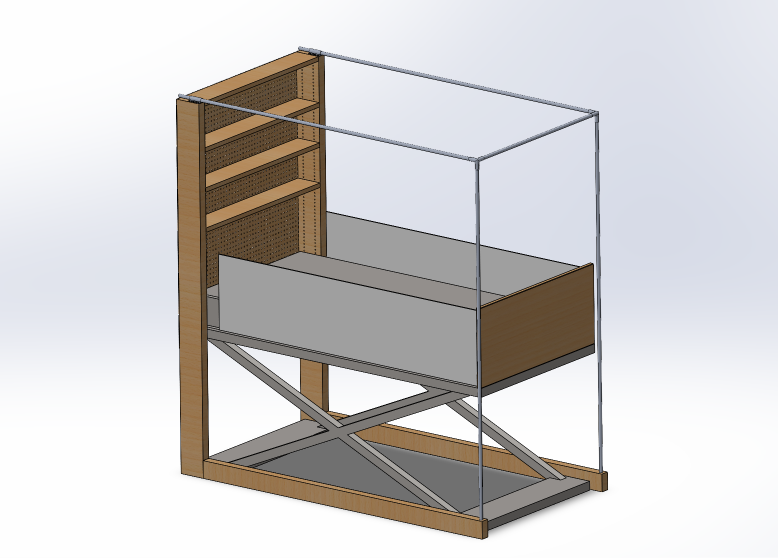
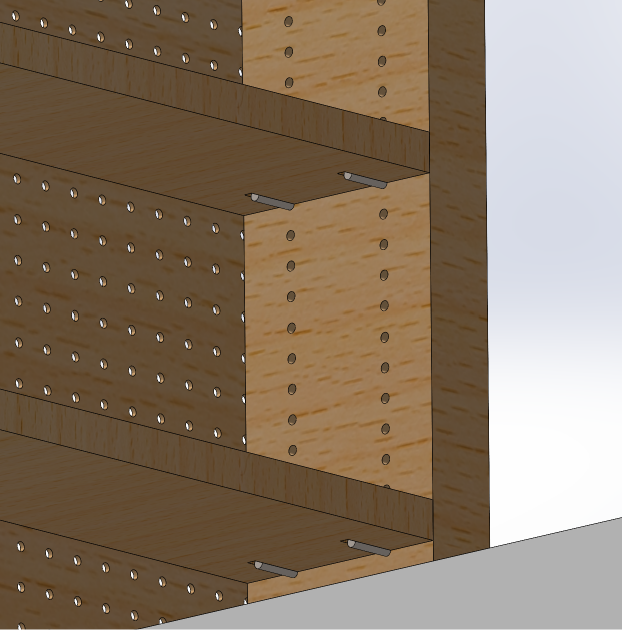
The headboard is modeled as a shelf with the back panel as pegboard to make mounting anything much easier
Each shelf sits on pins coming from the side panels, which is the most structurally sound option for this application
The holes in the side panels are added to make the spacing of the shelves adjustable to match any bedside needs
The frame around and above the bed serve as railing for the enclosure
The monitoring system and feeding bag holder will sit on/be attached to the shelves in the headboard
Engineering Analysis 1
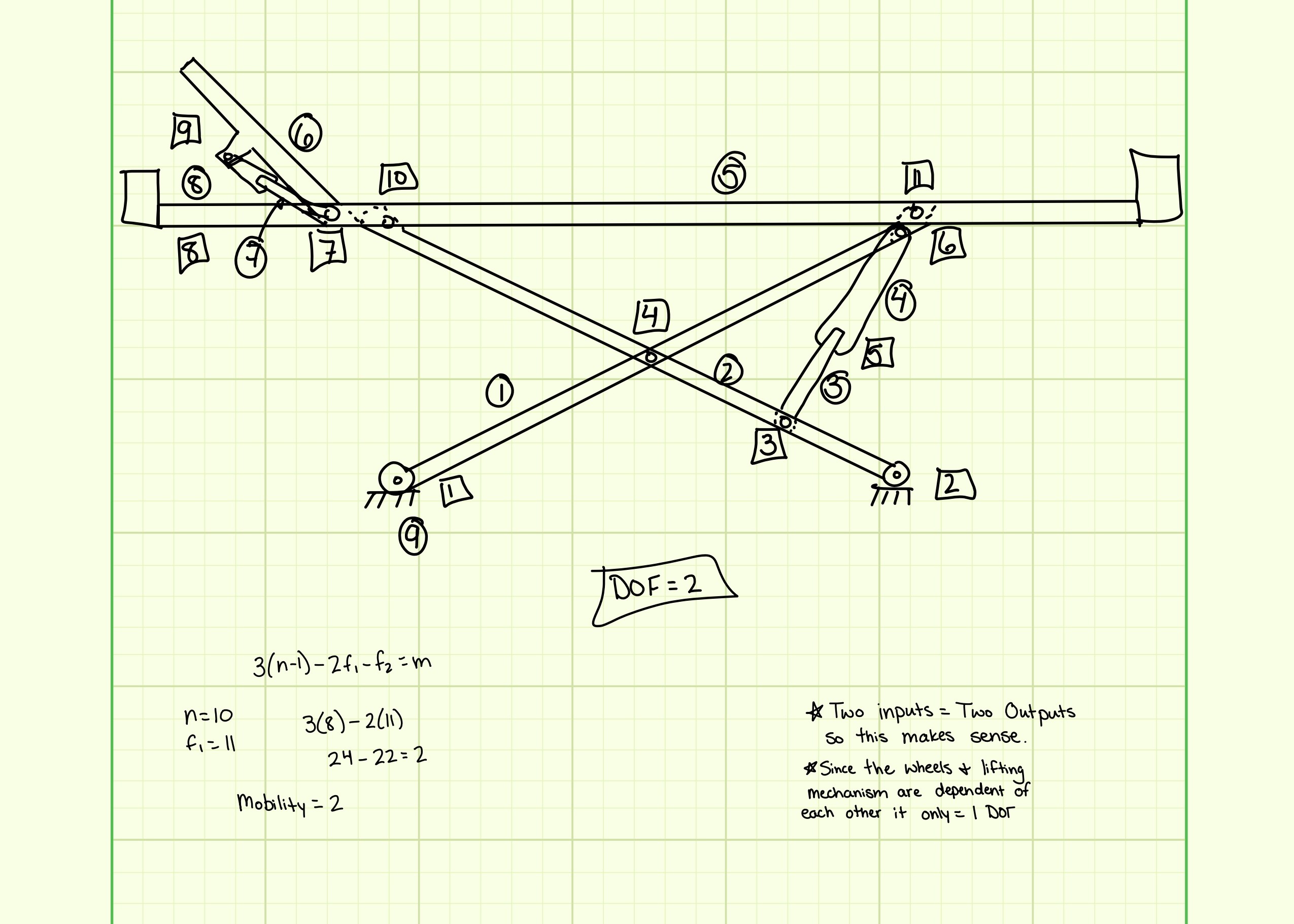
This is an analysis of the bed’s degrees of freedom. We drew a side profile of the bed and labeled all links and joints to calculate the simulated mobility. This is important so we can make sure the simulated DoF is the same as what we expected from the bed. Our analysis confirmed that the measured mobility of the bed is 2 degrees of freedom; this is the result we were looking for and means we shouldn’t need to alter the mechanisms within the bed itself.
Engineering Analysis 2
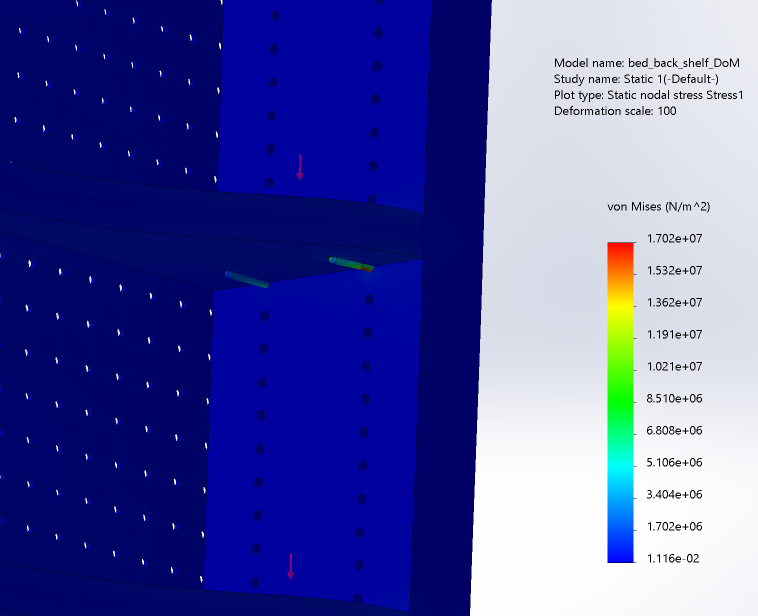
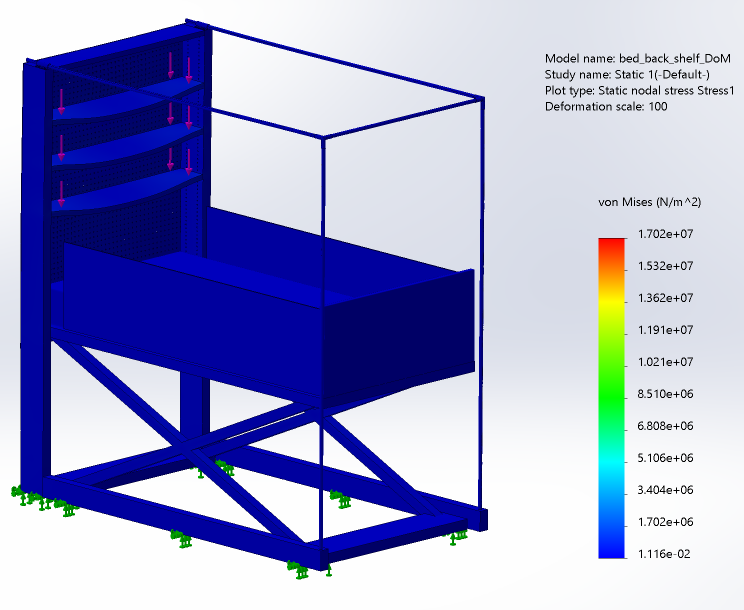
This is a 3D stress analysis on the the shelf pins and feeding bag holder.
Shelf Pins:
Here, a 100 pound load was placed on each shelf to demonstrate any warping that may occur; this is very important because if a failure were to occur while the child is sleeping, they may be injured. Our analysis proved that is configuration shows no extreme signs of warping or failing under an exaggerated load and that the pin configuration for the shelf design is adequate.
Feeding Bag Holder:
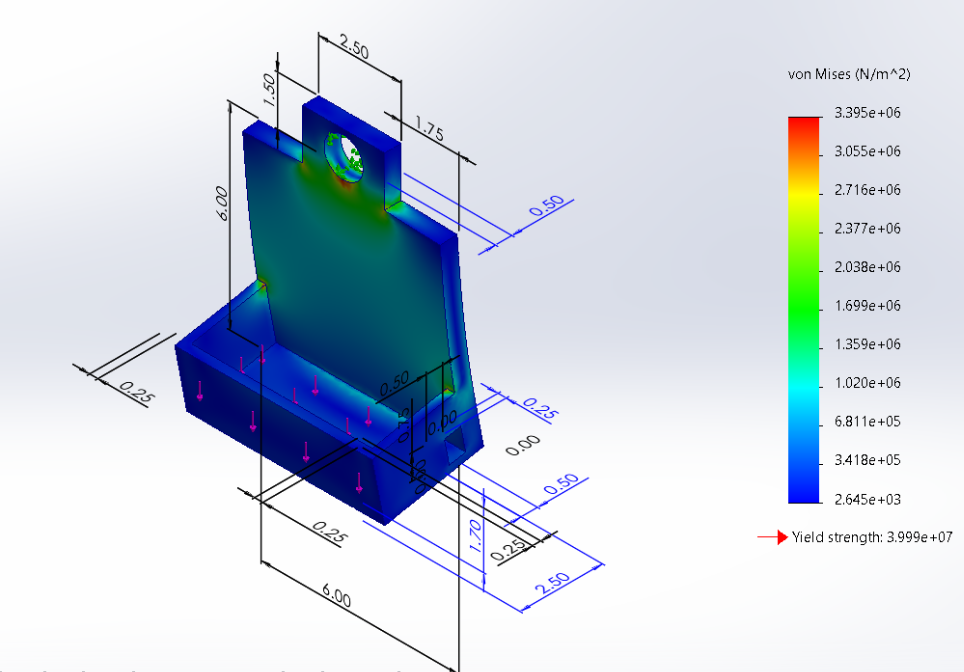
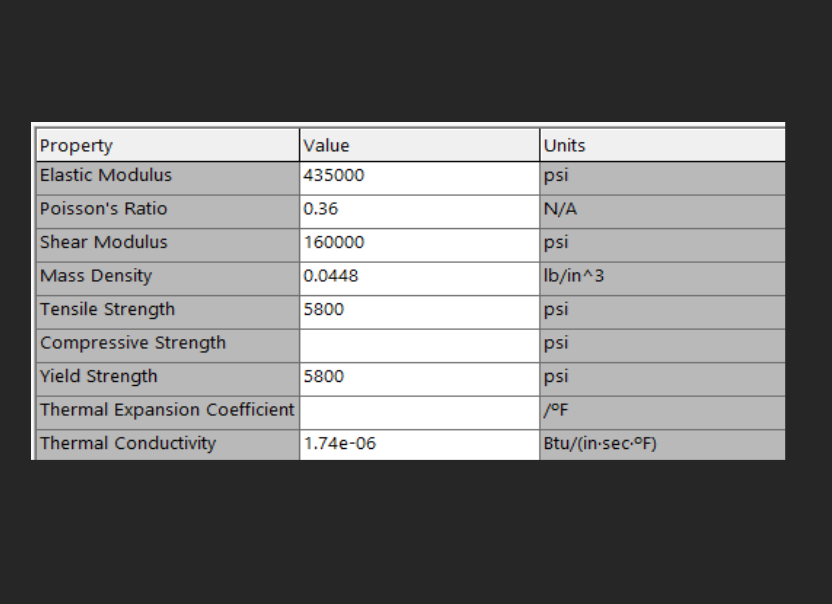
We ran an engineering analysis to test the stress that the feeding bag will put on the mechanism by applying a 100 N force to the bottom face of the bag holder. After applying the force, you can see that the deformation of the bag holder is not great enough to affect the stability of the material. Due to this engineering analysis, we have proven that this mechanism is safe and viable to execute its intended designand use.
Engineering Analysis 3
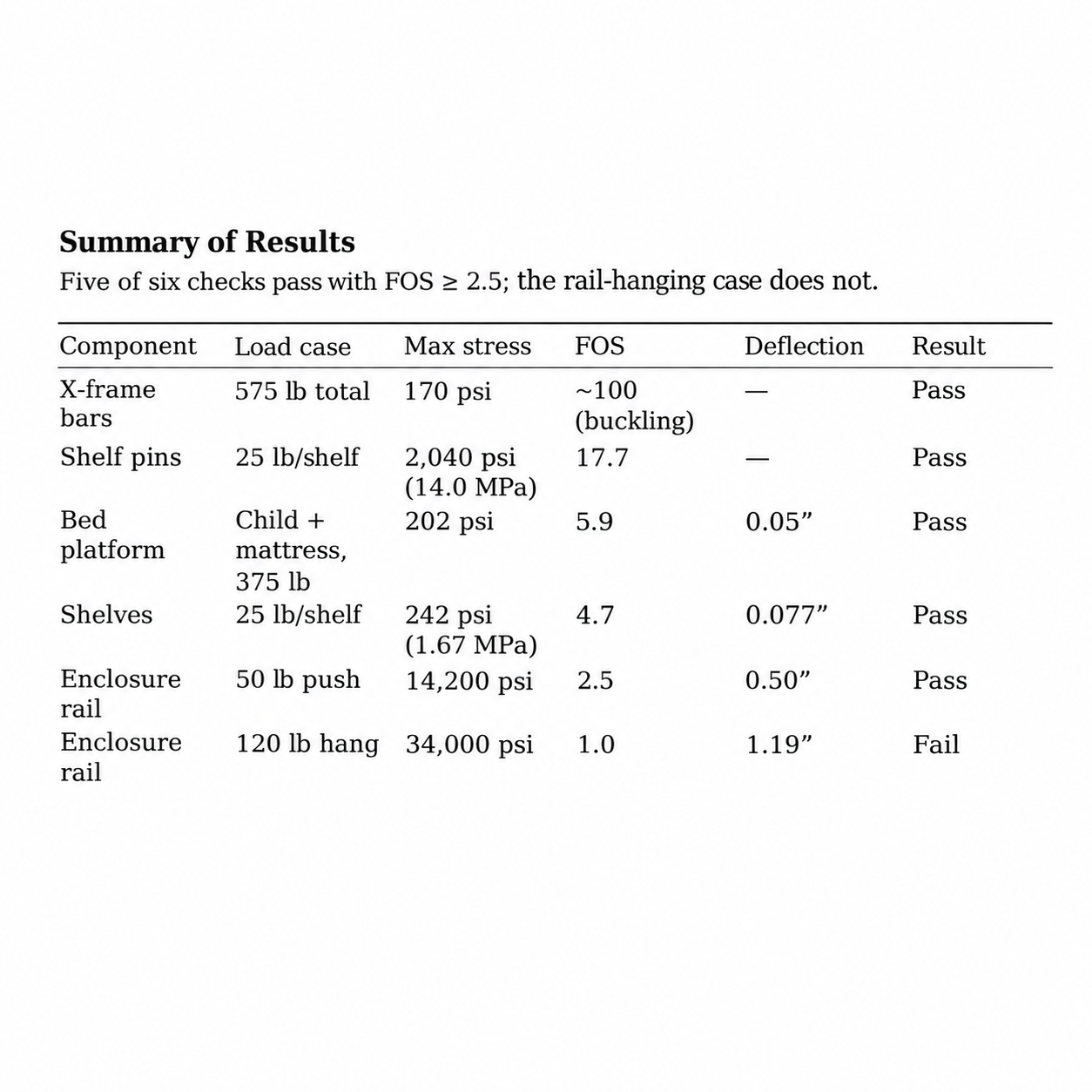
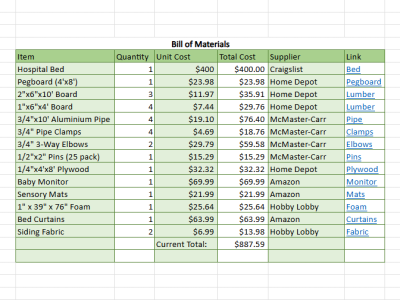
This is a material analysis of the bed’s lumber, steel pipe, shelf hardware, and platform, combining our SolidWorks FEA with hand calculations. We checked every load-bearing part against defined load cases because a child with special needs may bounce or push on the enclosure, and a failure means injury. Our analysis confirmed that the shelves, shelf pins, bed platform under the child’s load, X-frame bars, and the rail under a 50 lb push all pass with a factor of safety of 2.5 or more. However, the 3/4″ top rail yields are in high if a child hangs from it, but this is very unlikely given the height of the rails. This means the frame, shelves, and pins can stay as selected, and possibly in the future, the rails should be made to support more weight as the child grows in case of any extra load being put onto them.