Fall 2026 Project 12: High Chair

Abstract

Our task was to create an adjustable high chair for an above average-sized child.

From left to right: Dallas Birk, Marcelo Camacho, Daniel Slater, Mia Nagai

Problem Statement

The mother has requested a custom high chair with adjustable height for their 3.5 year old son.  The chair must also have a tray for eating that can easily be attached and removed.  The chair will mostly rest on hardwood floors.  The child also holds on to the back of existing chairs, so this area will be strengthened.

Design Specifications

  • Child weighs about 68 pounds (chair should be designed for 80 pounds at the absolute minimum, realistically this will be closer to 100 pounds)
  • Child is about 40 inches tall
  • Table height is 45 inches

Background Research

Version 1.0.0
Version 1.0.0

High chairs are chairs used for getting babies and toddlers fed, typically introduced at 5 months when a child can sit properly with good head control. Things that were researched are what were essential such as: proper posture, adjustability, ease of cleaning. Usually we would need three point restraints, however the mother requested not to implement them so we were able to omit that. Since the child that was assigned to us was still growing, we decided to make a “grow-with-me” style chair where the mother would just have to adjust the height of the chair rather than buy a whole new one.
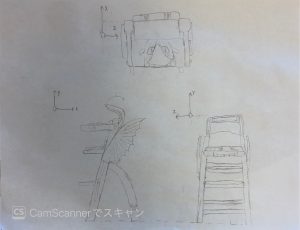
Concept Design 1

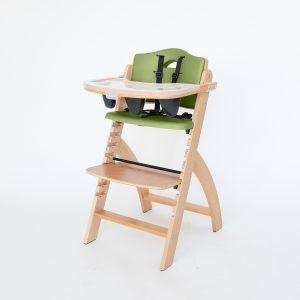
This design is based on an existing chair with an adjustable height. The design uses a pair of sliding mechanisms to adjust the seat and footrest. It also features a removable tray for food for ease of cleaning and a lowering harness with cushions as the child likes compression.
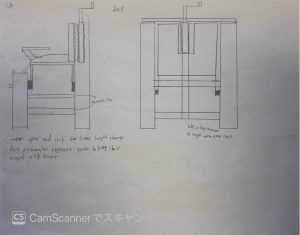
Concept Design 2

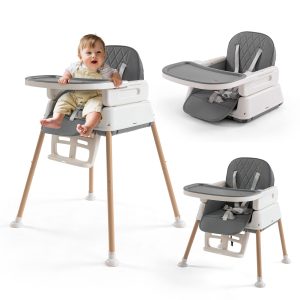
This design uses a crank attached to a worm gear to provide an easy way for the parent to raise and lower the seat.  Guides are attached to the main body of the chair that align with slots in the legs to keep the chair steady.
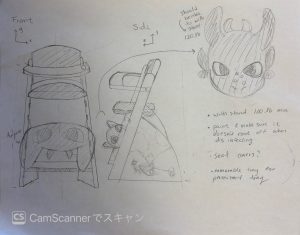
Concept Design 3

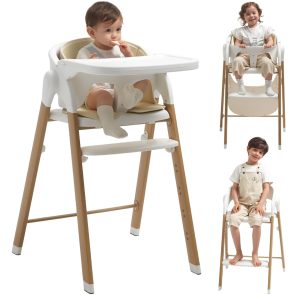
This design is based on an existing chairs but with certain differences. It was made sure it was easier for the mother to clean by making the tray easier to remove as well as make sure the step/footrest is adjustable for the child to get into the seat himself. There’s designs incorporating the child’s interests, for him to be more enthusiastic to take a seat.

Decision Matrix

Overview of Selected Design

Design 3 was selected as our final design based on the decision matrix.  We determined that this design was the most durable, had all of the features requested by the family, and was viable in all other categories. The specification for the chair is that the chair is going to be 34.5″ in height, the weight of the chair is less than 22 lbs, and the seat will be adjustable; the highest level of the seat will be 24.6″ and will be able to adjust it as low as 10.5″ so when the child grows, they would not have to commission or buy a new chair.  The chair has many different features implemented. One of them is the fact that the design has the child’s interests illustrated on, so the child would be much more likely to be willing to take a seat. While the child is one of the main clients we keep in mind, we also had the mother as well. One of the features that are there is the dishwasher safe cover for the tray. Another thing is that the materials that this high chair is made of is mainly wood which would be relatively easy to clean by wiping down. The chair is able to withstand 240 lbs maximum in weight. The high chair would comply with the ST-18, EN 14988 standards, H. R. 4040 because we are modifying a product. Another thing is that this chair is safe in terms of substances because there are no BPAs, phthalates, and PVCs.

Engineering Analysis 1

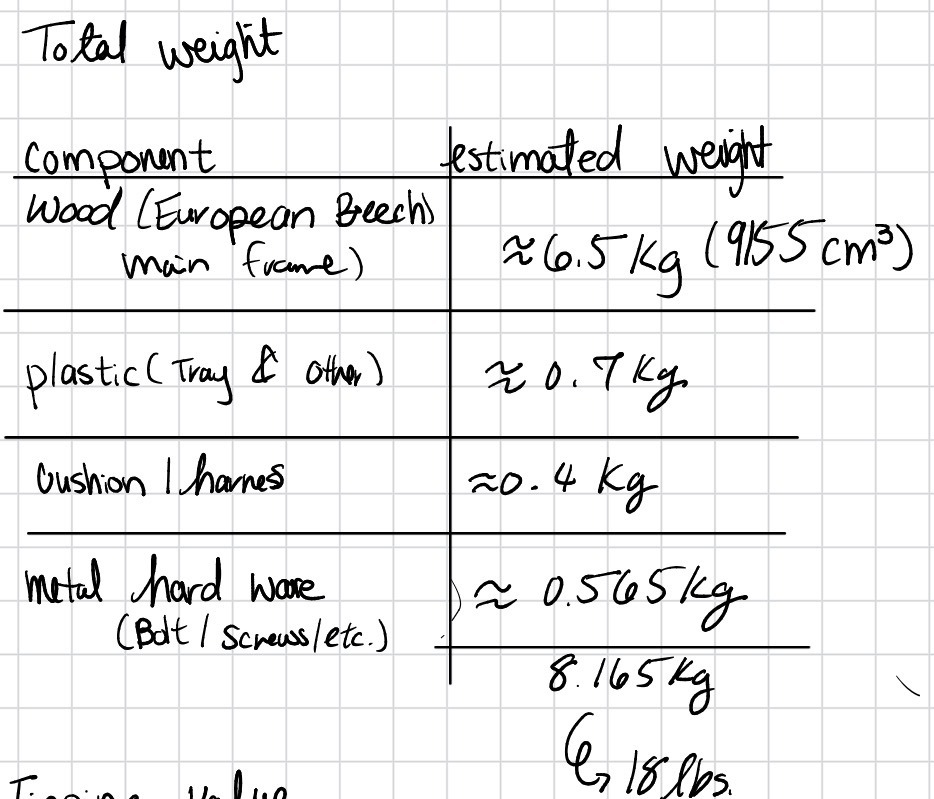
This part of the analysis focuses on the weight of the chair, which is one of the main concerns for the mother, who would like to move the chair around. We broke down how much of the chair would be made out of what material and made a rough estimate to get a chair that is approximately 18 pounds, however, this chair will be modified to have a little more weight so we can get, more or less 22 pounds.

Engineering Analysis 2

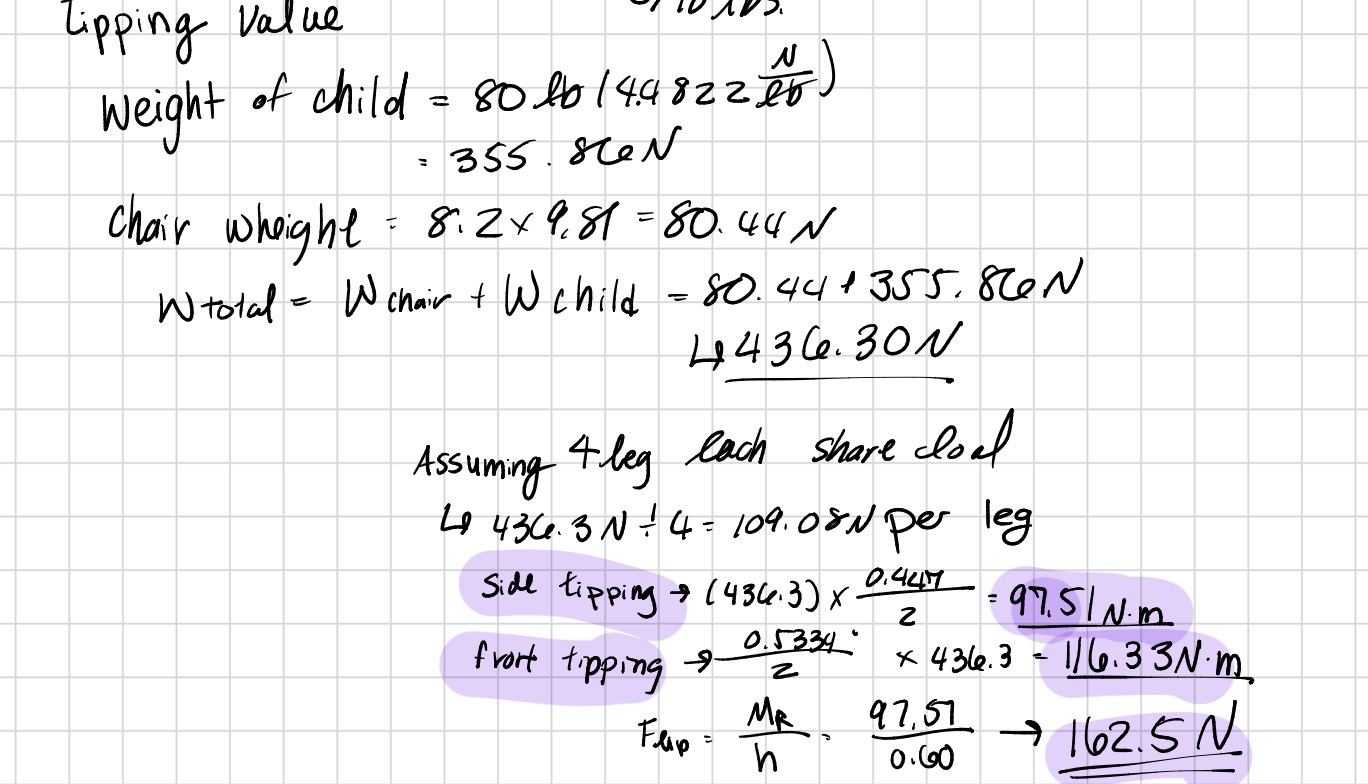
Since we are going to take a pre build chair and modifying it, the numbers from the footprint were utilized from the metrics found. The formulas for tipping were found on google.

Engineering Analysis 3

To answer the question on whether or not the child will be able to get on the chair by himself, we looked at the tolerance already found within the product to see that the weight will be tolerable.

CAD Drawings

Semester

2026 Fall