This project focuses on designing a sensory box tailored for a special needs child, providing a safe and supportive environment for sensory exploration and therapy. The box is constructed with stability, durability, and safety in mind, featuring padded edges, a wide base to prevent tipping, and calming sensory elements to accommodate the unique needs of the child.
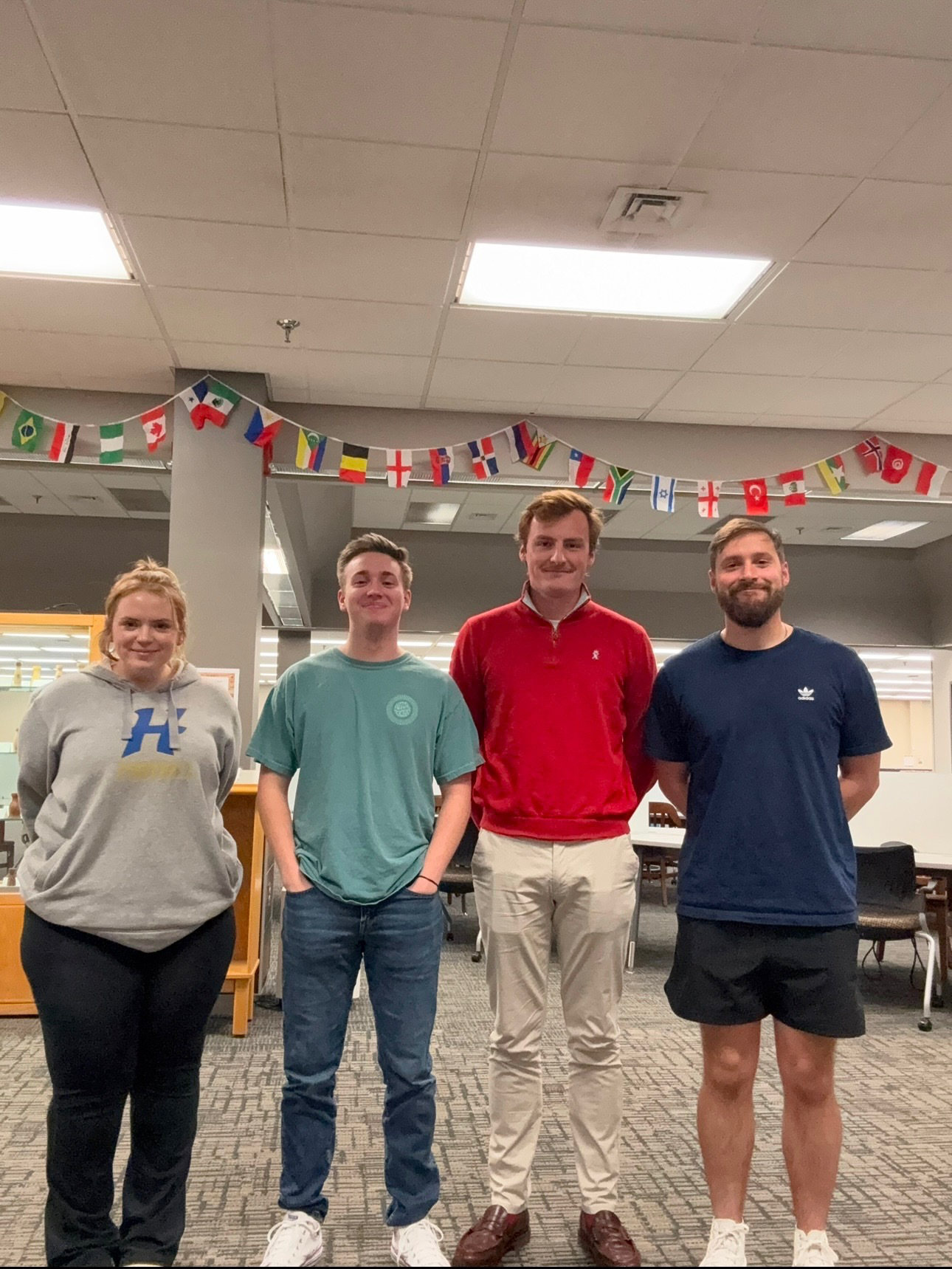
Caleb Bucher, Jordan Davis, Paul Delmotte, and Connor Riddick
Problem Statement
To design a sensory box that safely holds a 60 lb child, ensure it is stable, durable, and free of sharp edges. Use sturdy materials like plywood or high-density plastic, and design it with a wide, low-profile base to prevent tipping. Cover all edges and hard surfaces with soft padding like foam or rubber to protect against injury. Incorporate rounded corners and a secure yet lightweight lid if needed. Test the box with weights exceeding 60 lbs and check for stability and safety to ensure it meets all requirements.
Design Specifications
The Sensory Box is designed to safely support a child weighing up to 60 pounds while ensuring comfort and protection. It features padded support bars to prevent injury, providing a secure environment for sensory exploration. The structure is compact enough to fit through a standard doorway, allowing for easy transport and storage in various settings. Blue is the preferred color to create a calming atmosphere, and the interior incorporates different textures to enhance sensory engagement and stimulation.
Background Research
The Boundex Cuddle Box, developed by occupational therapist Eileen Richter in collaboration with Tumbl Trak, is a safe and portable sensory exploration tool designed for children with additional needs. Featuring a sturdy steel frame with padded edges and securely stitched Lycra layers, it provides durability while offering a comforting squeeze that aids in sensory integration therapy. Ideal for homes, clinics, and gyms, it helps children with sensory processing disorders regulate their experiences in a secure environment. Backed by Tumbl Trak’s 30+ years of expertise, the Boundex Cuddle Box is a trusted choice for parents, therapists, and coaches.
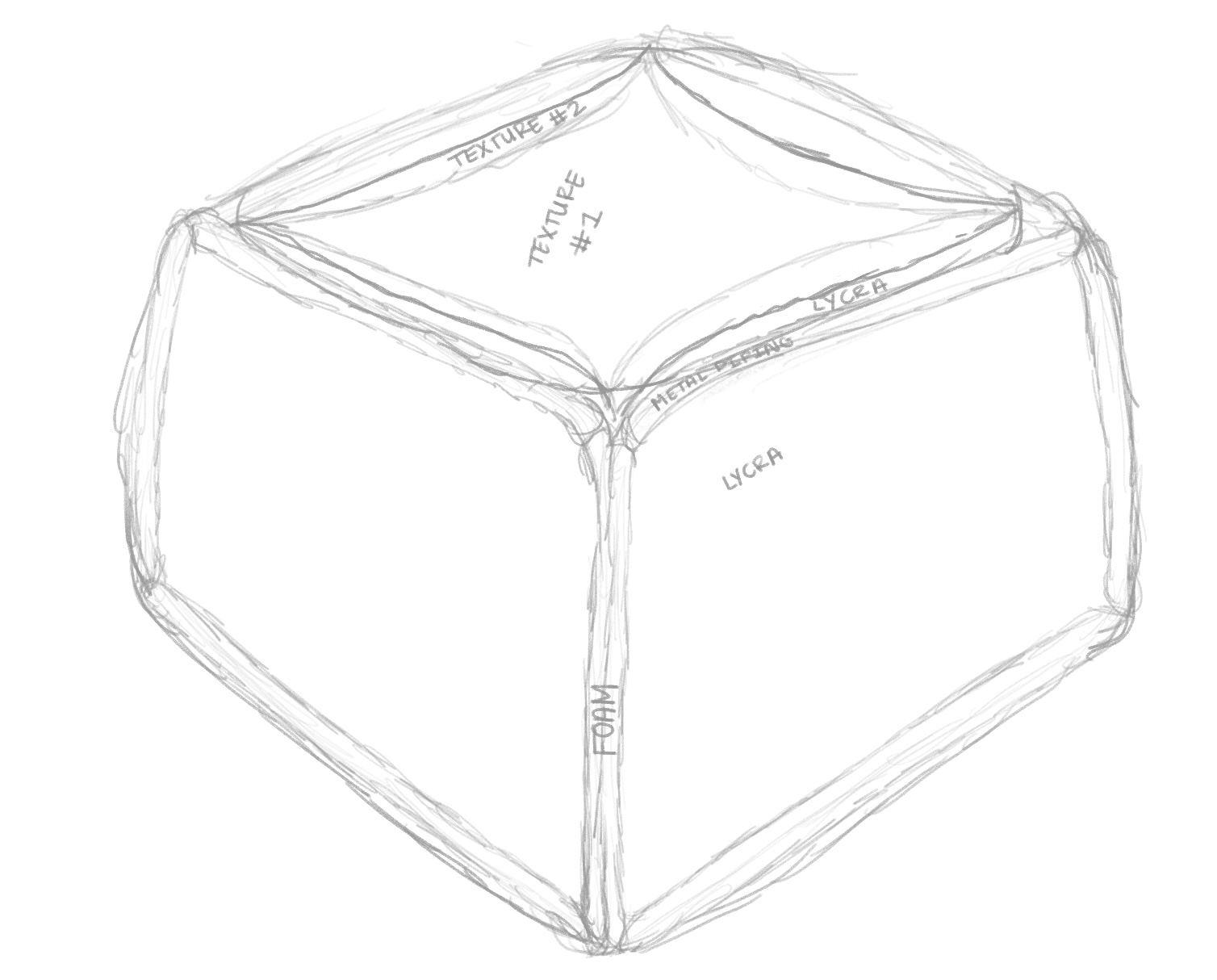
Concept Design 1
The first concept design is very similar to the example that we were given. The major differences are added cushion around the support bars to prevent the child from bumping their head, and a variety of textures instead of one consistent fabric in order to fulfill sensory needs. However, the Lycra will remain as the bottommost layer since it provides the essential bounce.
Our design is made out of 4 metal pipe support frames with feet at the bottom connecting the frames. Along the frames are hooks that we would use in order to hold the fabric on top. There is also room on the bottom that will hold a cushion mat to protect from injury. This frame would be surrounded by some type of foam to further protect from injury.
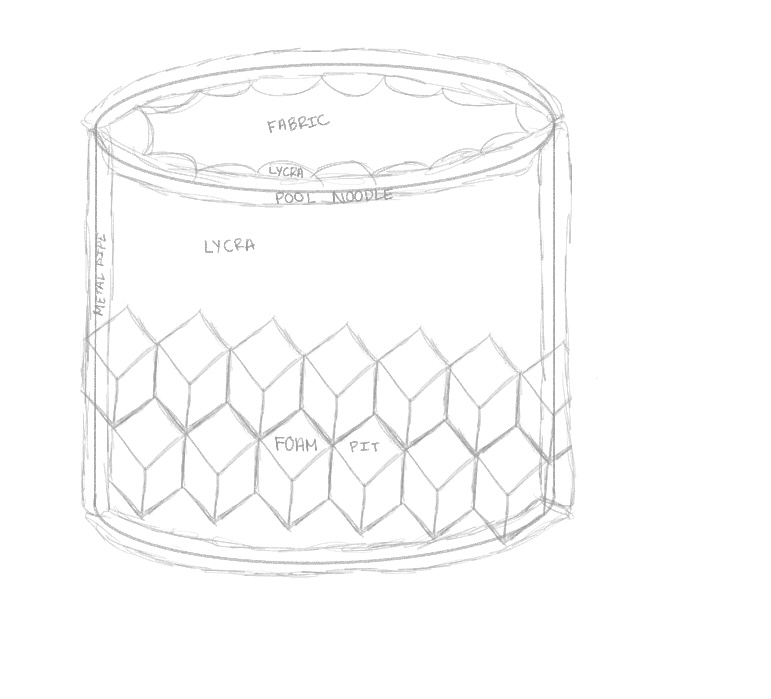
Concept Design 2
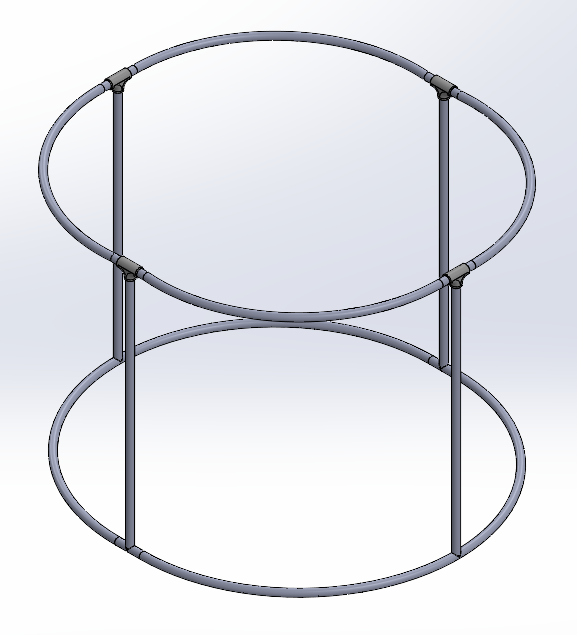
The second concept design features a cylindrical shape and a foam pit bottom. The foam pit will not only add an extra bit of fun but also cushioning in case the fabric upper level were to fail. The rounded edges of the metal piping will reduce the number of accidental head bumps on sharp corners.
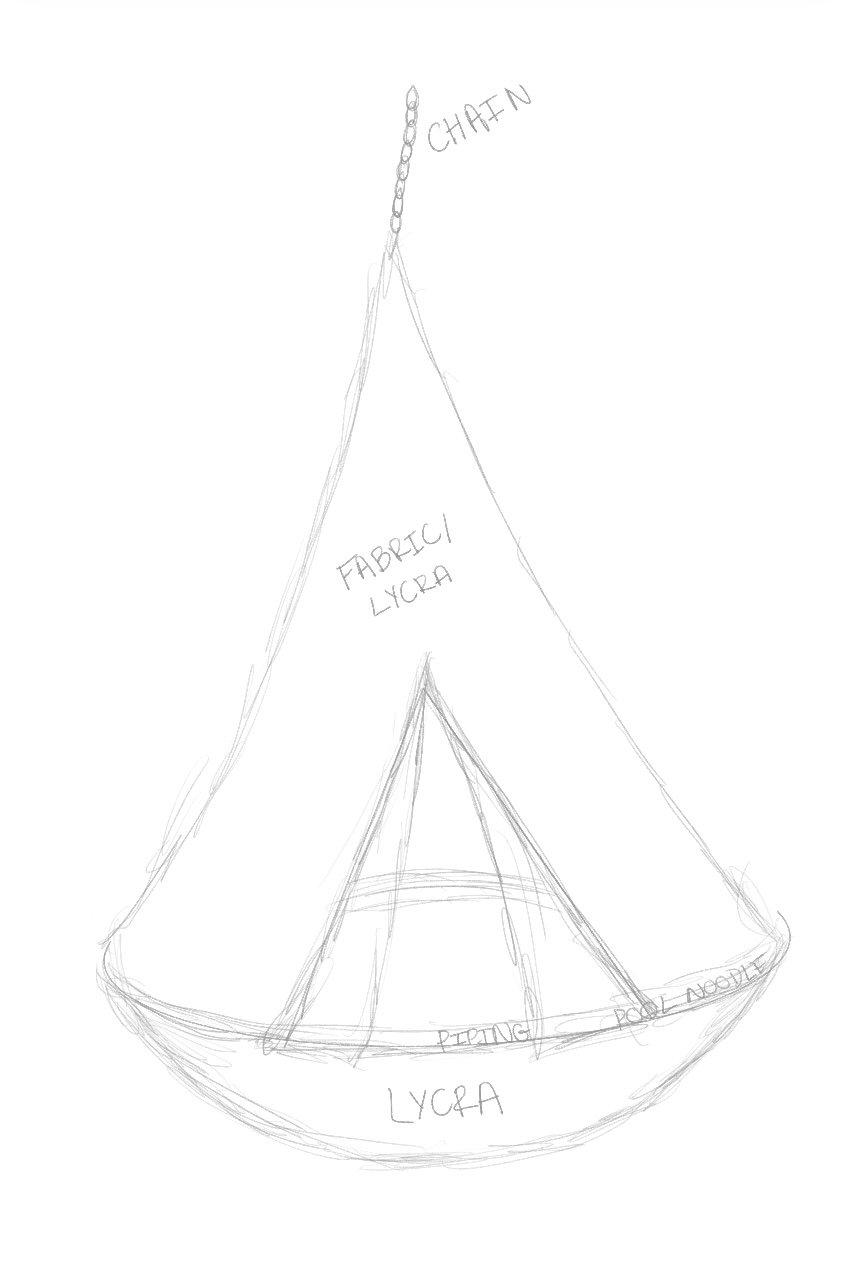
Concept Design 3
The final design concept is a hanging swing. This design would take up less floor space. It would also allow the child to not only jump and play, but to swing to soothe themselves. It would still incorporate a rounded metal piping bottom to keep the walls from collapsing around the child.
Selected Concept Design
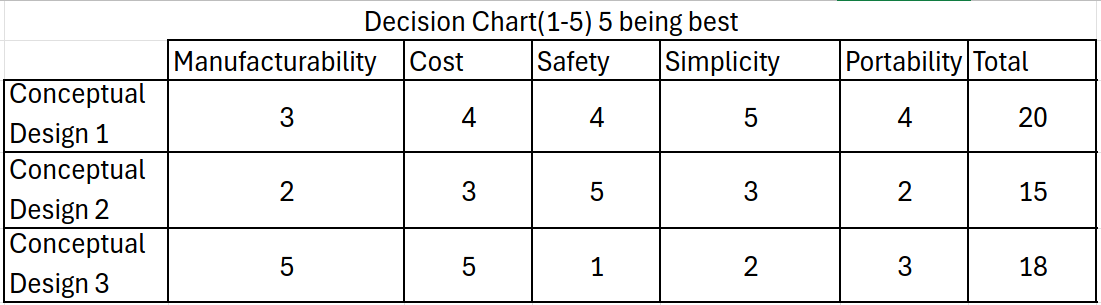
We chose Conceptual Design 2 for its simplicity, ease of assembly, and strong focus on safety—our top priority when designing any playset or toy for children. The straightforward design also helps reduce the cost to make. While we anticipate some challenges with the fabric in any design, we believe Design 2 will provide excellent support for the child.
Decision Matrix
Describe Design Details
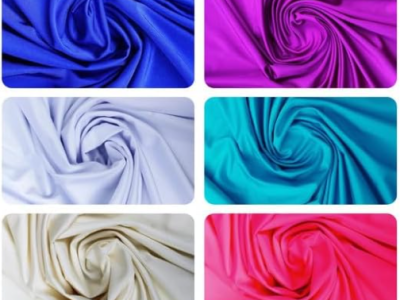
We are building a large cylindrical sensory box measuring five feet in diameter and three feet tall. The frame will be constructed from steel piping, with a circular base and top ring connected by vertical supports. The entire structure will be wrapped in four-way stretch Lycra fabric, creating a smooth, tensioned surface. The top will have three layers of Lycra for extra durability and sensory resistance.
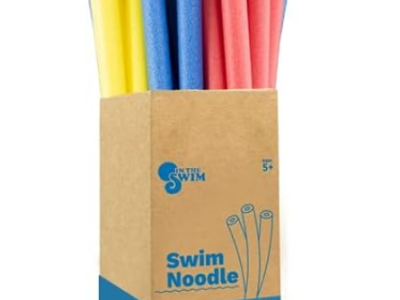
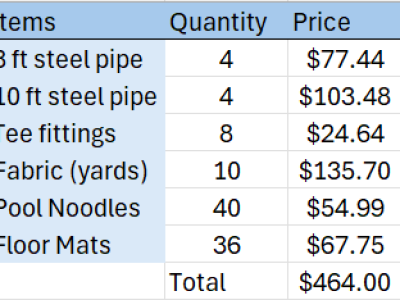
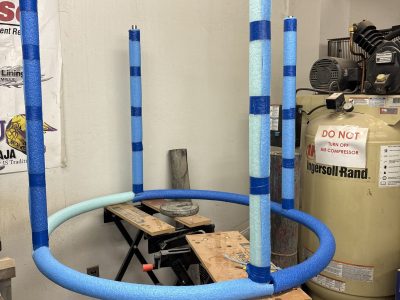
Each steel pipe will be padded with standard 52-inch pool noodles for added safety and comfort. Approximately five noodles will be used to cover the full perimeter, and any extra noodles will be cut and repurposed for a foam pit or additional padding.
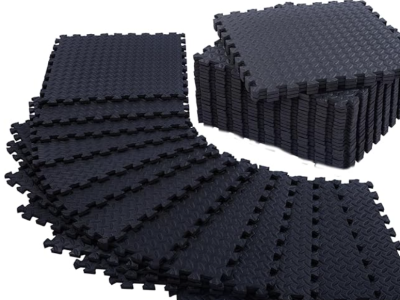
The bottom of the sensory box will feature cushioned, interlocking mats that can snap together or be pulled apart for easy setup and cleaning. These mats provide a soft and safe surface for play or sensory engagement.
Engineering Analysis 1
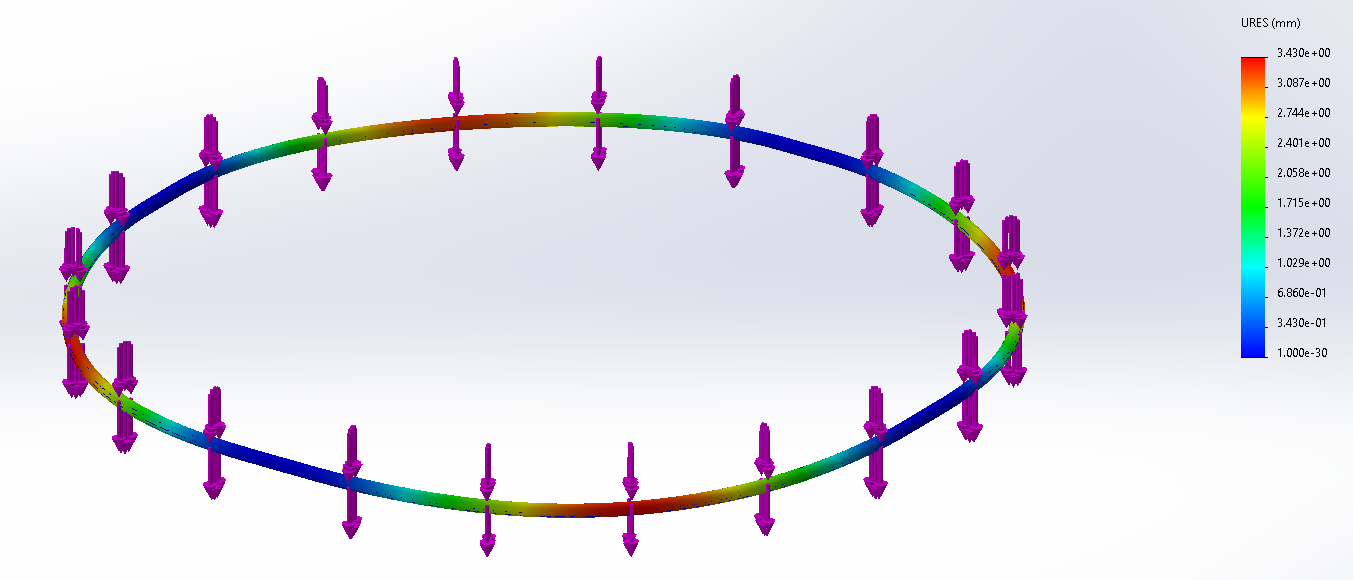
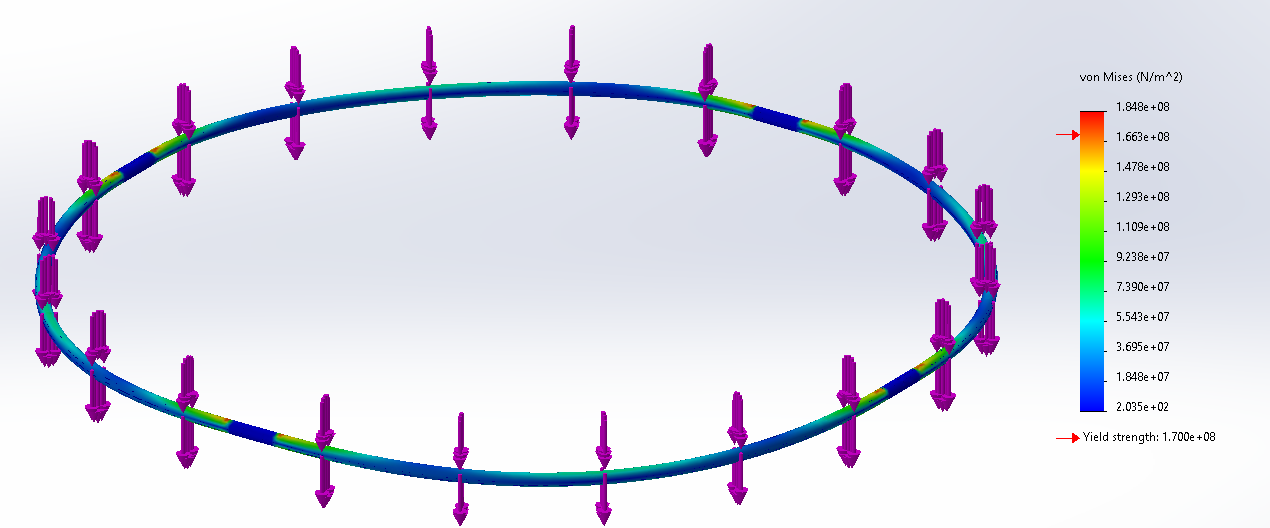
A stress test was conducted on the structure by applying a 110lb load. The objective was to observe its behavior under stress, measure its maximum displacement and analyze Von Mises stresses.
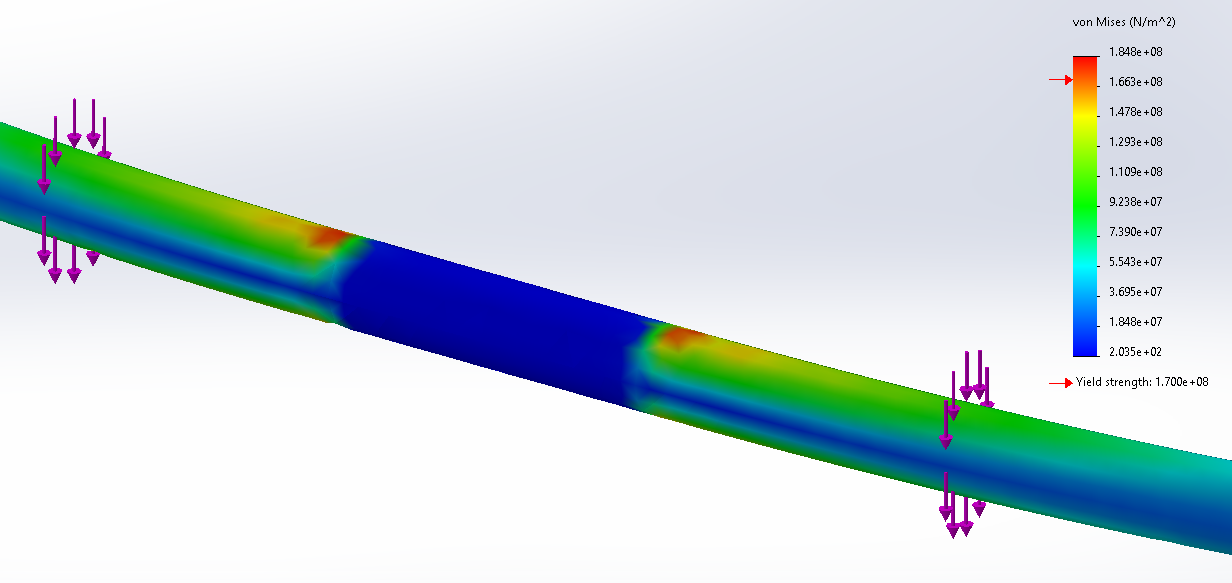
The results show a maximum displacement of 0.134 inches. The yield strength is reached very locally, affecting only a small area of the structure without compromising its overall integrity. Moreover, the applied load is far above the actual operating conditions. This means that while localized stress peaks exist, they do not pose a risk to the structure’s performance in real use.
Engineering Analysis 2
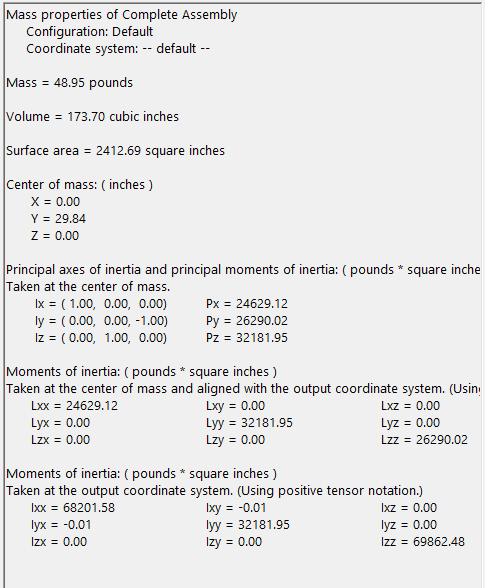
Our second analysis was a weight analysis. We wanted to see what kind of force this box could cause if there was a tip. We also wanted to see the weight in order to know if it would be easy to tip over. We found the weight of the completed project to be around 50 pounds using solid works.
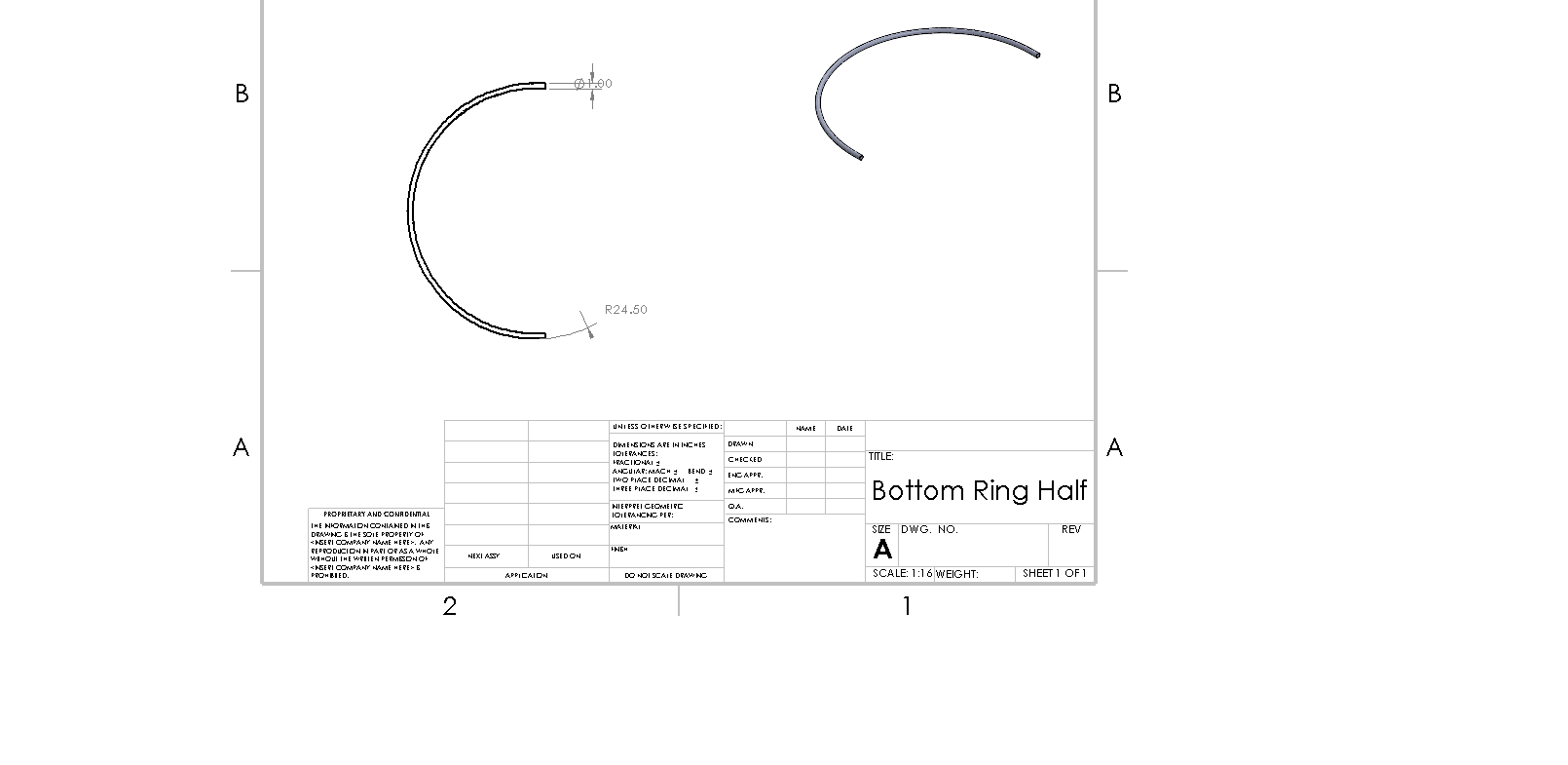
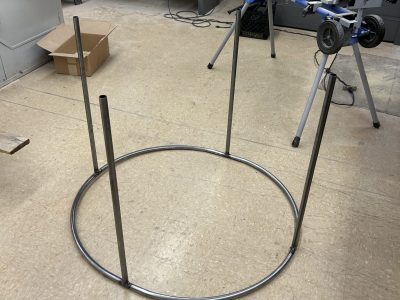
Our fabrication process began with the framing of the final product. We began by taking two 6 feet long pipes and bending them with a rough diameter of 4 feet to make a perfect circle. These two half circles were then welded together.
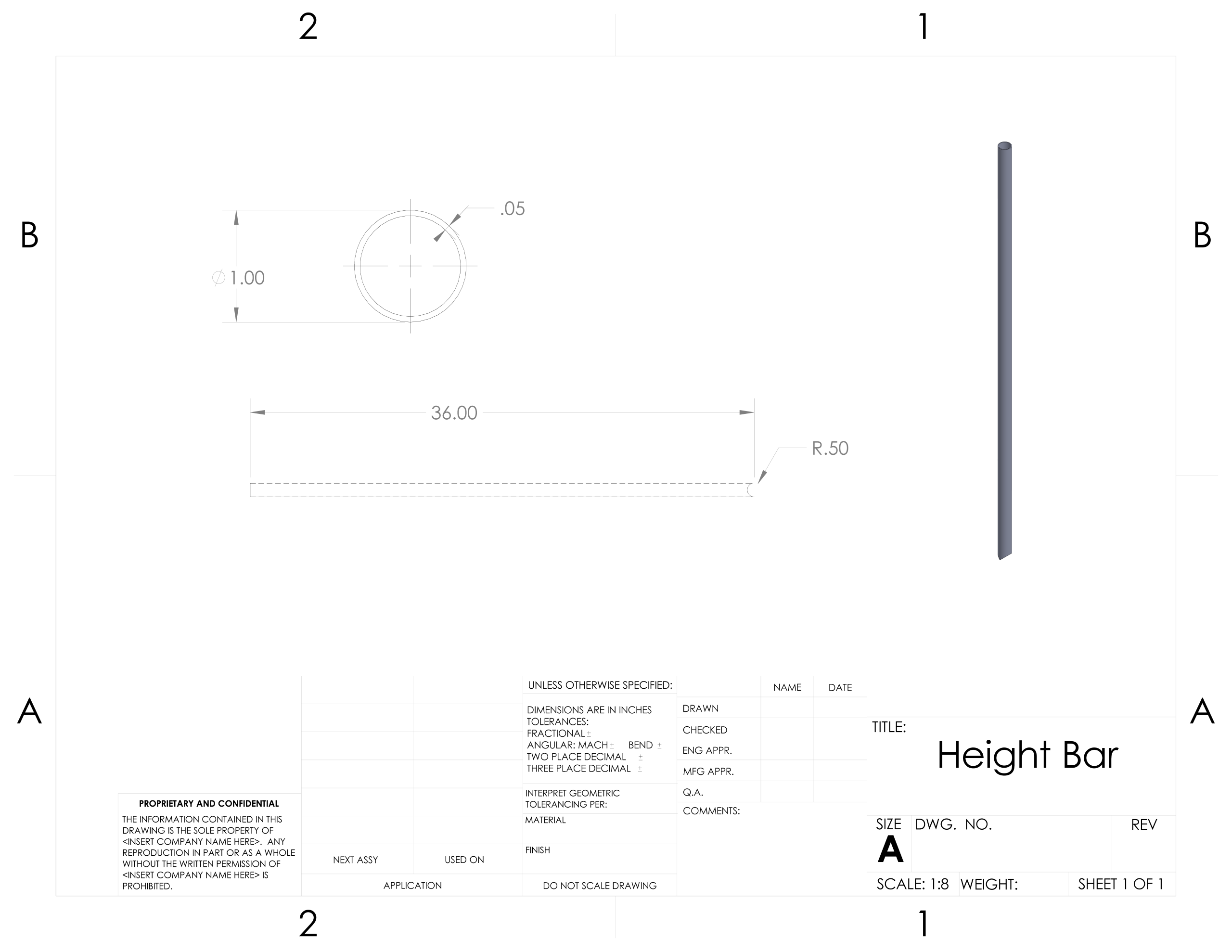
The next step was taking two more 6 feet pipes and cutting them in half. Each of these halves was then welded vertically on the bottom circle on 4 corners.
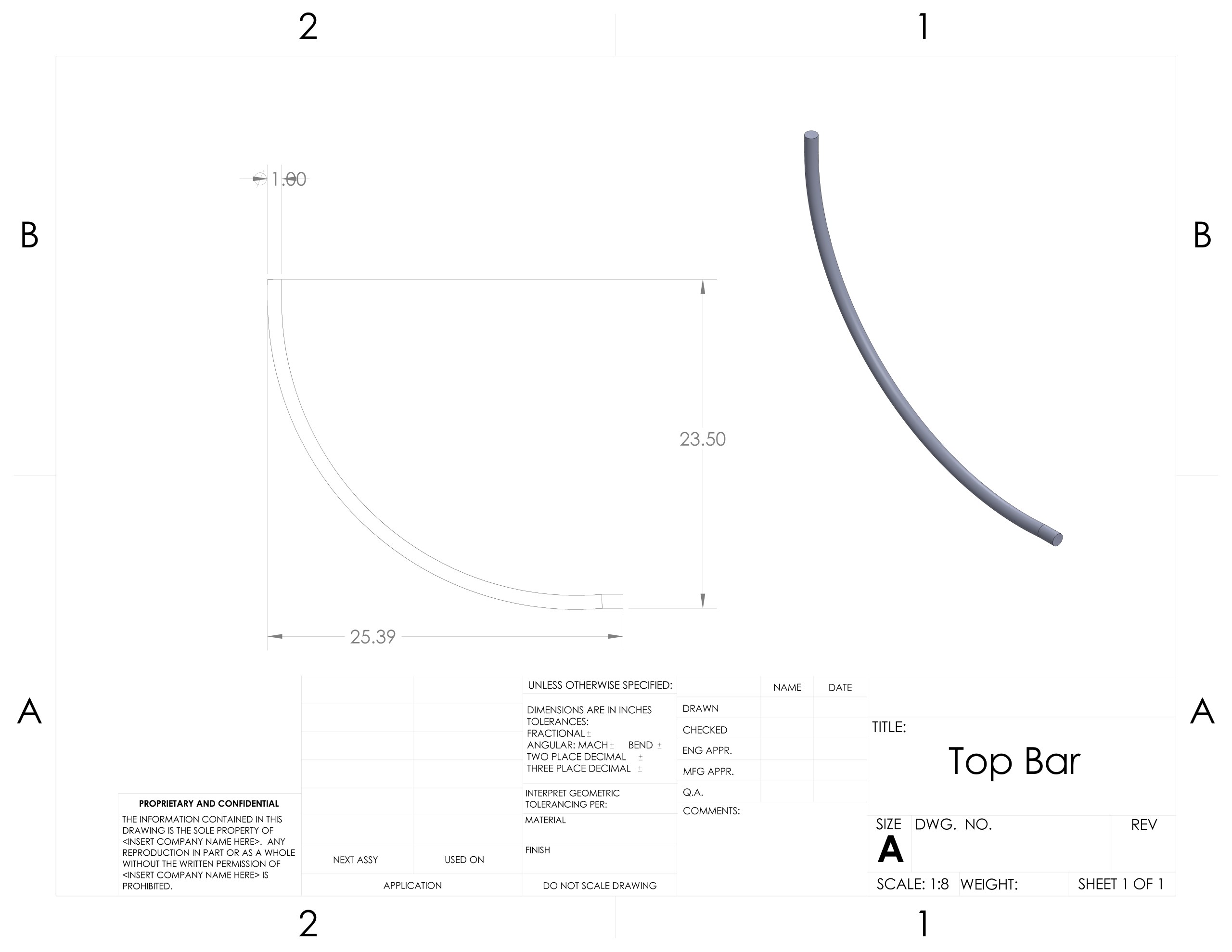
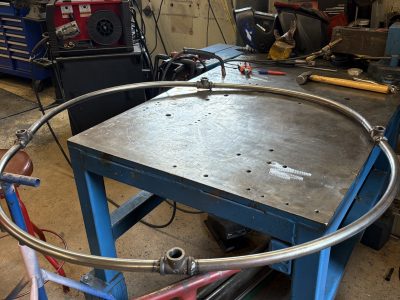
We next created 4 quarter circles with the same diameter as before and welded T fittings to make a full circle.
At the top of the vertical pipes we threaded holes so that we could screw the top circle with the bottom portion of the frame.
The next step we made was surrounding any metal with pool noodles. This was done to help prevent injury of the child.
After the frame was completed we then moved on to making the fabric covering. We worked our way around the framing sewing a complete covering around it.
Testing Results
Before delivering our project to the customer, we tested the strength of our frame and fabric with college students. We used one of our friends to help test the product. We had them sit on the fabric and move around to see if there was any failure. After inspection, our test had passed and there was no failure.