We are working with a family of a 10 year old boy with autism. He is hoping for a way to get out some energy at school and possible at home with an adaptive bike design. He enjoys most sensory stimulation and hasn’t stopped moving for roughly the last 10 years! We are designing a bike that will allow him to get out some energy in a way that is safe but still fun enough for him to stay on for a extended period of time. It will be used mostly at school but we would like for it to be available to him at home as well due to him only being at school for 2 days out of the week. He has many iPads that he uses throughout the day that help keep him entertained and able to communicate.
Paul Song, Aiden Mullins, Sarah Livingston, Ramon Perez Gamboa, Jacob Wildman, Caleb Liko
Problem Statement
We are needing a bike that has the sensory needs capable of keeping attention while ensuring safety throughout its use. To do this, we are concerned about tipping, slipping, feeling stuck, and boredom shortening his time spent on the bike and thus failing to relieve him of his energy. It’s main use will be at school but we are hoping to be able to make it portable enough for him to bring it home if he wishes. His fine motor skills are a limiting factor on how small each commponent can be so there will have to be features to ensure he is capable of opporating all of the attachments. Finally, he will need to have access to his iPad due to it being his primary form of communication.
Design Specifications
Need to replace normal bike seat with a more supportive seat, to decrease stability concerns.
Need to avoid sharp object and spikes.
If stationary, need to incorporate a choice board.
If movable, need to incorporate straps to help him stay on the bike.
Needs to have a spot for an iPad to rest so he can communicate while on the bike.
A handle on the back would be preferable, so that his mom or teacher can assist with the steering aspect.
Background Research
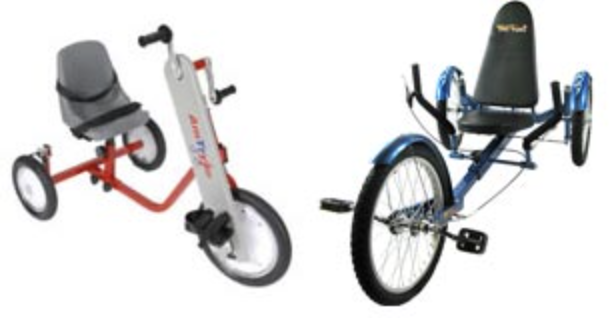
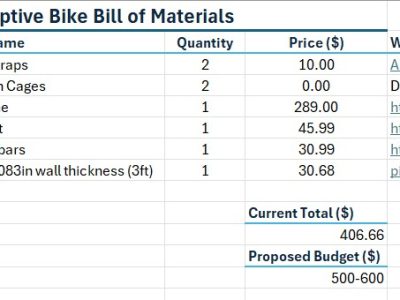
For our background we explored various adaptive bicycle designs that catered to the need of the child. This included looking at preexisting adaptive bicycle and tricycle design, while looking at safety, comfort, and sensory considerations. For all these considerations, we decided that looking to modify a preexisting bike/ trike was the best option for fitting the design requirements. This included looking at fidgets, safety straps, handle bars, etc. Thus for our research we looked at price, cost, and materials.
Concept Design 1
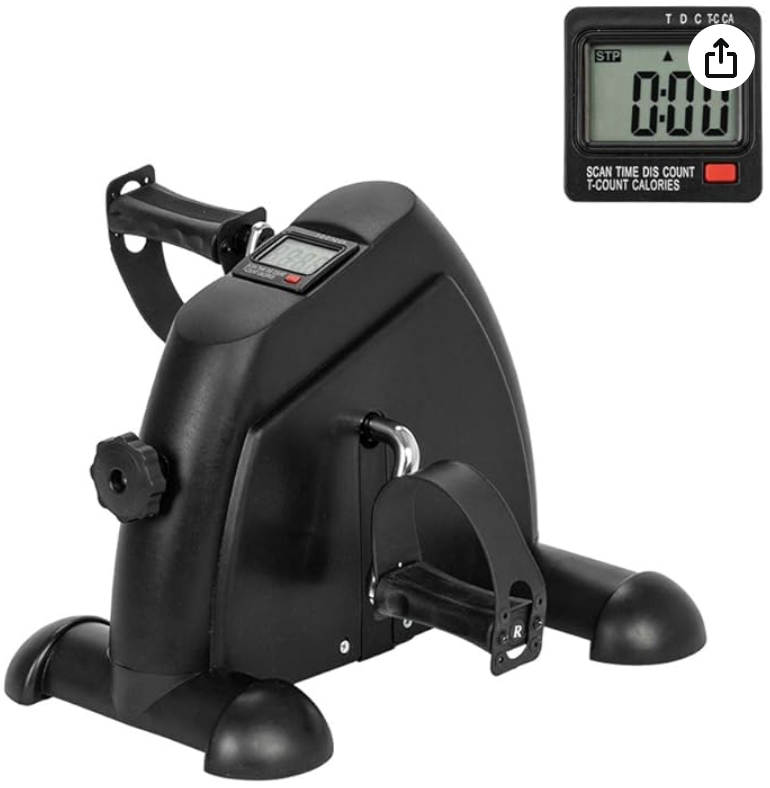
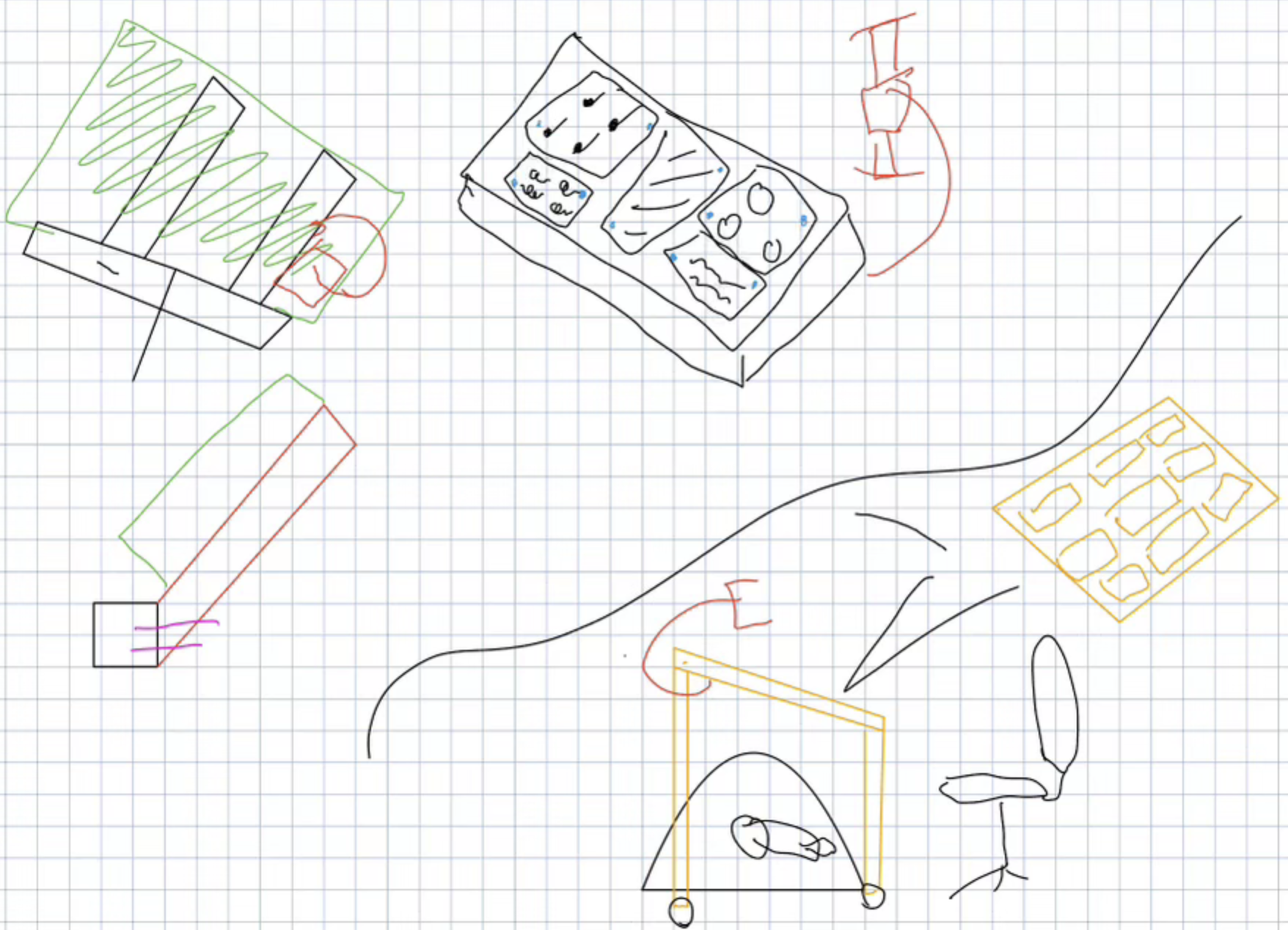
Our first concept design was a stationary setup, where the child would sit at a desk with a choice board while pedaling an under-the-desk exercise bike. There will also be an arm that attaches to his iPad so he can still communicate. The choice board will be made up of modular parts, allowing easy arrangement of fidgets and stimuli while also allowing easy future modifications. This concept highlights safety, stimuli, and flexability, but neglets an aspect of movement.
Concept Design 2
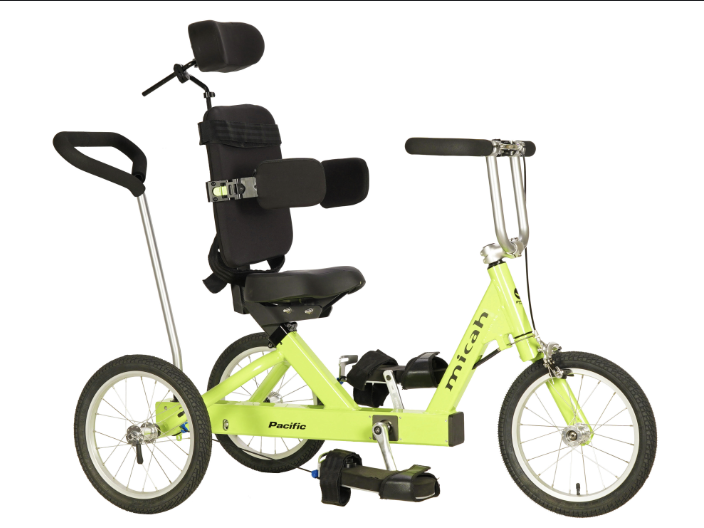
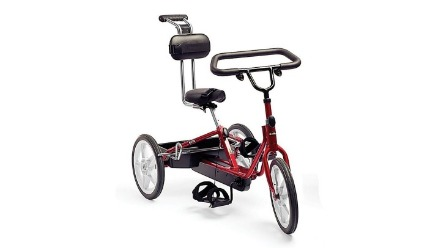
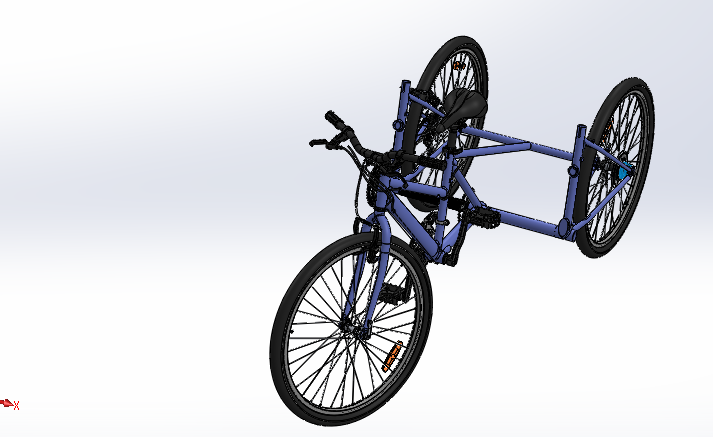
For a movable bike, we wanted to design an option that was stable and safe. To do this we decided 3 wheels would be best, as well as straps on the pedals and seat to assist with stability. We also want to replace the seat to make it more comfortable while also helping with the balance aspect of the bike. There is also a handle on the back of the bike so that his mom or teacher can assist with the steering. The handle also helps the bike be more portable between school and home.
Concept Design 3
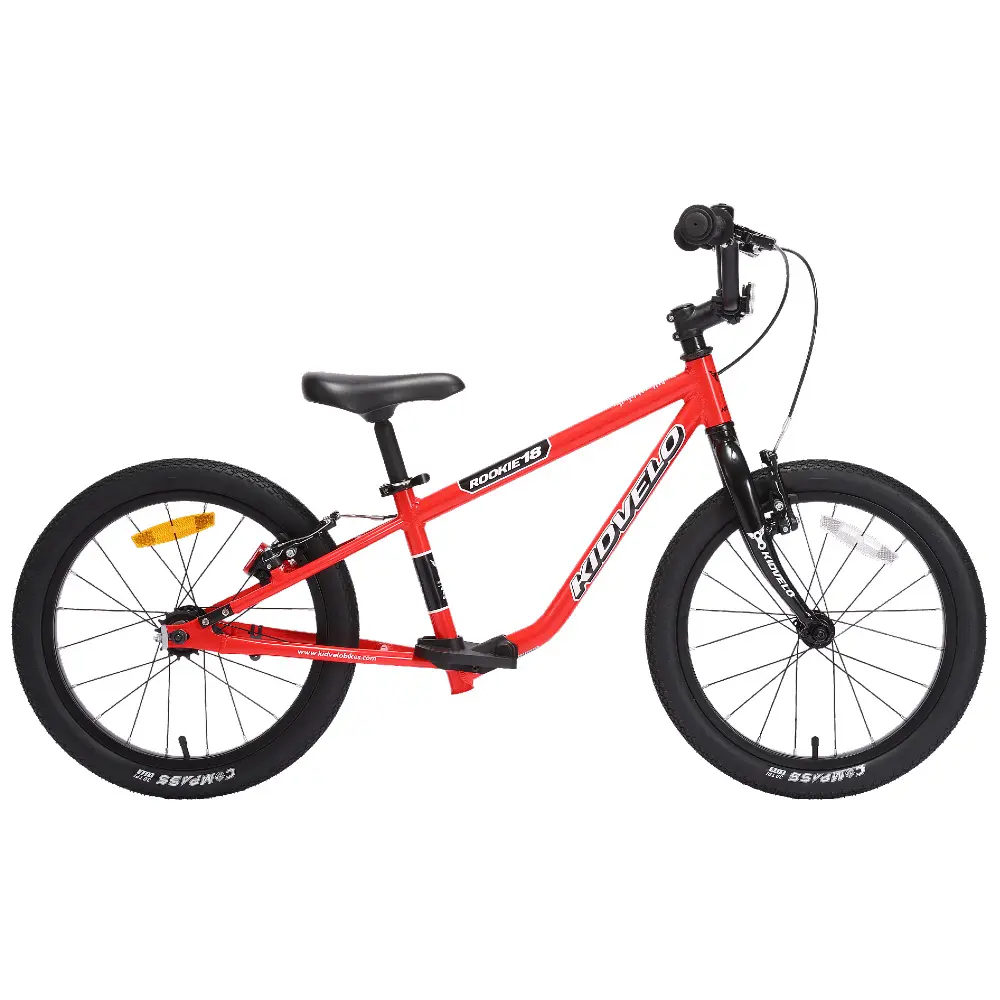
For this design, the base is going to be a standard bike with training wheels to keep it stable. This will be the most mobile design leading to more safety precautions being needed. First, we need a supportive seat that will help him stay in the seat without the fear of falling off. We will have straps over the pedals to ensure him feet stay on the pedals. Finally we are going to have an attachment that can slot under the rear wheel to keep it in place so that it can be turned into a stationary bike if desired. The main draw backs are the steering capability and stability of the bike, but the stationary attachment does allow for a wider experience on the same bike. On a the same frame we could remove the pedals and allow for his feet to help with both the stabilization and steering. This will add a lot more safety to the bike while allowing for the same maneuverability that isn’t found in the other designs.
Selected Concept Design
Going against the decision matrix we are going to continue on with design 2. This is due to the request of the family as well as further thought on how the specifications should be weighted to match the needs of the family.
Decision Matrix
Overview of Selected Design
For this design, we need a large seat that will be capable of keeping him supporting him and keeping him on the seat, pedals with straps to keep his feet on the pedals, a low enough gear to ensure he can pedal for an extended period of time, a handle on the back with a break so a guardian will be able to guide and help if necessary, and finally handlebars that are large enough to be used without too fine of motor functions.
Describe Design Details
In terms of the pedals, the family has asked for a strap to go over his foot and hold it in place. We also have a set of pedals that have a cage that your foot can slide into that would allow him a little more freedom to get out himself while not taking away any of the security while pedaling forward. We are planning on presenting both ideas and after testing them we will fully secure the preferred option.
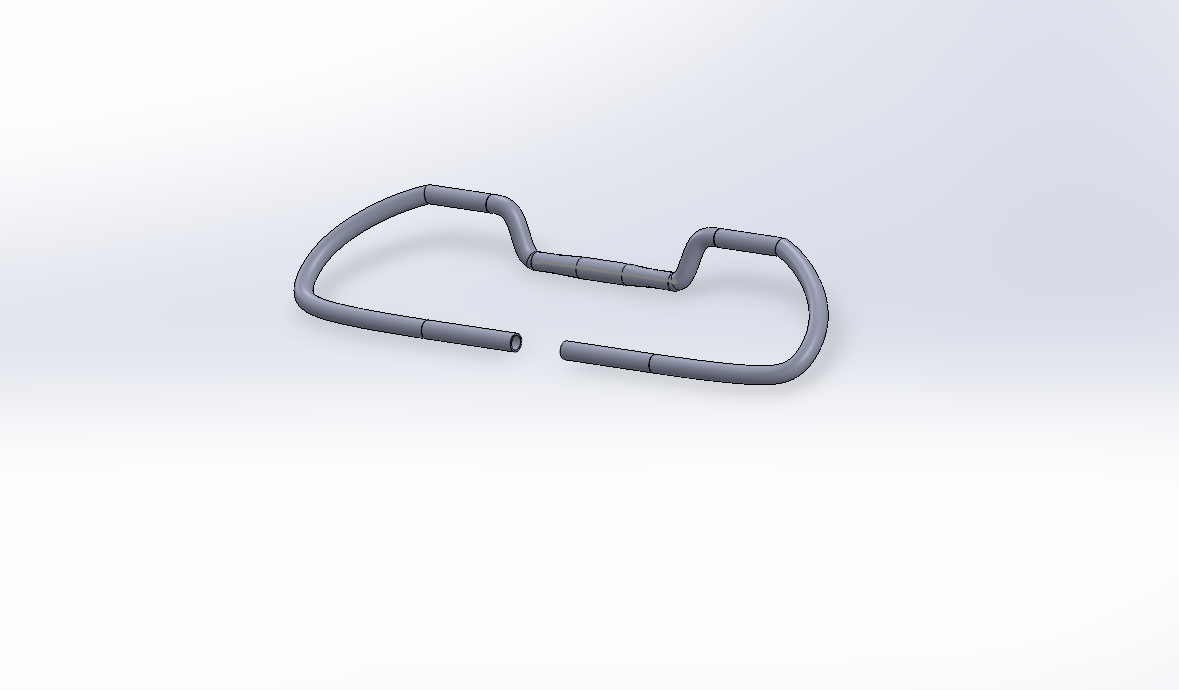
For the handlebars, we are going to get a handlebar that makes an oval shape that would allow him to steer using a neutral or pronated grip. This also allows him to rest on the handlebars by grabbing the further part of the handle if desired. This gives him to most security as well as comfortability.
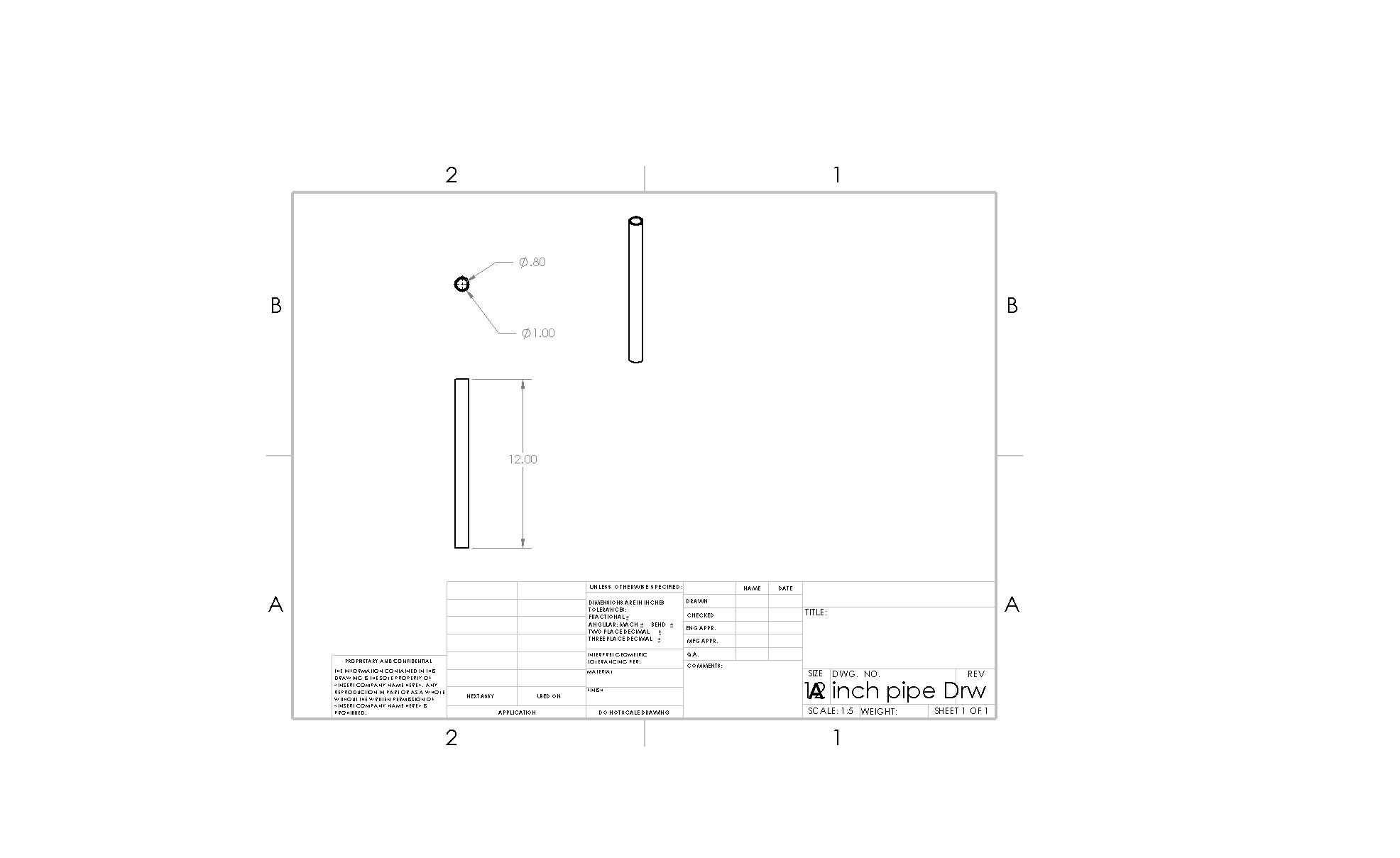
For the rear push handle, we are attaching a sturdy bar with a handle allowing the guardian to help push and help get him started or push/pull to guide him a little in either direction. Due to too many complications in design, it will not be linked with the front wheel but we will link a brake to the handle that actuates the rear brakes. This will allow the guardian to stop him or slow him down incase he gets in any trouble.
For the seat, we want to do a bucket seat because it offers the most support but that will not allow him to pedal. Due to this, we are going to a wide saddle seat with a backrest to help support him while still allowing him to pedal.
Engineering Analysis 1
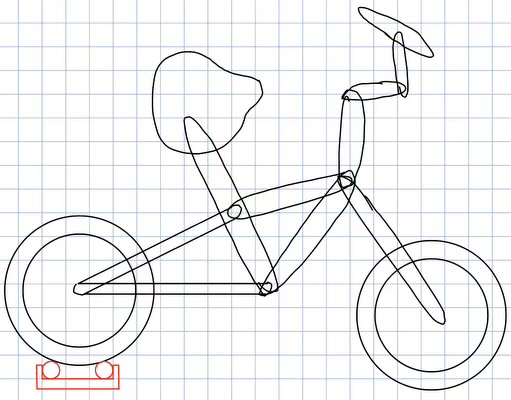
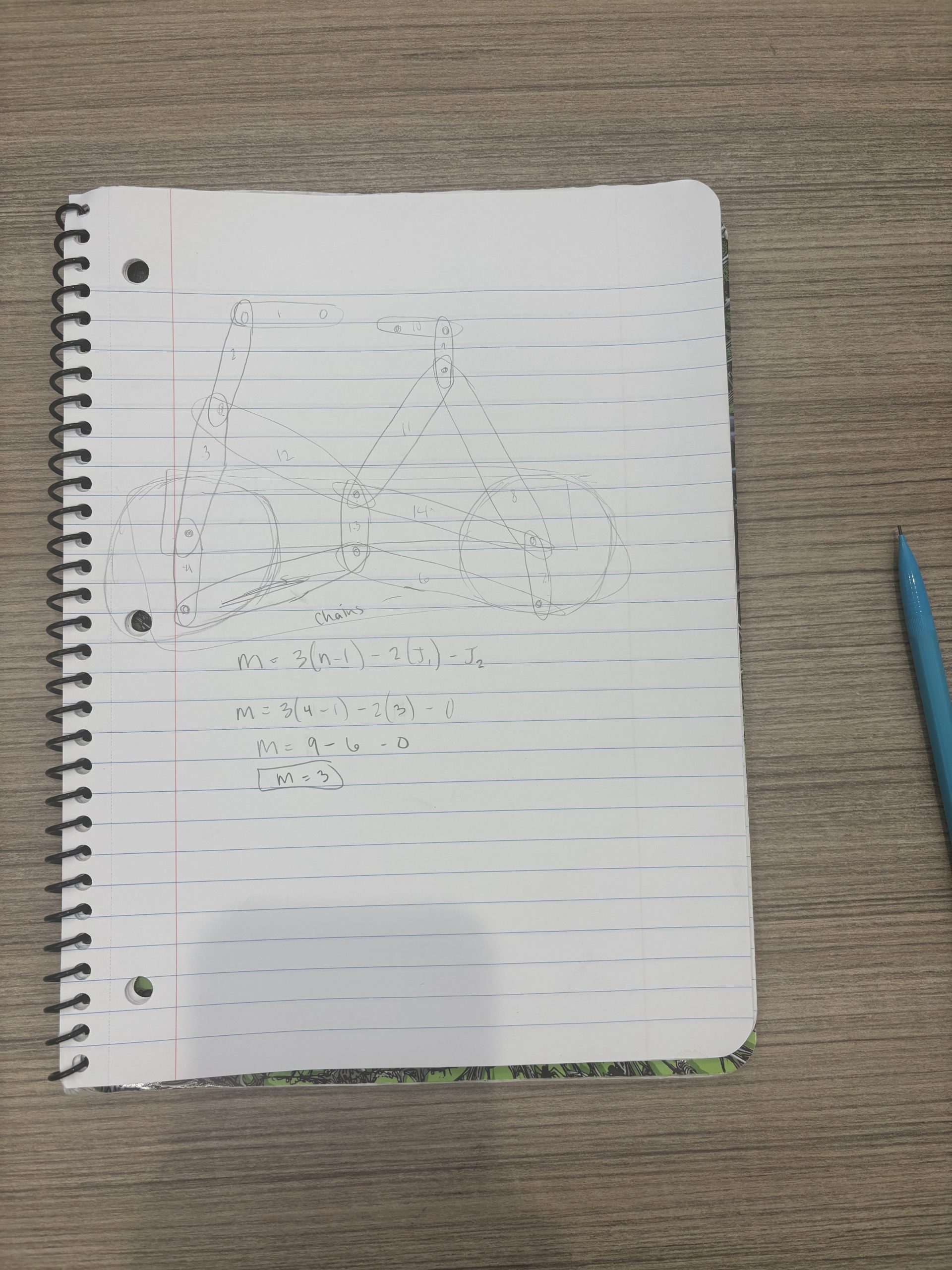
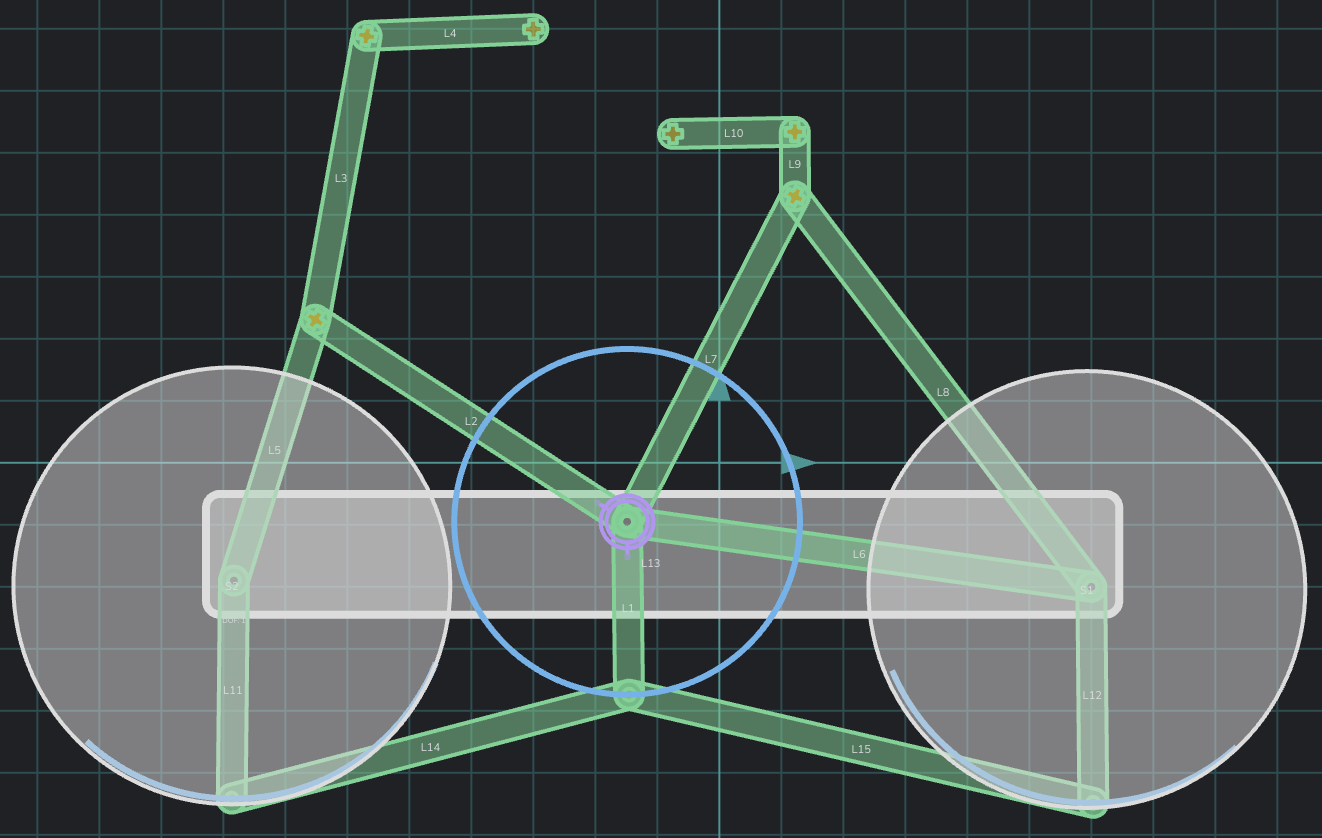
When doing the analysis for the DOF on the bike frame we first designed it in motion gen. This gave us a DOF of 1 due to the limitations of motion gen but after drawing it out by hand and finding that it had 4 bodies and 3 links we found a DOF of 3. This is to the to rotation of the times as well as the turning capabilities of the wheels. This shows the limitations of motion gen being unable to design a chain link.
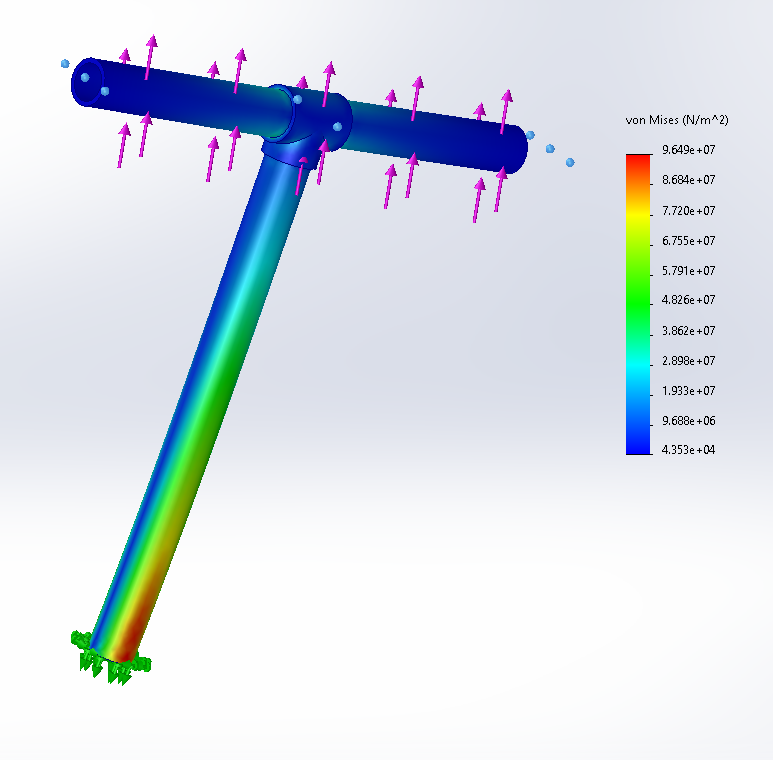
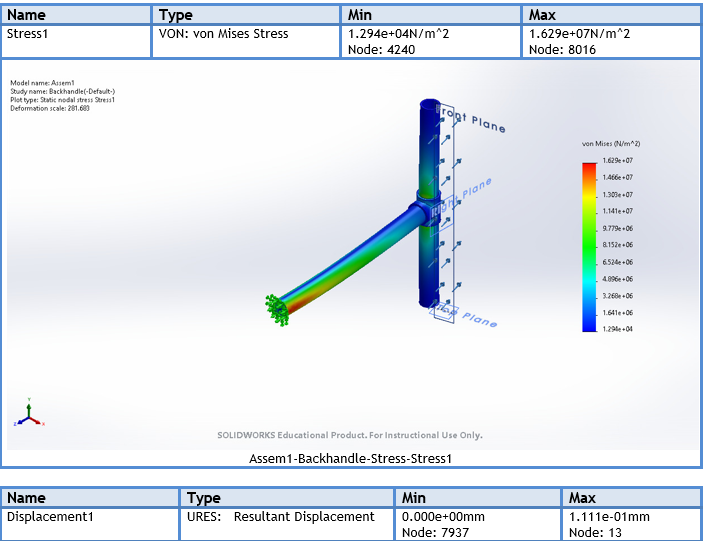
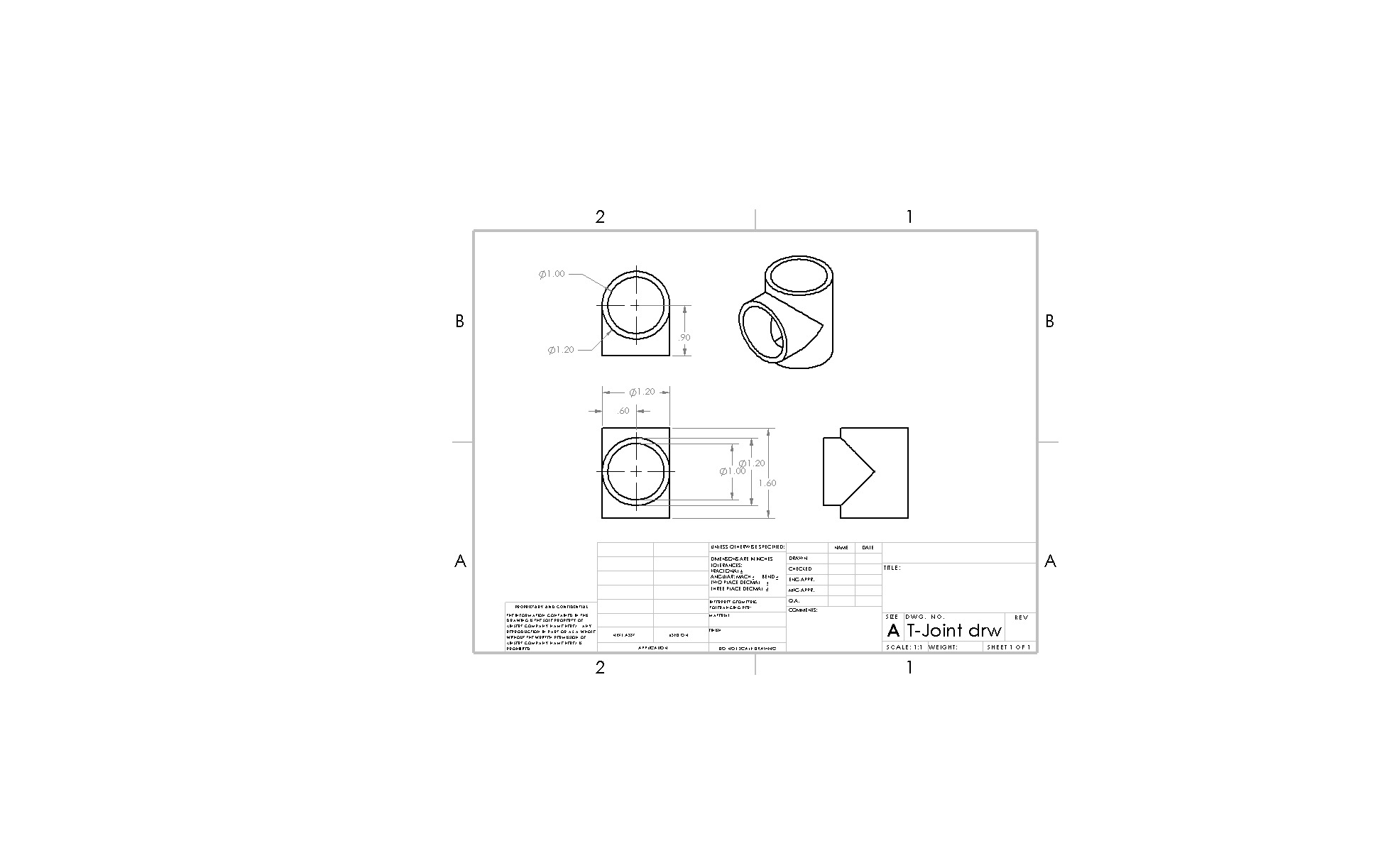
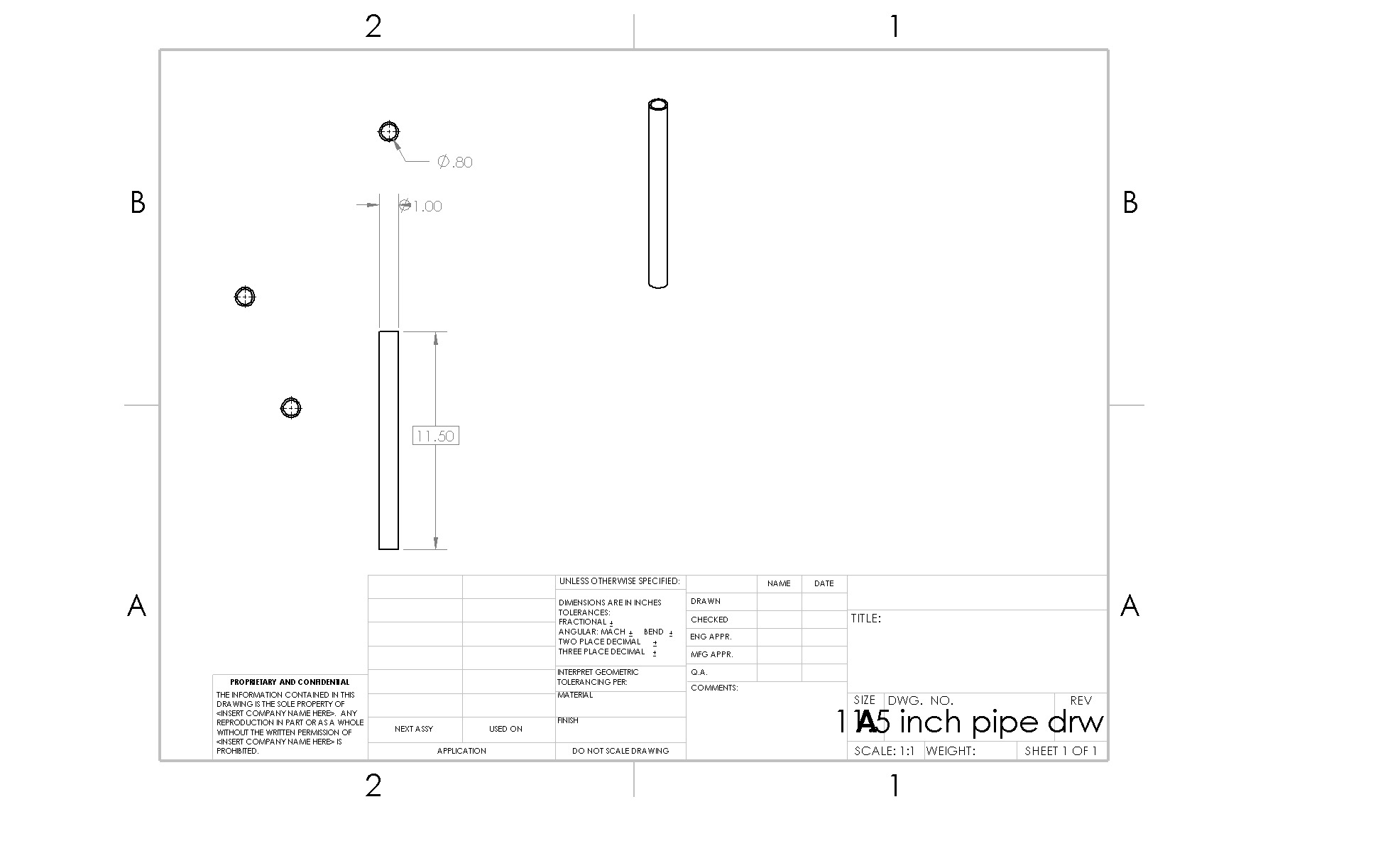
The goal for the handle in the back is for whoever is with him to be able to aid with steering or balance without directly using the front handlebar. We modeled the part in SolidWorks and did a stress analysis. The material we chose for our analysis was an Aluminum alloy. We choose this because of its strength to weight ratio making it ideal for our trike. Running a static stress simulation on the handlebar we assumed a couple things: the end of the bar connected to the frame of the bike to be rigid, the links and the t connection to be treated as a single body, and the force acting uniformly across the handle. Likewise, we did calculations for the force acting like a damper in which the reaction force would act away and upward from the trike. In calculating our force, we estimated a maximum acceleration of 5m/s^2 for a tricycle with average acceleration being between 2-3 m/s^2. Likewise, we calculated the mass of the system from the weight of the kid plus the weight of the bike; 65lbs +65lbs = 130lbs or roughly 60kg. Multiplying these two components we got a total force of 300N. We then used this force in our FEA analysis to calculate maximum stresses and deflection. We got a maximum stress of 16.3MPa and a deflection of 0.11mm at the base of the rod. Thus, our greatest concern is having a connection, whether it be welded, clamped, screwed, etc, that’ll have a higher yield strength than 16.3MPa
Engineering Analysis 3
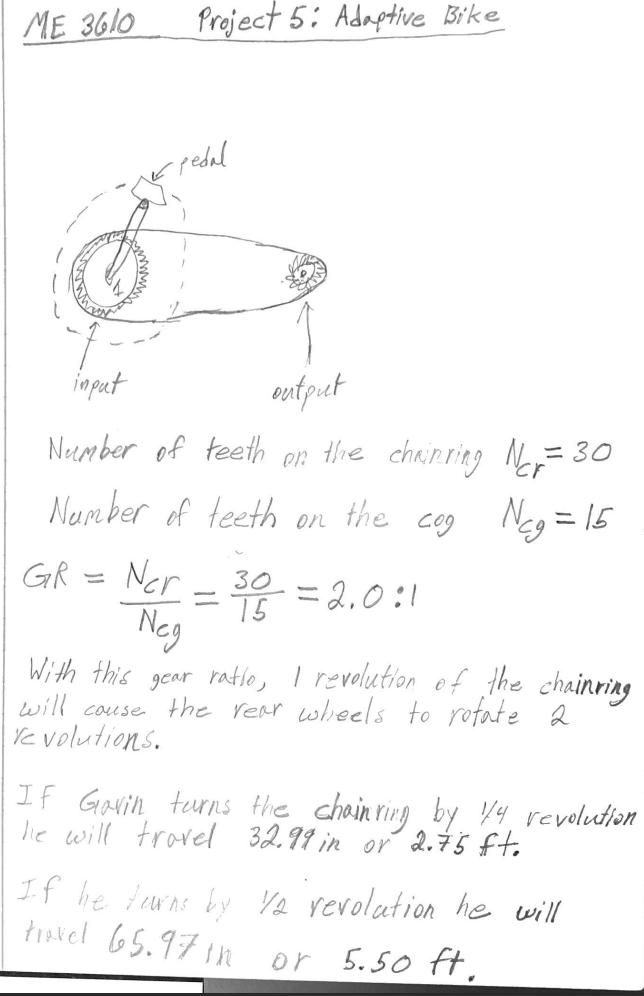
This analysis was done on the gear set of our trike. We calculated the gear ratio by dividing the number of teeth on the chainring (input) by the number of teeth on the cog (output). The chainring has 30 teeth and the cog has 15 teeth. This leads to a gear ratio of 2.0:1. We then calculated the distance that would be traveled when you turn the chainring. We found that turning the chainring ¼ revolution led to 2.75 ft and turning it ½ revolution led to 5.5 ft.