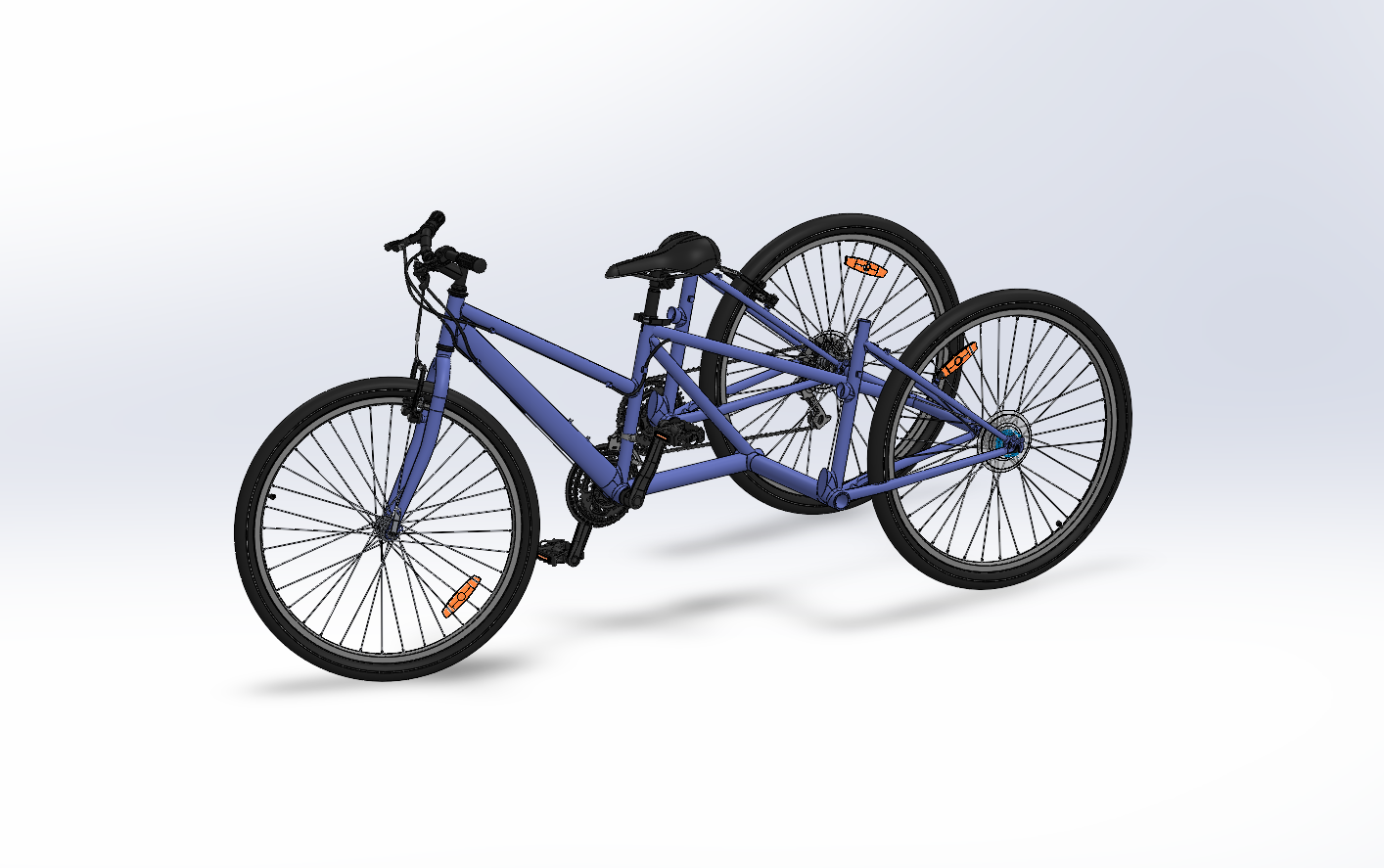
Our team is designing an adapted bike for a ten-year-old with autism. The family of the ten-year-old, Gavin, has requested that we make an adaptive bike that he could using during his PE class. The family wants the child to use the adaptive bike to get some of his energy with it also being able to fulfill his sensory needs.
Eli Norman, Ethan Sawyer, Harley Higginbotham, Joshua Washington, Uri Marinovich
Problem Statement
Design and develop an adaptive, multi-use bike that can be used both indoors and outdoors, specifically tailored to Gavin, a ten-year-old boy with autism. The bike must be self-balancing and incorporate sensory adaptations to help regulate his energy levels during PE. Given Gavin’s challenges with balance and coordination, the design should feature a secure, supportive seat to prevent falls. Additionally, the bike should have low gearing for easier pedaling and be lightweight and compact for convenient transport.
Design Specifications
Easy to pedal / low gearing
A secure/stable seat (bucket seat)
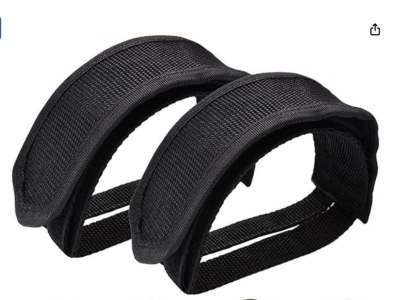
Straps to keep feet on the pedals
Self-balancing bike
Ergonomic and easy to use handlebars
Indoor and Outdoor use
Background Research
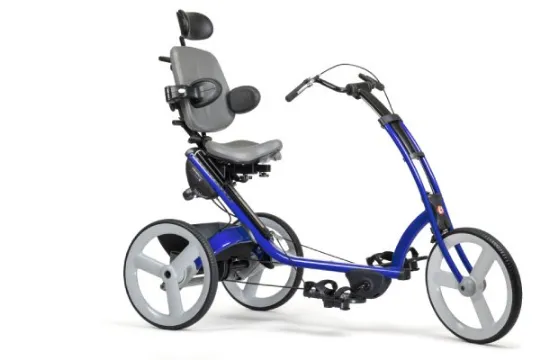
Design One is inspired by the Rifton adaptive tricycle, which meets the family’s requirements. However, like most medical equipment, it comes with a high price tag, averaging around $3,000. The Rifton features a secure, supportive seat with foot straps for added safety, and its handlebars appear to be more user-friendly.
Design Two is inspired by Mobo’s Ultimate Three-Wheeled Cruiser. It allows the child to exercise their legs without relying heavily on arm movement. The low seating position enhances safety, reducing the risk of injury in case of a fall. Additionally, the bike is easily adjustable to accommodate riders between 3’8″ and 5’2″ in height. Another advantage is its affordability, with a price of just $499.99.
Concept Design 1
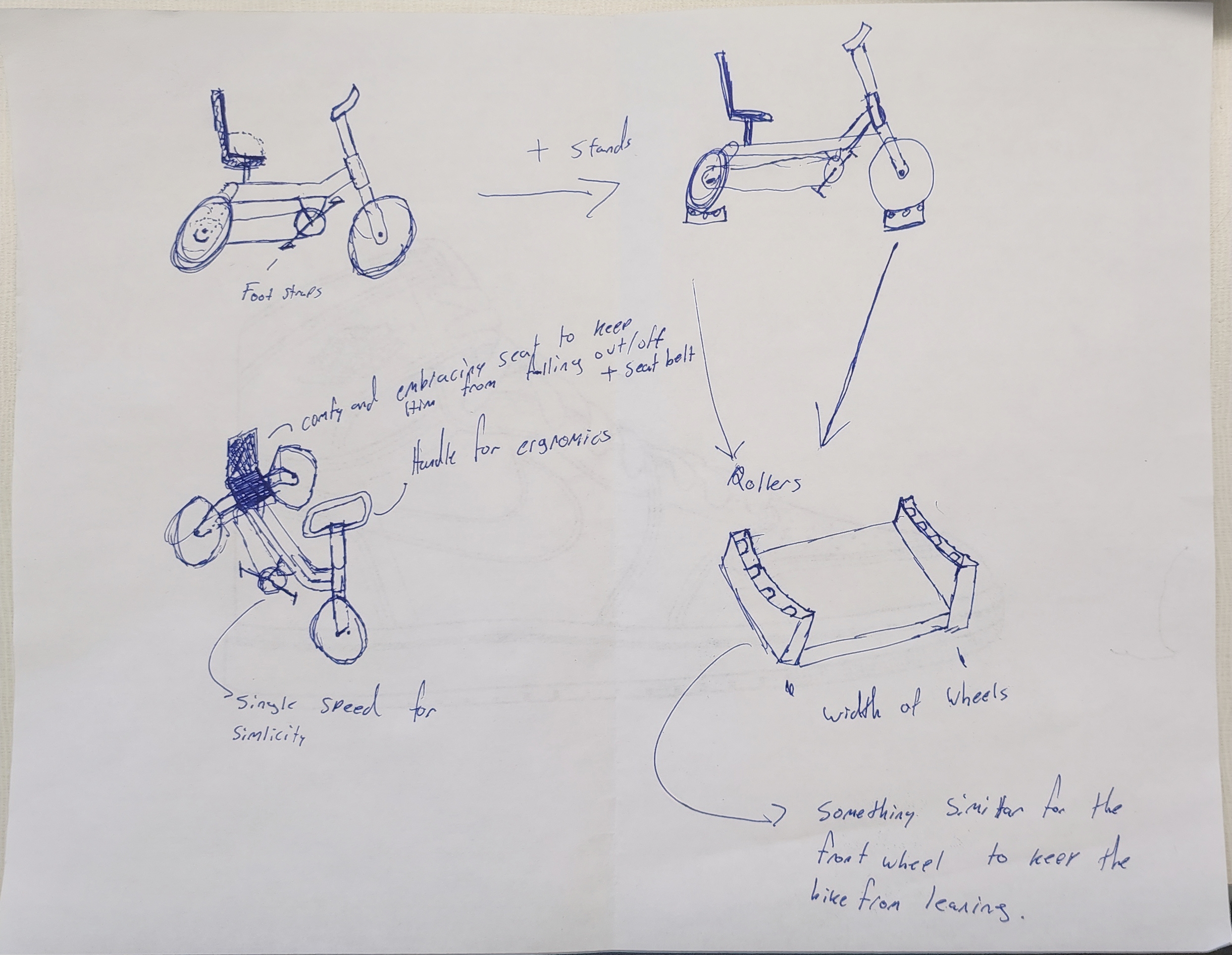
Design One is similar to the Rifton tricycle but aims to be more affordable while featuring a more encompassing seat for enhanced security and stability. Foot straps help keep the user’s feet on the pedals, preventing them from slipping off. Additionally, the design includes rollers, allowing the trike to be used indoors as a stationary option if desired.
Concept Design 2
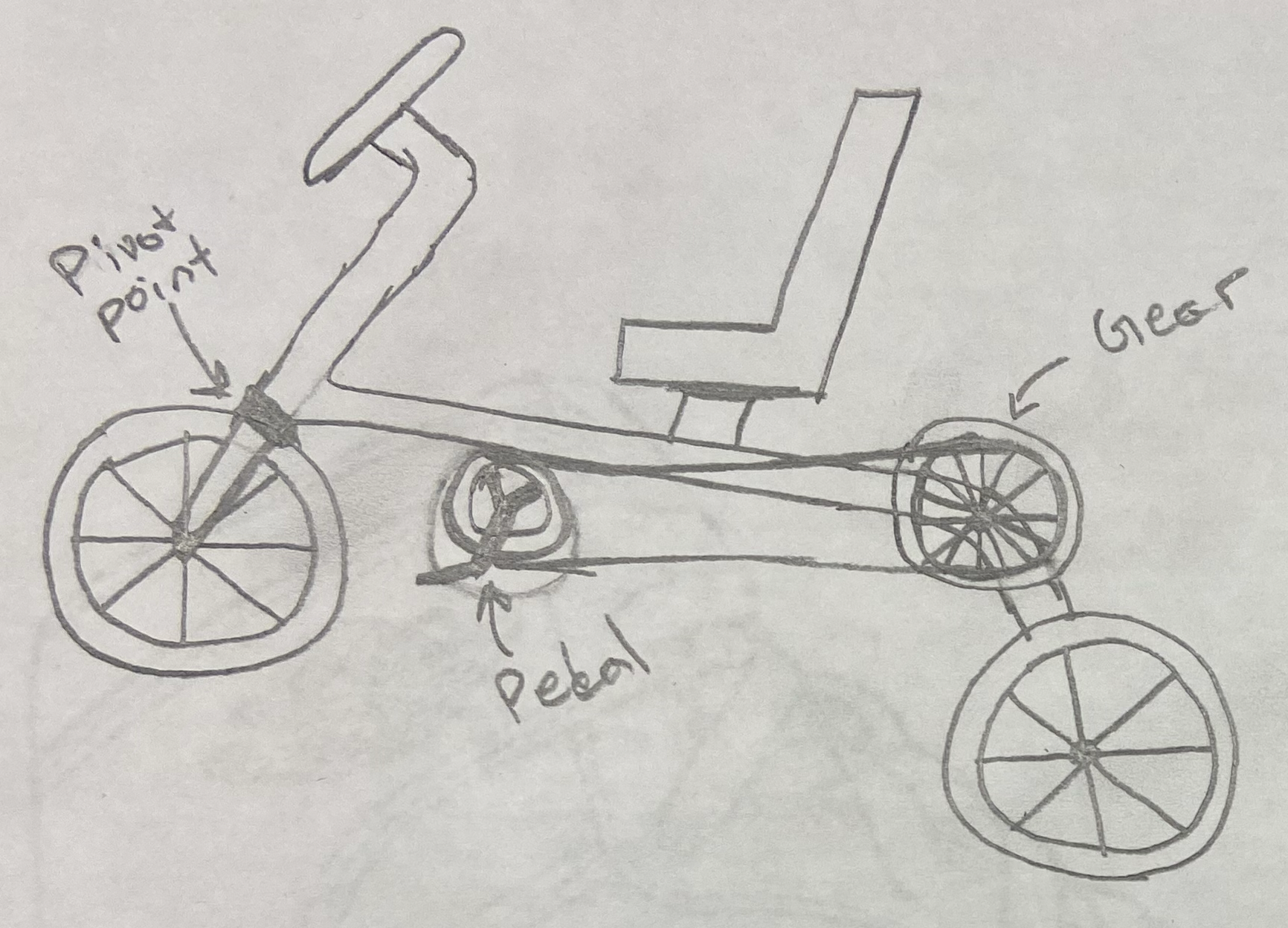
Design Two is inspired from real-world models to ensure stability and ease of use. By positioning the user to sit lower down in the bike allows for a lower center of gravity thus providing a sturdier and well-balanced trike. A three-point harness enhances safety by providing increased security as compared to a standard lap harness. To accommodate Gavin as he grows, the bike features a telescopic frame that will be able to extend out as he ages. Additionally, this design includes two handle steering for each rear wheel allowing for increased maneuverability.
Concept Design 3
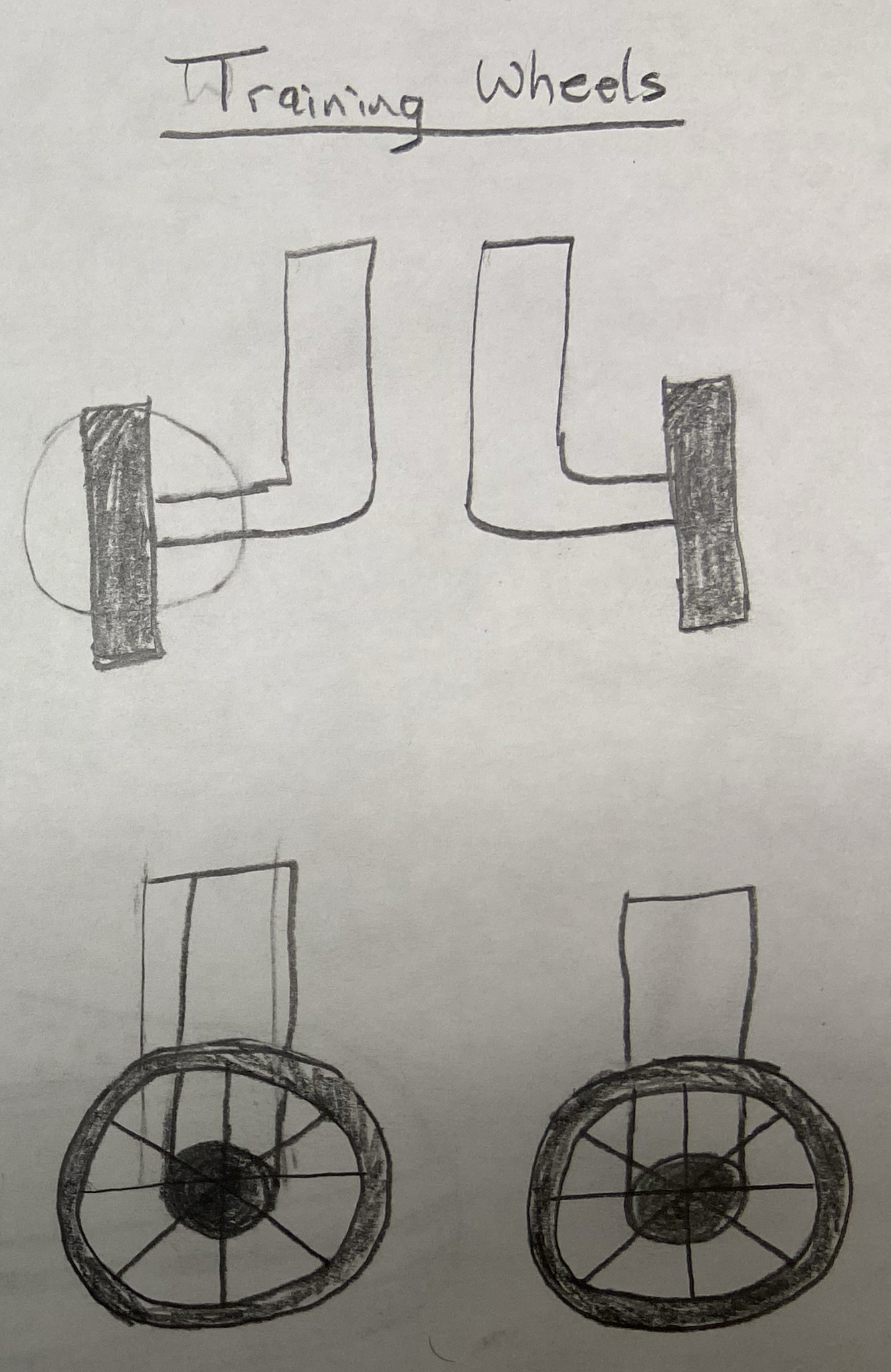
Design Three combines elements of a tricycle and a standard bicycle, featuring one wheel in the front, one in the back, and two removable training wheels. The smaller diameter wheels position the rider lower to the ground, enhancing stability. A bucket seat with a three-point harness ensures maximum safety for the user. Additionally, the removable training wheels allow for future adaptability as the rider gains confidence and balance.
Selected Concept Design
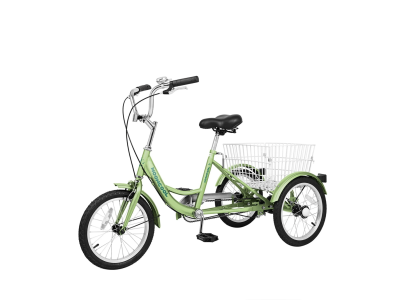
For this design, we need a large seat that will be capable of keeping him supporting him and keeping him on the seat, pedals with straps to keep his feet on the pedals, a low enough gear to ensure he can pedal for an extended period of time, a handle on the back with a break so a guardian will be able to guide and help if necessary, and finally handlebars that are large enough to be used without too fine of motor functions.
Decision Matrix
Overview of Selected Design
For this design, we need a large seat that will be capable of keeping him supporting him and keeping him on the seat, pedals with straps to keep his feet on the pedals, a low enough gear to ensure he can pedal for an extended period of time, a handle on the back with a break so a guardian will be able to guide and help if necessary, and finally handlebars that are large enough to be used without too fine of motor functions.
Describe Design Details
In terms of the pedals, the family has asked for a strap to go over his foot and hold it in place. We also have a set of pedals that have a cage that your foot can slide into that would allow him a little more freedom to get out himself while not taking away any of the security while pedaling forward. We are planning on presenting both ideas and after testing them we will fully secure the preferred option.
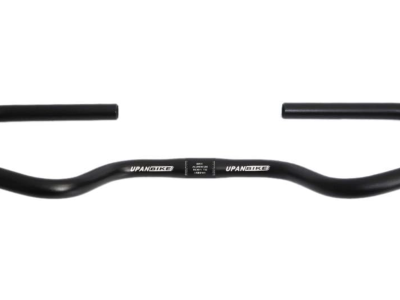
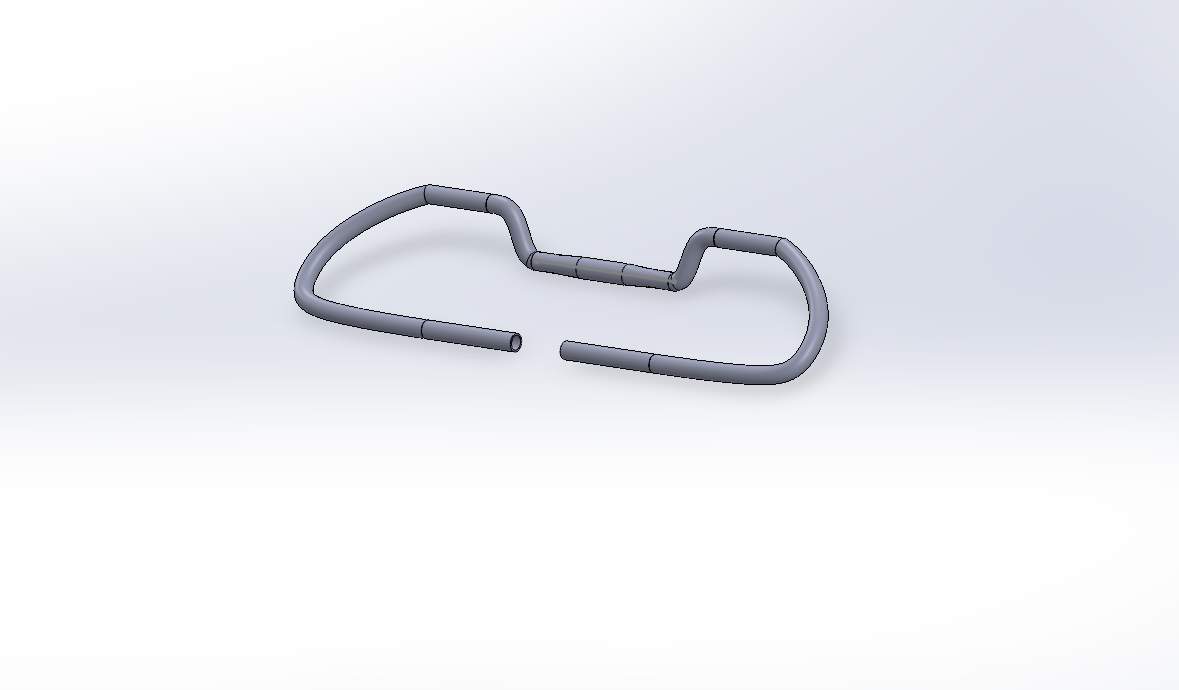
For the handlebars, we are going to get a handlebar that makes an oval shape that would allow him to steer using a neutral or pronated grip. This also allows him to rest on the handlebars by grabbing the further part of the handle if desired. This gives him to most security as well as comfortability. Furthering his comfortability on the bike, we are adding an iPad mount onto the handlebars so he will be able to communicate while he is sitting on his bike rather than having to get off the bike. This is due to him being non-verbal and only communicating through his IPad.
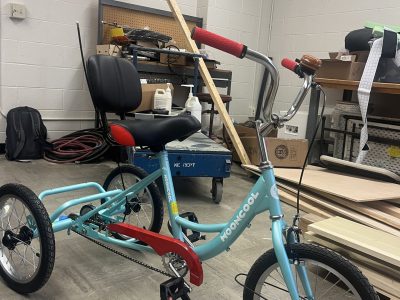
For the rear push handle, we are attaching a sturdy bar with a handle allowing the guardian to help push and help get him started or push/pull to guide him a little in either direction. Due to too many complications in design, it will not be linked with the front wheel but we will link a brake to the handle that actuates the rear brakes. This will allow the guardian to stop him or slow him down incase he gets in any trouble.
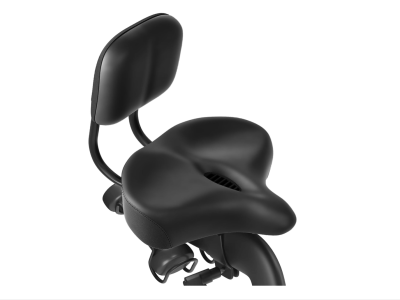
For the seat, we want to do a bucket seat because it offers the most support but that will not allow him to pedal. Due to this, we are going to a wide saddle seat with a backrest to help support him while still allowing him to pedal.
Engineering Analysis 1
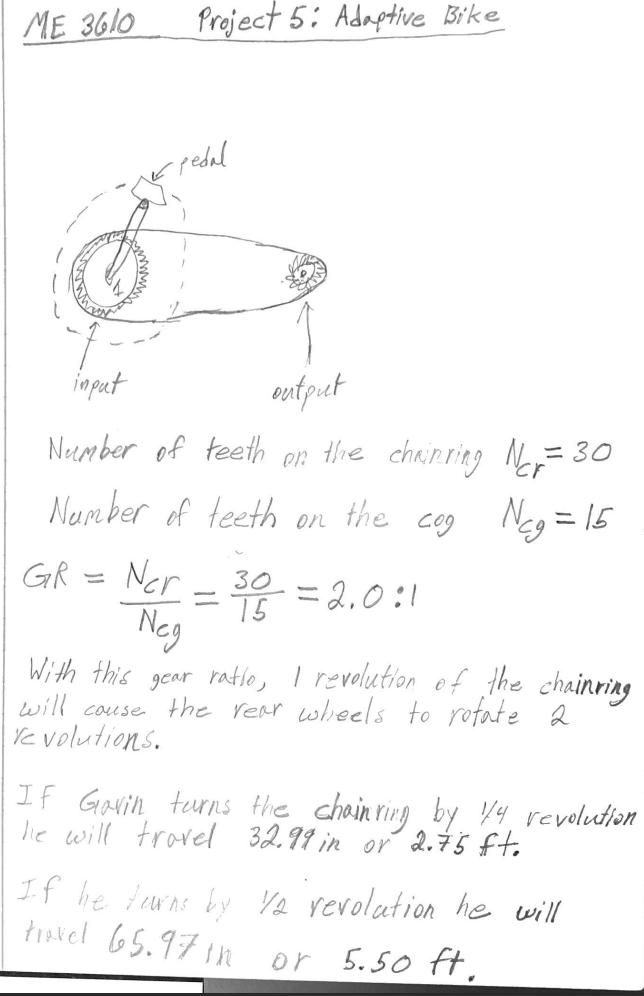
This analysis was done on the gear set of our trike. We calculated the gear ratio by dividing the number of teeth on the chainring (input) by the number of teeth on the cog (output). The chainring has 30 teeth and the cog has 15 teeth. This leads to a gear ratio of 2.0:1. We then calculated the distance that would be traveled when you turn the chainring. We found that turning the chainring ¼ revolution led to 2.75 ft and turning it ½ revolution led to 5.5 ft.
Engineering Analysis 2
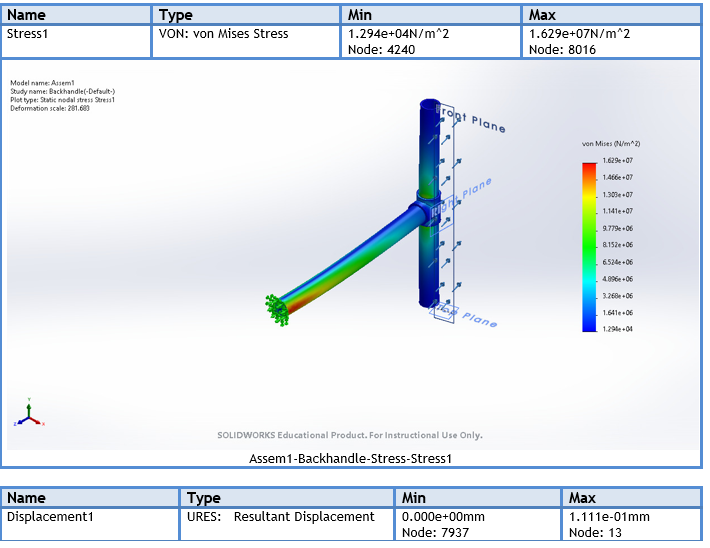
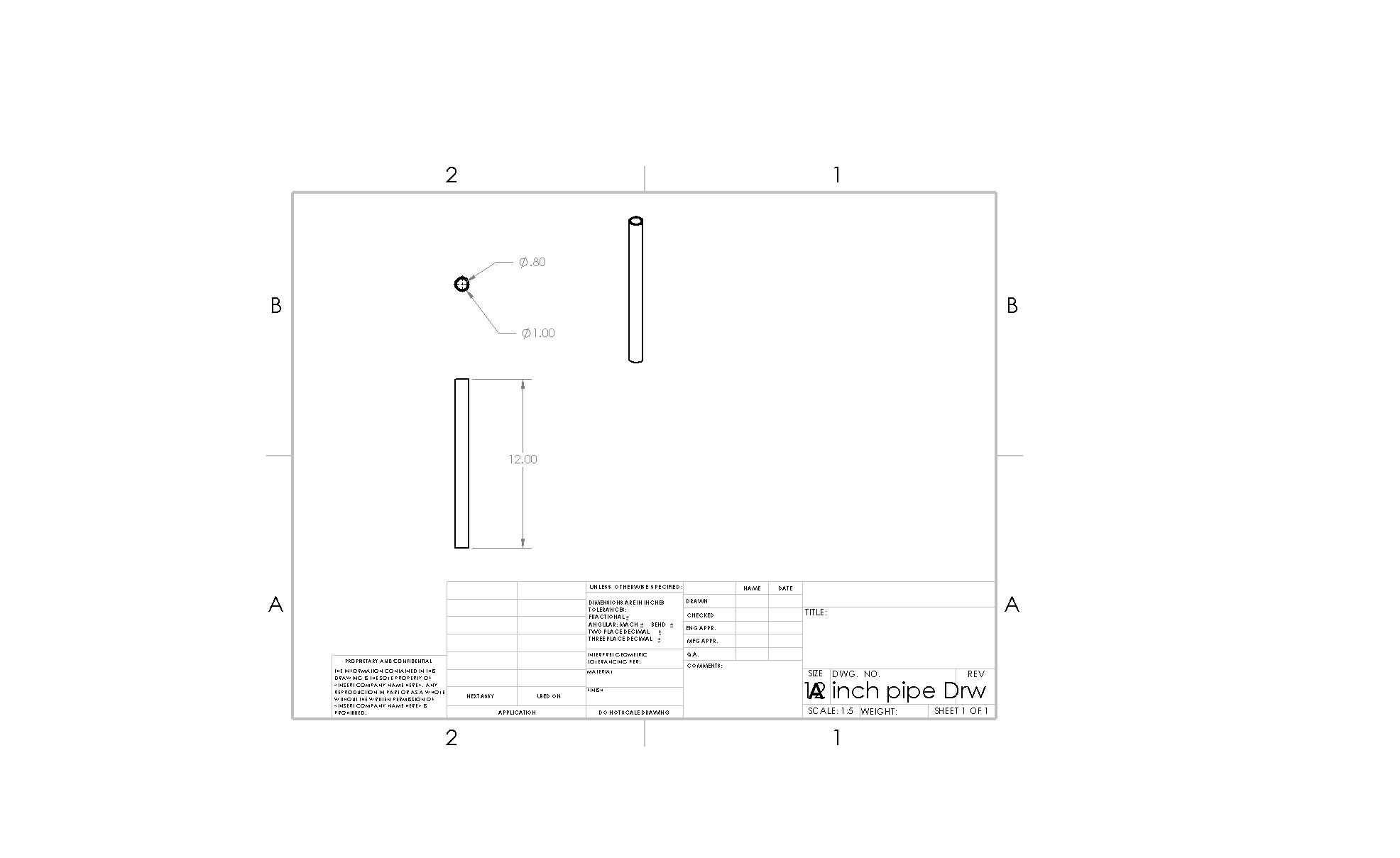
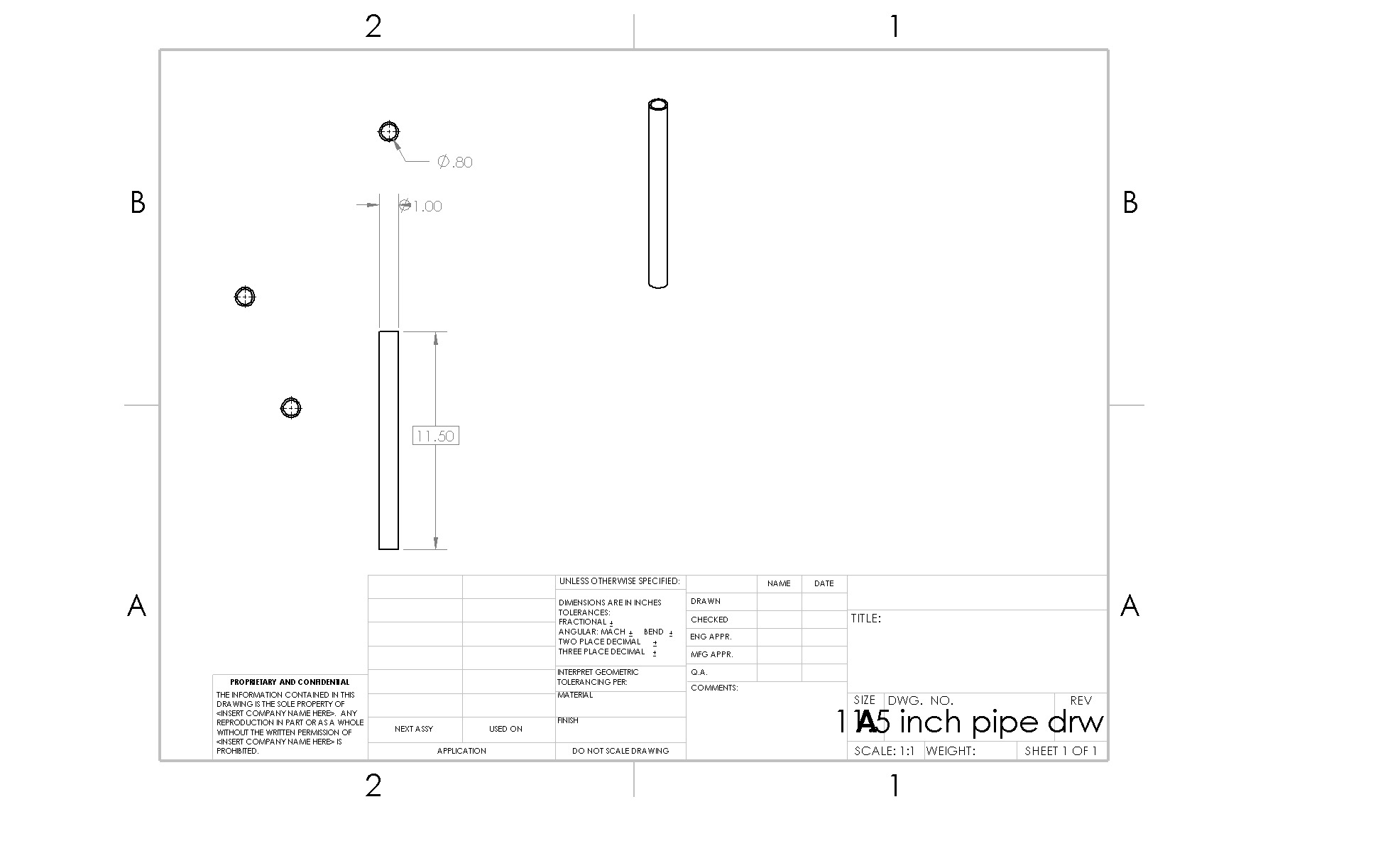
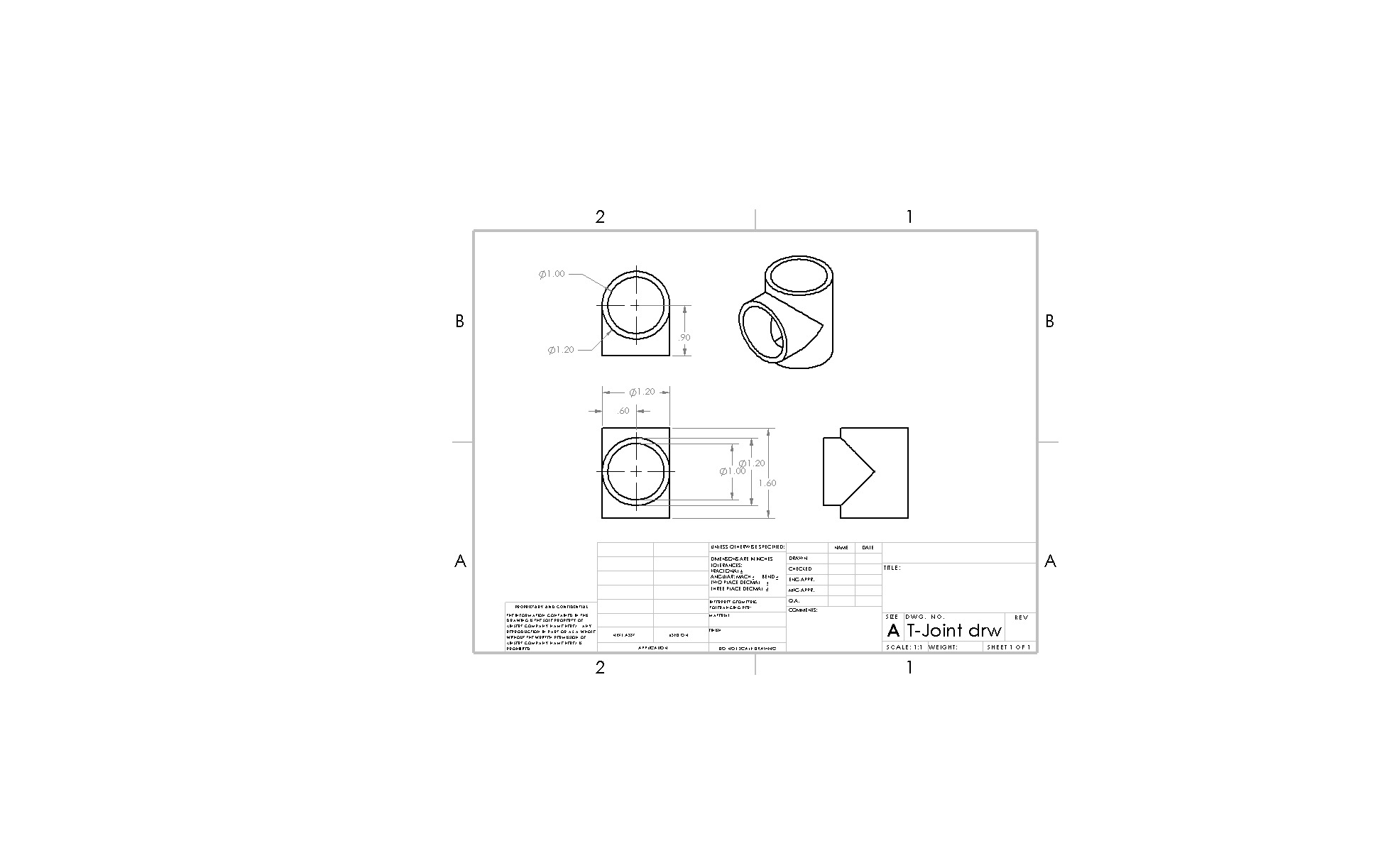
The goal for the handle in the back is for whoever is with him to be able to aid with steering or balance without directly using the front handlebar. We modeled the part in SolidWorks and did a stress analysis. The material we chose for our analysis was an Aluminum alloy. We choose this because of its strength to weight ratio making it ideal for our trike. Running a static stress simulation on the handlebar we assumed a couple things: the end of the bar connected to the frame of the bike to be rigid, the links and the t connection to be treated as a single body, and the force acting uniformly across the handle. Likewise, we did calculations for the force acting like a damper in which the reaction force would act away and upward from the trike. In calculating our force, we estimated a maximum acceleration of 5m/s^2 for a tricycle with average acceleration being between 2-3 m/s^2. Likewise, we calculated the mass of the system from the weight of the kid plus the weight of the bike; 65lbs +65lbs = 130lbs or roughly 60kg. Multiplying these two components we got a total force of 300N. We then used this force in our FEA analysis to calculate maximum stresses and deflection. We got a maximum stress of 16.3MPa and a deflection of 0.11mm at the base of the rod. Thus, our greatest concern is having a connection, whether it be welded, clamped, screwed, etc, that’ll have a higher yield strength than 16.3MPa
Engineering Analysis 3
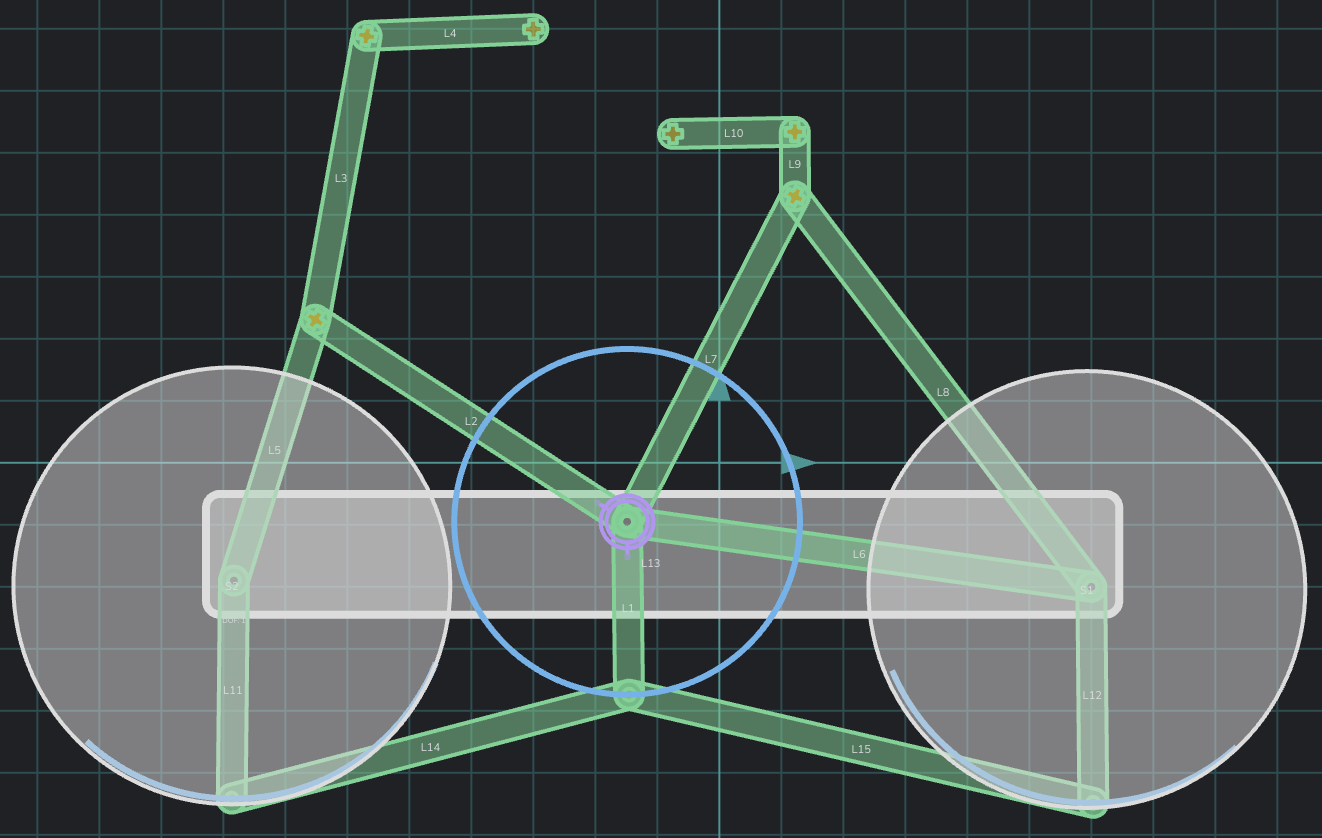
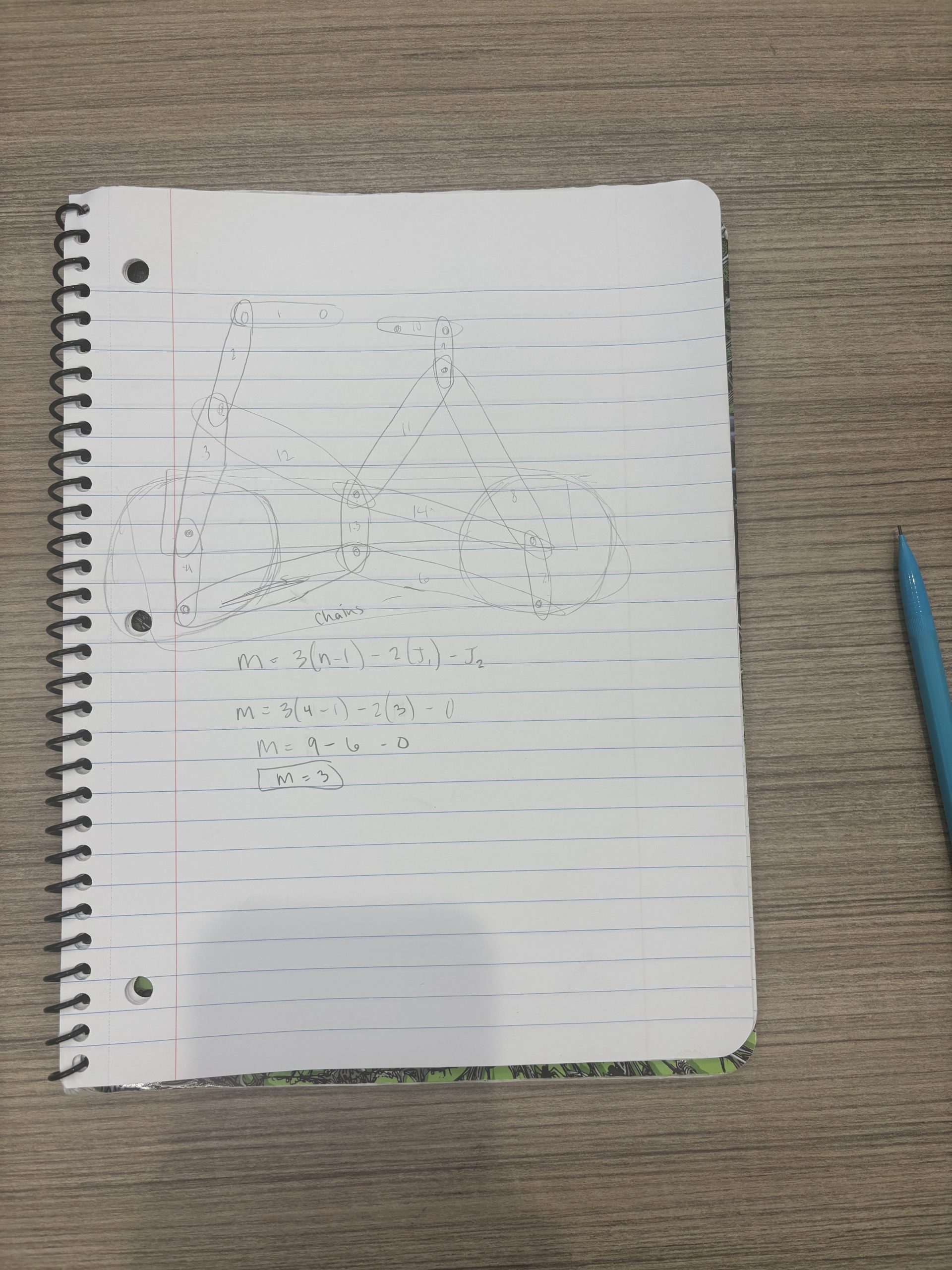
When doing the analysis for the DOF on the bike frame we first designed it in motion gen. This gave us a DOF of 1 due to the limitations of motion gen but after drawing it out by hand and finding that it had 4 bodies and 3 links we found a DOF of 3. This is to the to rotation of the times as well as the turning capabilities of the wheels. This shows the limitations of motion gen being unable to design a chain link.
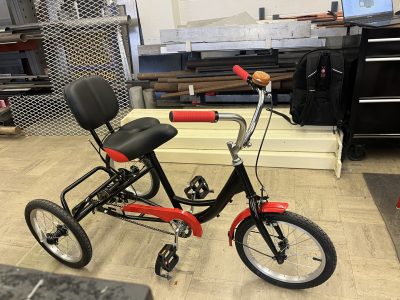
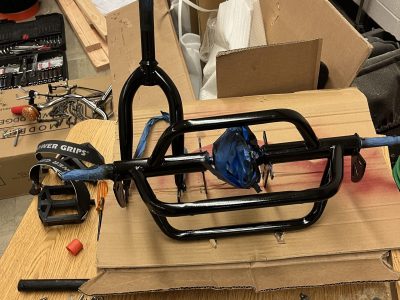
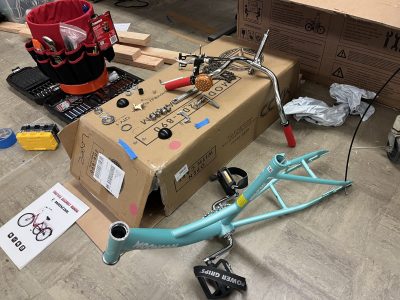
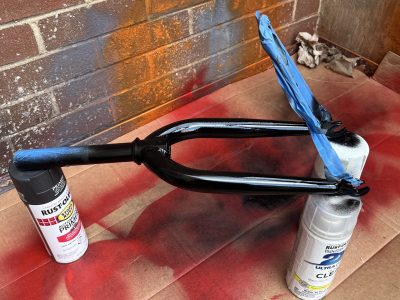
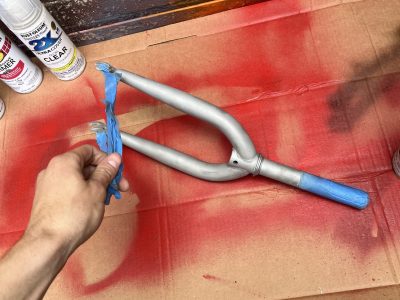
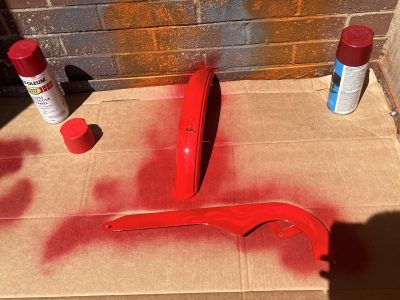
We started by assembling the bike. This involved fitting the brakes, bike chain, gears and frame together. After this, we changed the handle bar but the new bar was too low so we reverted back to the original handlebars. We then welded the backhandle onto the bike frame. We replaced the pedals and seats. Soon after we ran the brake cables through the front and back and attached the brakes. Lastly, we sanded the original paint and colored the bike black and red (since red is his favorite color).
Testing Results
Our main concern for failure was in the push bar due to the welds. After our engineering analysis, we were confident in our design but after construction we had to test again. As shown in the video above, the handle held up as intended and was able to hold with the strain of pushing the bike!
Completed Design Photos
Instructions for Safe Use
Make sure the child is seated securely on the bike before riding
Use the straps on the pedals to ensure the child’s feet do not slip off the pedals while riding
Make sure the child knows how to use the front brakes before riding
Use handle on the back to aid with stability and braking
Project Summary/Reflection
This project has been a great experience for all involved! We all came together and made a couple of designs to meet what the family could potentially want. With these designs, we made a weighted decision matrix to choose a final design as well as asking the family and we landed on a trike. With this design, we had to change a couple of parts to make it more accessible. We all came together and found parts to match these requirements giving him more stability and confidence while on the bike. When the construction process started we had a few problems with the handlebars not clearing the leg room needed due to them being shorter than the stock handlebars and the pedal cages had threads that had a wider diameter than the threads of the old pedals. In the end, we found new pedal straps that also gave a better look to the bike that matched what the family wanted as well as reinstalling the original handlebars to ensure he could pedal. Due to lack of supply, we also received a different color bike than we were hoping for but we sandblasted and repainted the whole thing to get a finished product that took the family by surprise! Looking back now, I believe this project came together very well and we are all proud to have made this bike that will hopefully serve as a great tool to get out some energy in a safe way!