In this project we will be helping a 6-year-old boy with Down-Syndrom and hemiplegic cerebral palsy. Because he is tall and has erratic movement behaviors, his family has asked us to build a highchair that will allow him to sit at a table but will prevent him from tipping himself over and hurting himself.
The boy we are helping has Down Syndrome and hemiplegic cerebral palsy and is tall for his age, and because of another condition which prevents him from speaking, he expresses excitement by rocking heavily back and forth. While he cannot sit in a typical dining chair, because of his size and frequent accentuated movements, he cannot safely sit in a highchair without his parents bracing it either. At home he sits in a highchair, but his parents must constantly support it with their legs so that he does not tip. Additionally, his need for special seating keeps the family from being able to do things as simple as eating out.
Design Specifications
Size appropriate seat.
While still needing to provide the restrictions of a highchair, we need to build a seat that is big enough for a six-year-old child.
Extreme stability.
Because this child is so large and rocks about wildly, it is critical that the chair is very stable and will not allow him to tip.
Adaptability.
While the parents hope to the child move past some of his current limitations, it is likely that he will need this chair for at least the next three years. Because of this we want to make sure the highchair can adapt and be useful to him for as long as possible.
Adjustability & Portability.
Because we intend for this highchair to allow the family more flexibility to take trips, it needs to fold into a compact form for transportation and also adjust to different high tables.
Background Research
We searched the internet for products designed to hold larger children securely while seated. We used the dimensions shared by those products to inform the footprint and seat height of our designs. We were taken aback by how expensive the products were, with some exceeding $5,000.
We are also actively communicating with the child’s physical therapist to make sure that our products are completely safe for his needs.
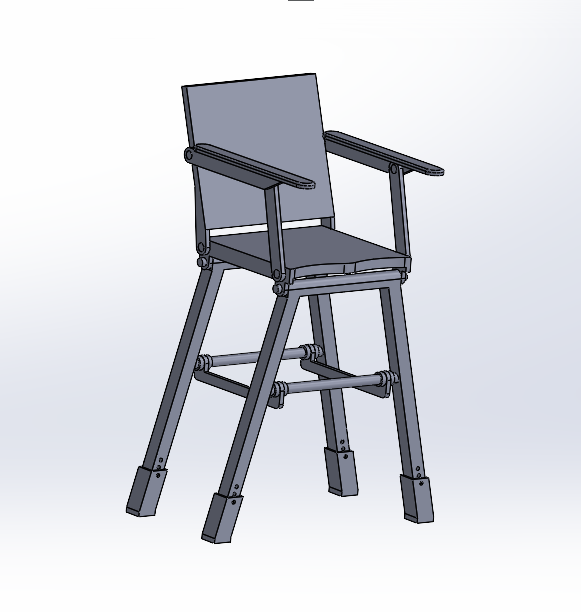
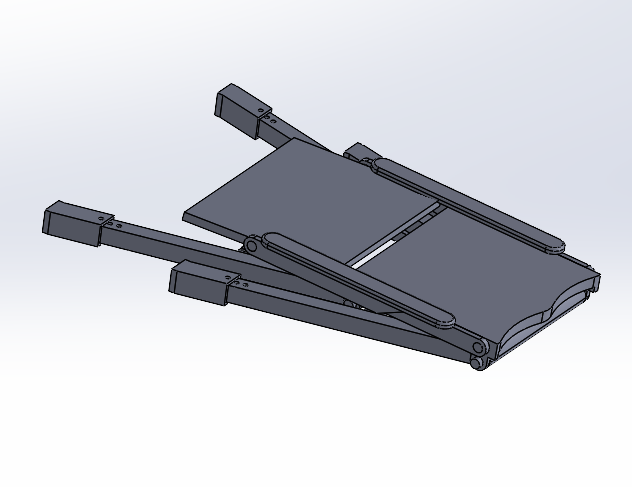
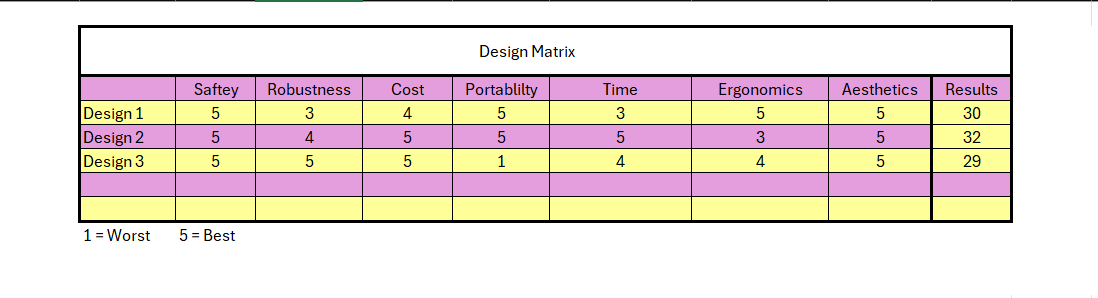
This design incorporates a wide base for anti-tip support, as well as an adjustment in each of the feet to allow increasing or decreasing the height of the chair. The angle in the legs and feet adjusters also ensures that the base will widen proportionally as the chair is raised. Most of the components is this model would be made out of wood and a small amount from aluminum to produce a lightweight assembly. Finally, this design makes use of several linkages to fold into a compact form for easy transportation.
Concept Design 2
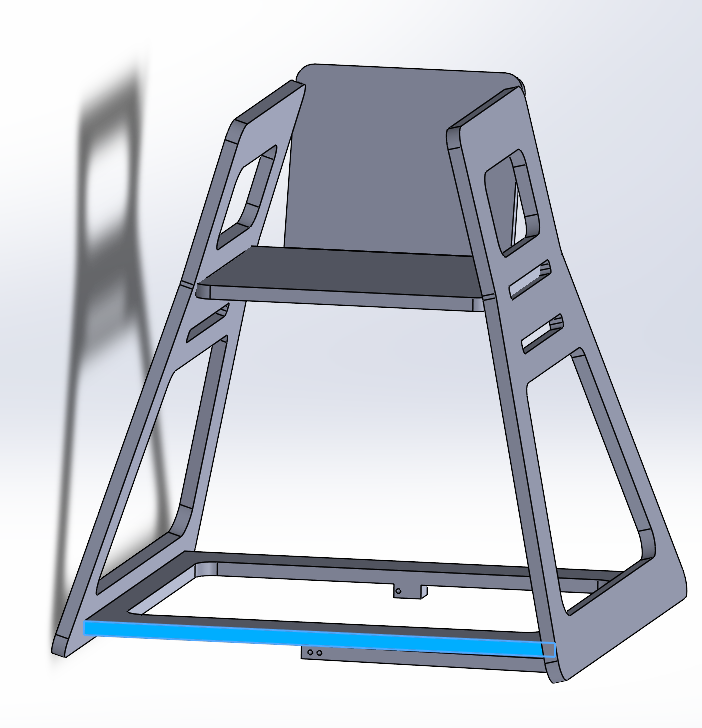
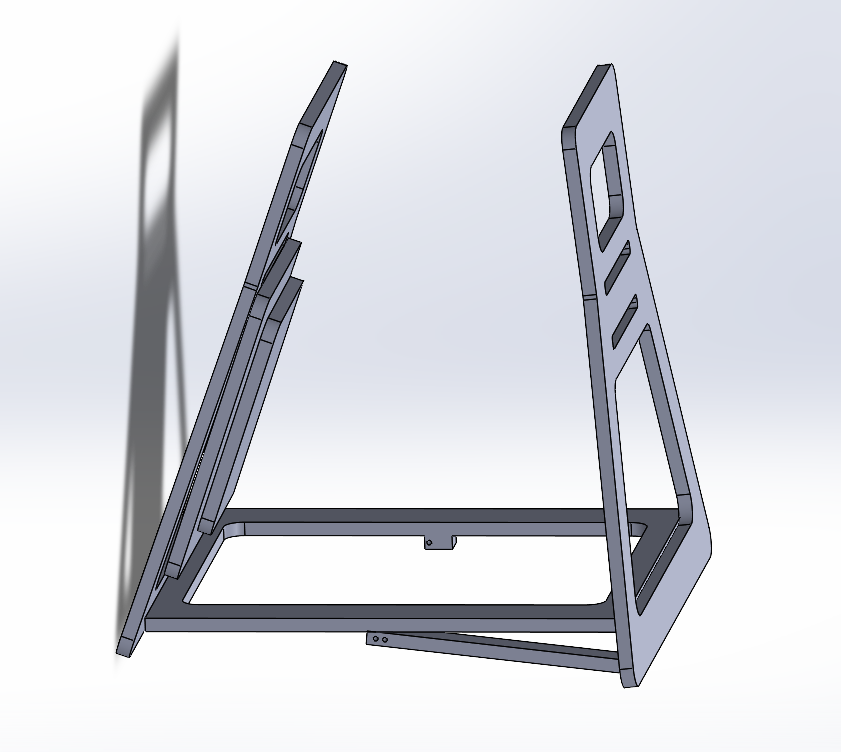
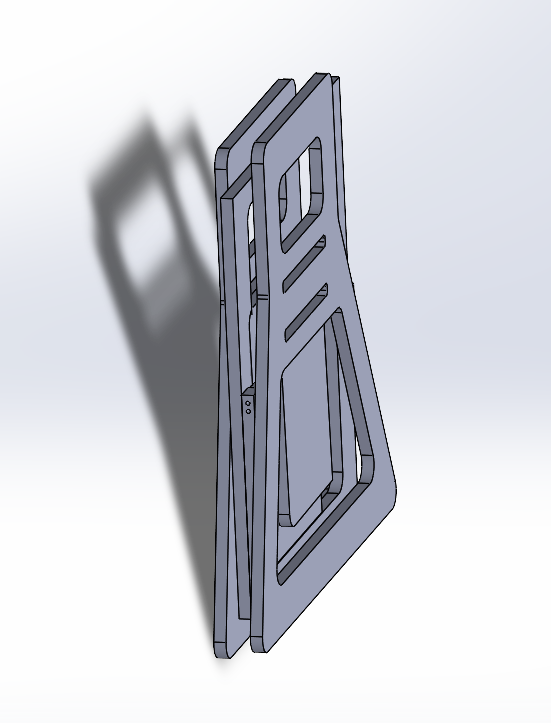
Concept design 2 prioritizes portability, cost, and manufacturability. All parts can be cut from 2 sheets of plywood via CNC with minimal post-processing required. When folded out, it features a wide base modeled after the footprint of the Rifton HiLo chair. When folded, it makes a shape nearly 30″ square by less than 3.5″ thick. There is an option for the seat to be lowered once the child gets older, but will probably require a separate seat-and-back combination that would need to be installed by someone with experience with a drill.
Concept Design 3
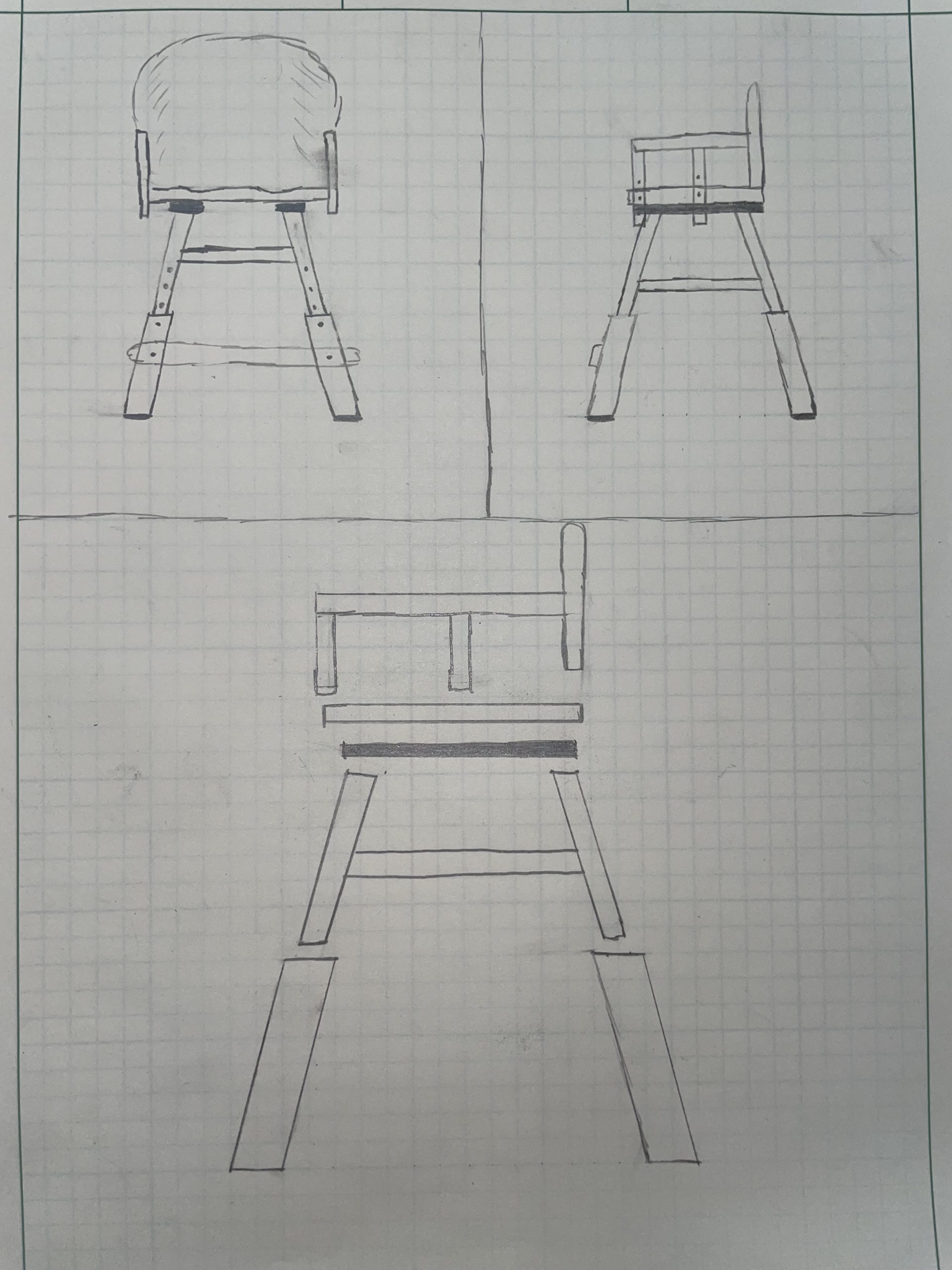
Our team’s third design concept is a simpler and more streamlined design compared to our previous concepts. It incorporates a wide base and rubber dampers that allows the child to safely sway back and forth without the chair tipping over. The chair also features adjustable legs, allowing it to grow with the child as they get older, as well as adjustable arms that allow the chair to fit comfortably under a standard dining table. These features allow the child to sit at the table with the rest of the family, helping them feel included rather than isolated in a traditional highchair with its own separate table.