Our project is to create and adapt switches for toys that cater to and entertain a variety of children with special needs.
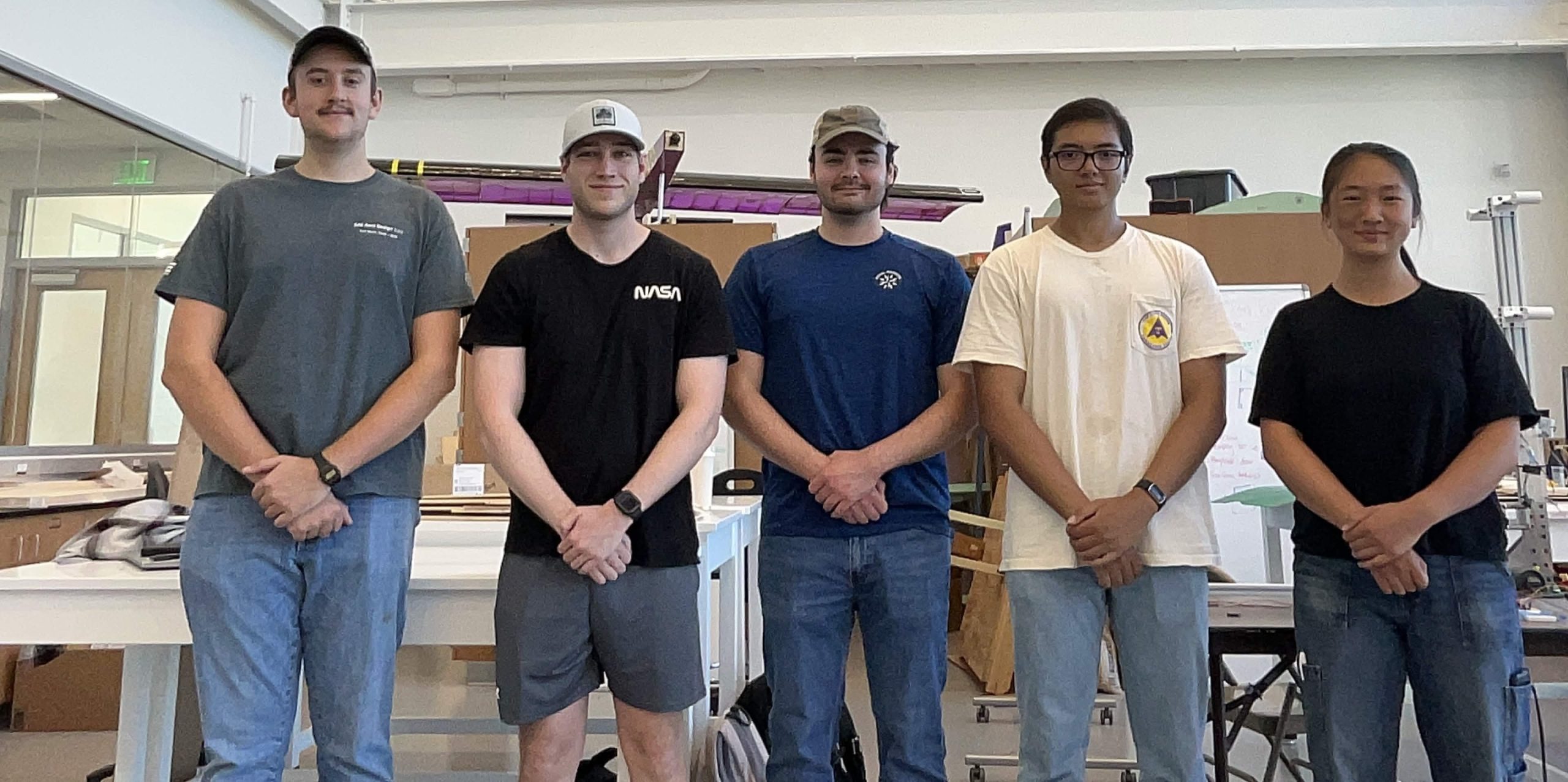
Team Members: Connor McGlothlin, Timothy Hathcock, Connor Stanford, Jon Vazquez, and Sydney Chan
Problem Statement
Our contact works with children with a variety of needs including limited vision, mobility, and strength. She mentioned that a wider variety of switch-adapted toys would be more entertaining and engaging for the children. Currently, they only have a few switch-adapted toys and are beginning to find them repetitive and uninteresting. To develop toys to fulfill varying needs, our project aims to create fun, accessible switches for toys that cater to the children’s needs. The scope of our project includes three toys. Several toys were specifically requested by our contact to be adapted. We selected two existing toys to adapt and will design one custom-made toy. The toys we selected to adapt will have a switch designs suitable for all mobility stages. The custom-made toy design for this project will consist of a large fidget board that includes many toys for all varieties of the children’s needs. These include lights, sounds, and movements for low visibility, easy to move toys and switches for weaker strength, and gross and fine motor toys.
Design Specifications
Our contact requested for some of the toys to play music or make noise, so we made sure to specify in our design that the toys’ decibel levels do not exceed 95db. This parameter can be verified with a decibel meter. Our contact also sent us a list of 8-10 choices of toys she wanted us to adapt. She specifically mentioned that the children prefer bright green and yellow, and she requested that the toys include movement, vibration, music/sounds, and lights. These sensory aspects of the toys will entertain children with limited vision, strength, and mobility.
Background Research
As stated previously, our group was given a selection of 8-10 pre-existing toys to switch-adapt, of which we chose two and additionally decided upon a custom piece to fabricate as well. Given the relative simplicity of the process, not much research was required for the selected toys. Our challenge lies in making the Air Toobz and the Pop-n-Swirl engaging and accessible for the children – something more interesting than just a simple button. Thus, most research pertained to the switch-adaption process and to the actual function of the toys themselves.
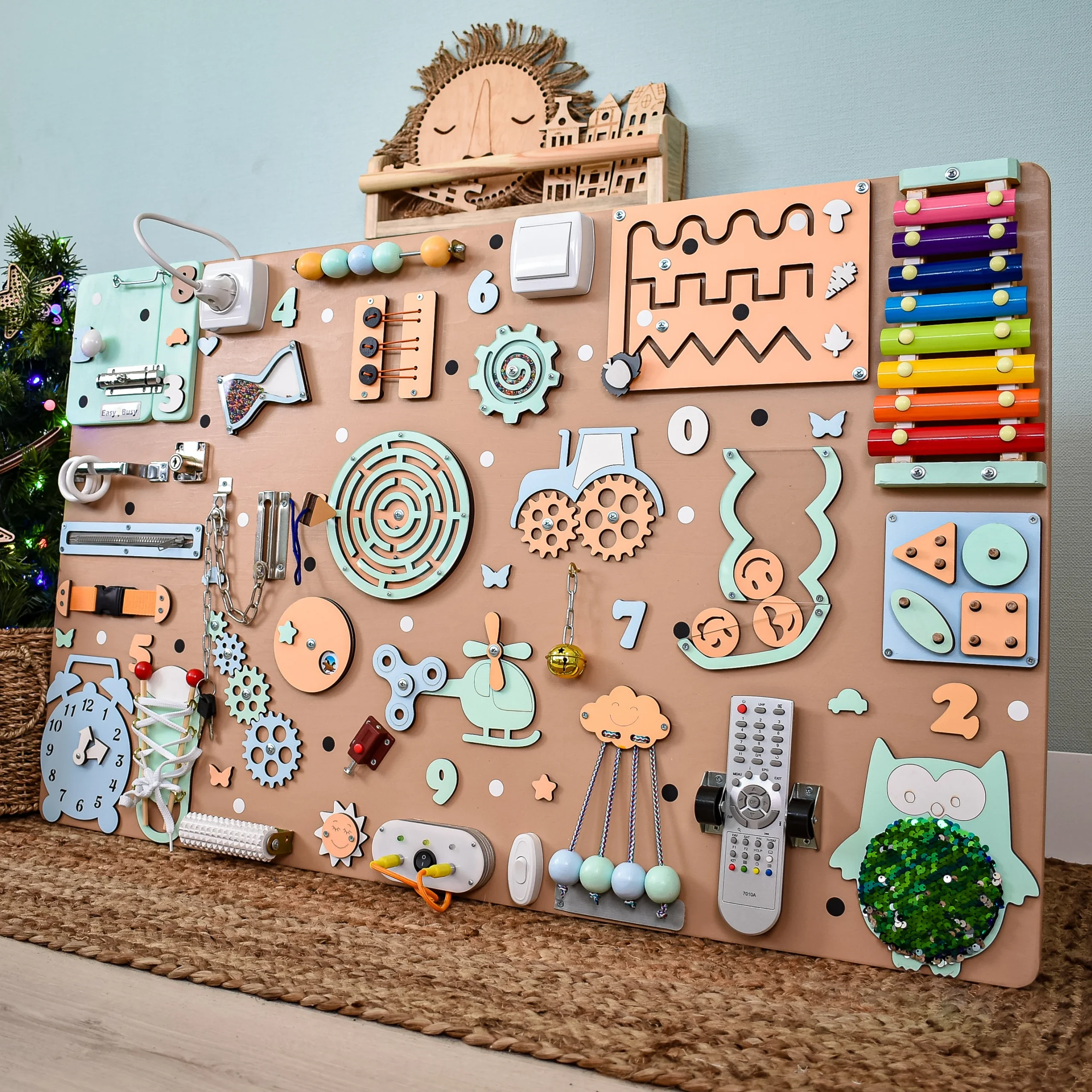
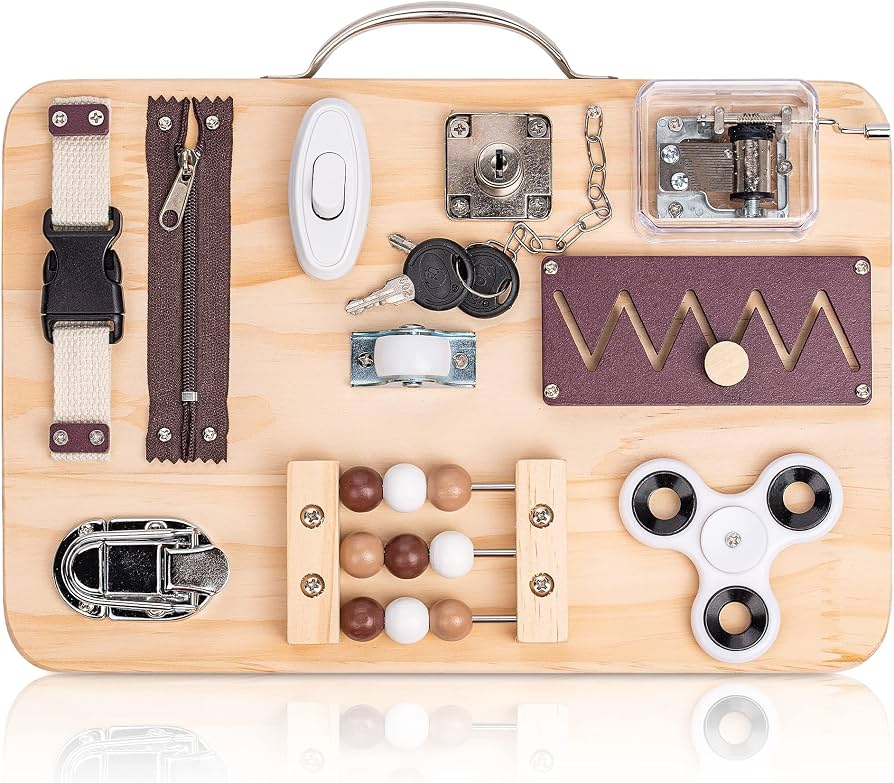
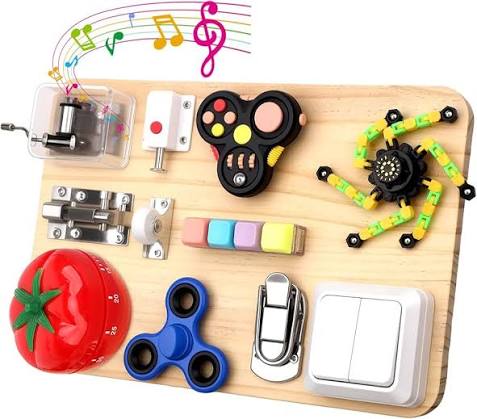
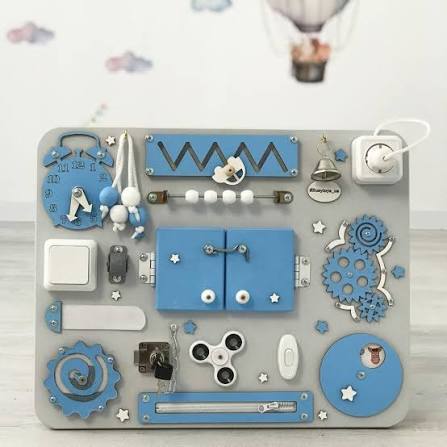
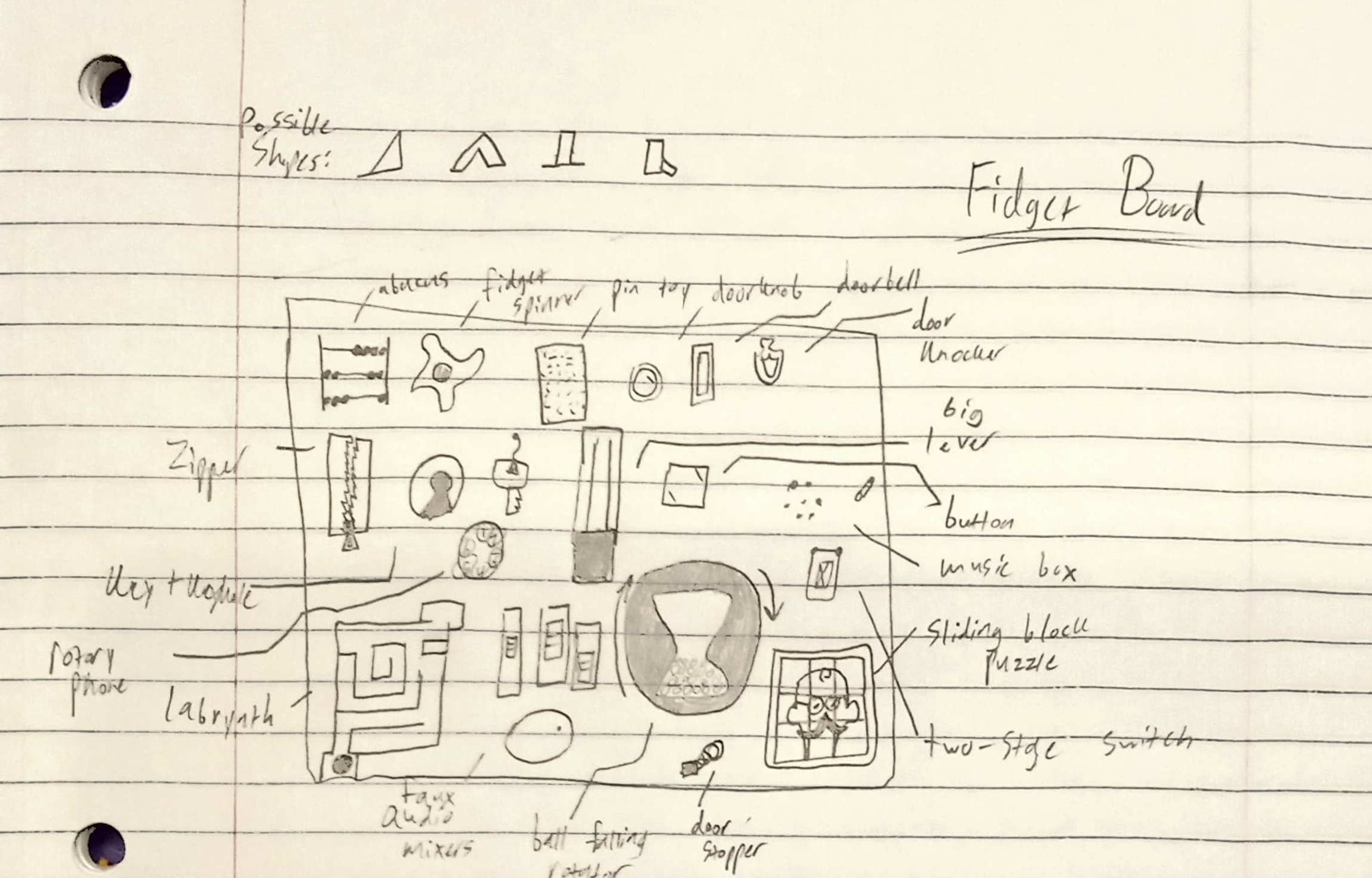
Our custom piece – the fidget board – on the other hand, required extensive research, leading to a multitude of possibilities of content configurations that can be included in the system. As of now, we know we want a mix of fine and gross motor skills, to ensure relevancy for any child who wishes to engage with it, some images that piqued our inspiration pictured here.
Concept Design 1
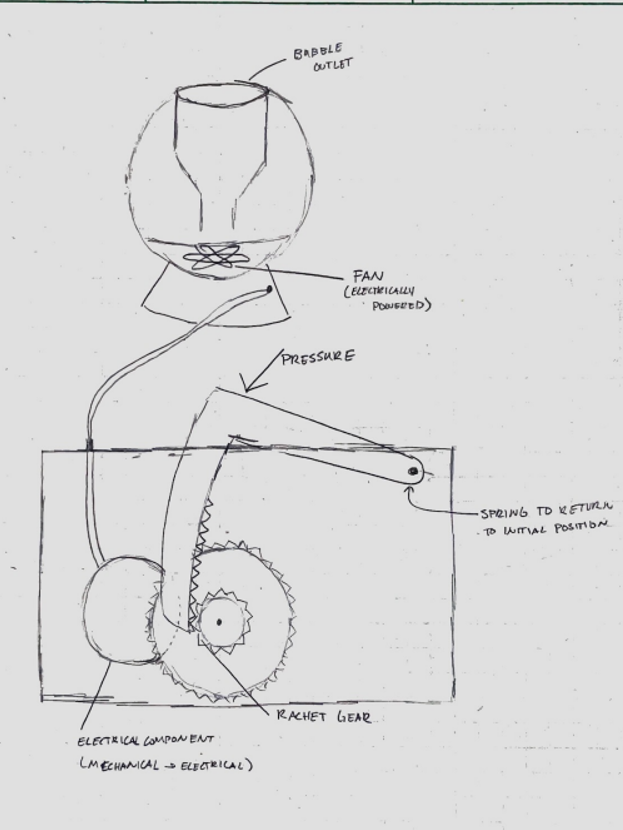
Variable Bubble Speed Toy: This is a pre-existing toy, requested by our contact, that shoots bubbles out of the top and scatters small balls inside the globe. All movement is activated by an electric fan at the bottom of the toy. Our concept for the adapted switch will be a wire connected to a dynamo-like switch that will increase that fan speed increased button pressing speed. For children that cannot press the button easily, there will be a wired capacitive switch that can activate the toy as well.
Concept Design 2
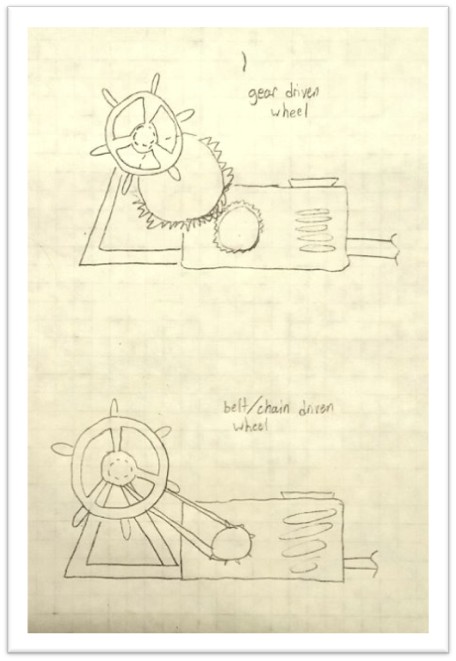
Air Toobz Evo Ball Cannon: This pre-existing toy was requested by our contact to adapt. The toy is composed of a tube with balls that shoot out due to air pressure. The air pressure is controlled by a dial. To adapt this dial to make it more entertaining and accessible, we will replace the small dial with a large steering wheel. For children with limited mobility, there will be an adapted switch available to activate the toy.
Concept Design 3
Fidget Board: This custom-made toy is based off of a large variety of existing fidget boards. There are several configurations possible for our design. The most favorable design will have two boards, hinged at the top. Each board will have estimated dimensions of 4ftx3ft. One side of the toy will include a collection of gross motor toys; the other side will consist of fine motor toys. There is also a possible interior design between the boards to include glow in the dark components and curtains at both openings.