This project involves developing a method and design for the comfortable simultaneous use of behind-the-ear hearing aids and glasses. The design will be made for continuous use. The child’s comfort, safety, and continued use of the hearing aid is paramount. The family’s needs and the specific behaviors of the child will be addressed in the final design.
(Left to Right) Fady Rezk, Francisco Huipe, Gavin Slone, Julian Capistran, Zailet Ningnye, Nicholas Chamberlain
Problem Statement
The family has commissioned a design that allows the comfortable placement of both behind-the-ear hearing aids and glasses. At the moment, the child is unable to comfortably wear both.
Design Specifications
Comfort – the design must keep the glasses and hearing aids in a position such that they are both comfortable to use
Secure – the design must ensure the glasses and hearing aids are kept securely on
Robust – the design must be able to withstand reasonable drops, falls, scratches, and other everyday wear without compromising function
Storage – the design must be able to be stored with the hearing aids or glasses, or have somewhere to be stored of its own
Background Research
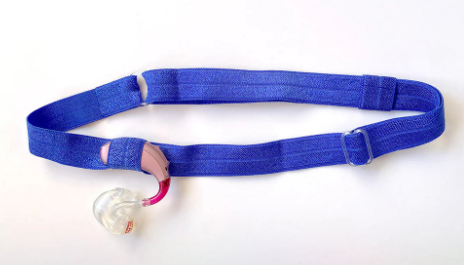
Our initial research showed that there are options for comfortably wearing glasses and hearing aids at the same time, however, these hearing aids are typically not behind-the-ear. In regard to behind-the-ear hearing aids, it seems that difficulty with wearing glasses and BTE hearing aids is a common problem and many opticians and audiologists recommend things such as retention bands for hearing aids. The retention bands are mostly meant to secure the hearing aid to the glasses to protect them each from drops or being lost. The retention band does not take into account the comfort of the wearer. We are primarily concerned with the comfort of the wearer, so retention bands are not what we are looking for. Our ideal design is something simple, reliable, and easy to replace while maintaining the ultimate goal of comfortable wearing.
Concept Design 1
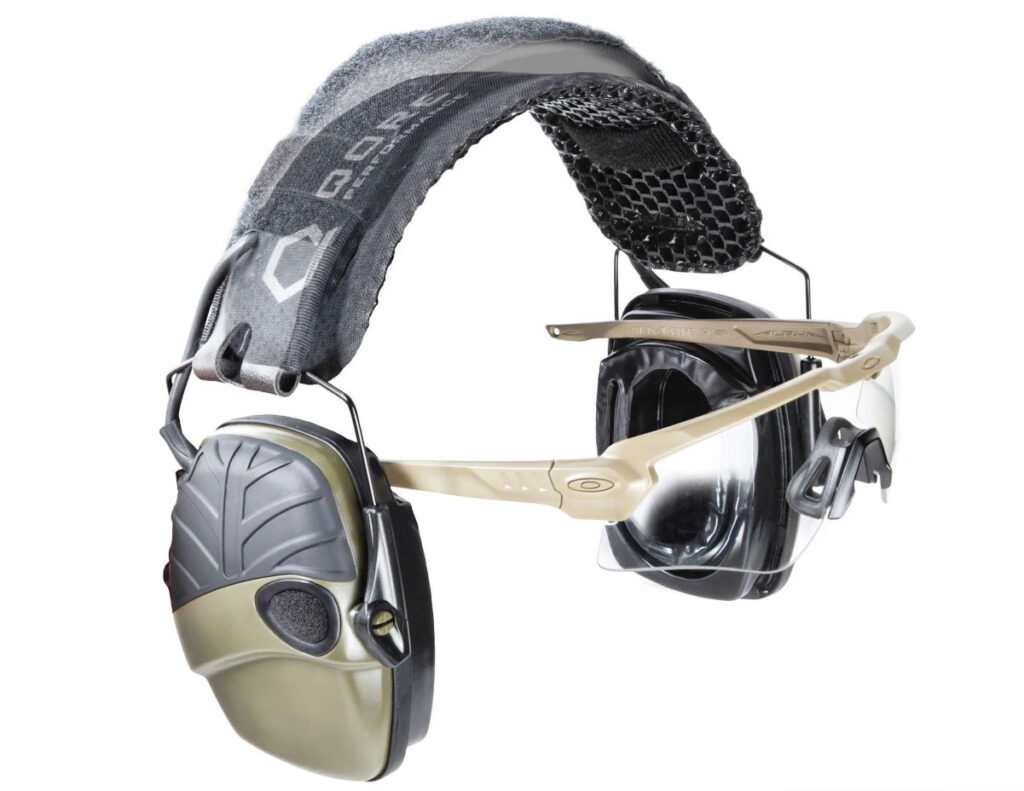
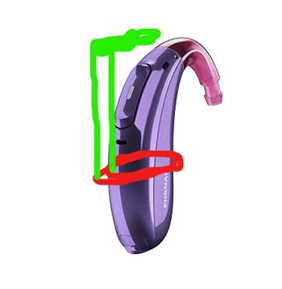
This design is meant to raise the glasses slightly above the hearing aids where they touch the ear or vice versa. This design would likely be made with silicone or flexible 3D printer filament such as TPU. By 3D printing, we have the advantage of rapid prototyping and accurate geometry modelling.
Concept Design 2
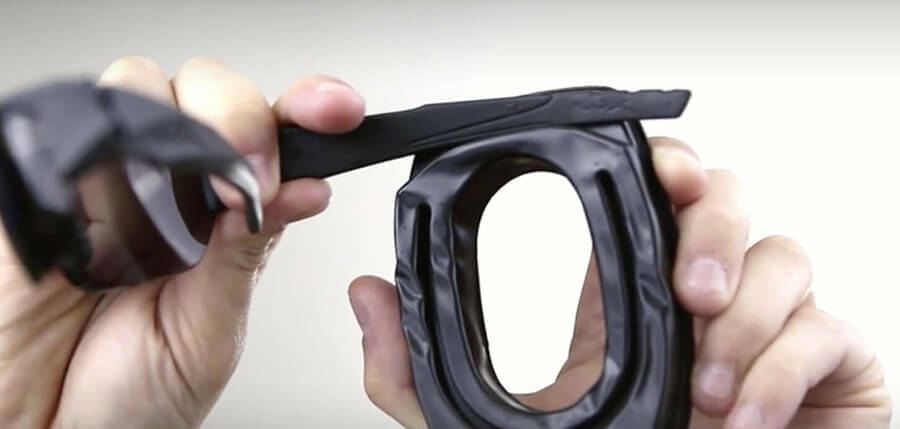
This design also attempts to raise the glasses slightly above the ear, which aims to prevent redness or soreness for developing. This design will also likely be made from 3D printing material.
Concept Design 3
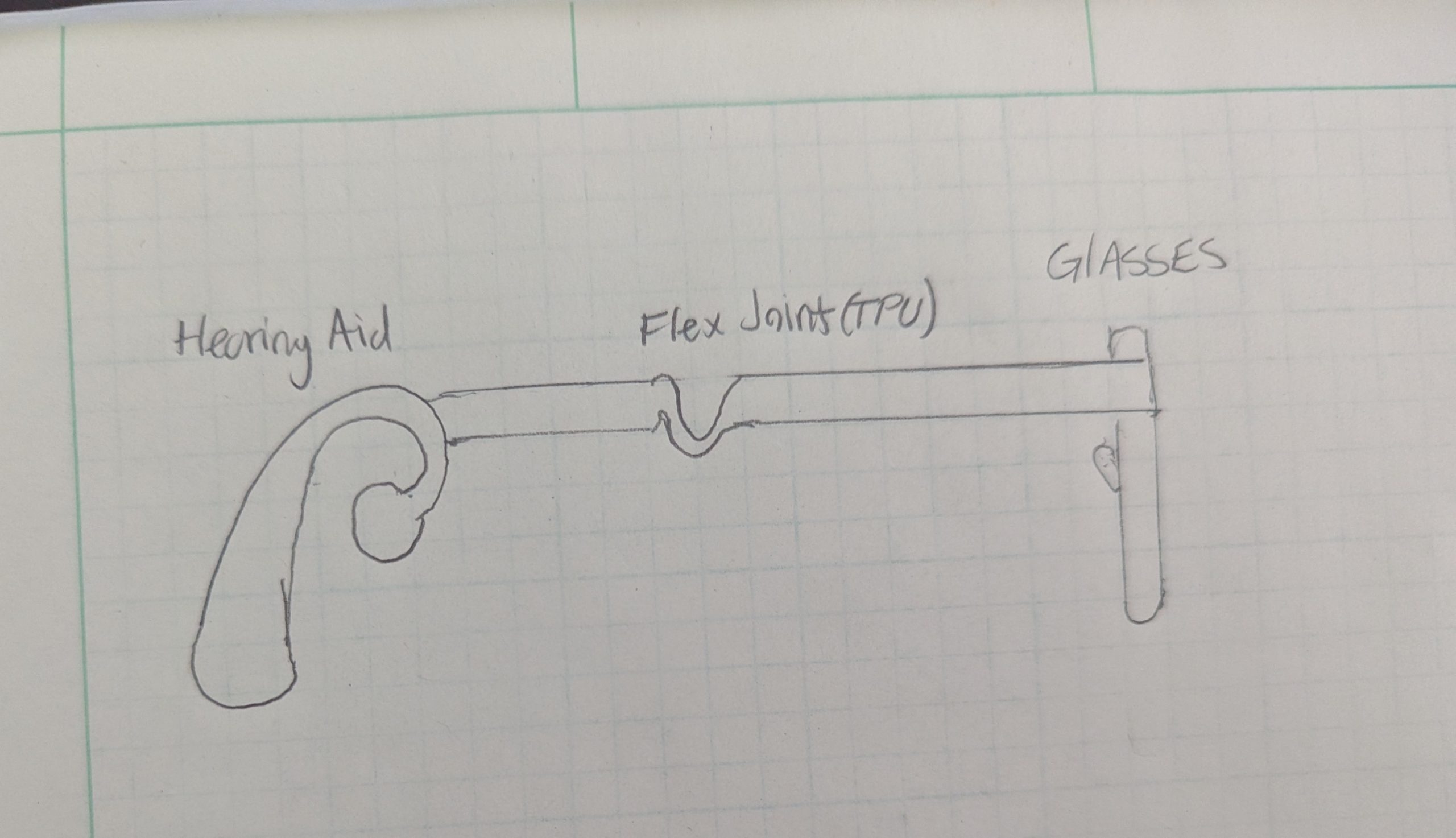
This idea involves cutting or replacing the arms of the glasses and using a flexible joint most likely made out of TPU to allow some flex and give for the user. Having only one piece behind the ear should alleviate the problems caused by having two separate stems overlapping behind her ear. In addition, it would position the glasses in a more natural position.
Selected Concept Design
The selected design is concept idea #1. We will expand upon this design and refine it to suit the child’s needs.
Decision Matrix
Overview of Selected Design
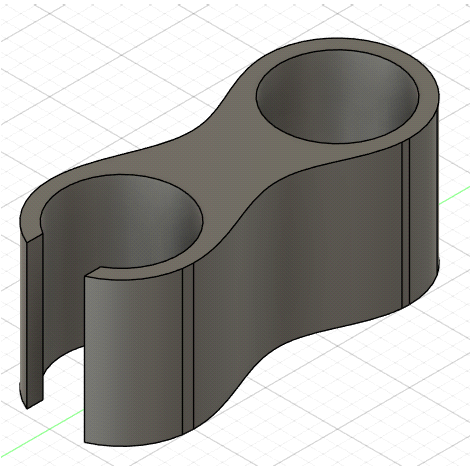
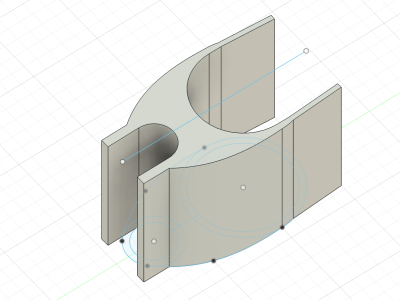
Our current selected design is a continuation of design concept #1. We intend to use TPU so that the bracket has some flexibility and can be quickly attached when needed. The model will be further refined once we take more measurements of the eyeglasses and hearing aids.
Describe Design Details
The bracket will sit on top of the hearing aids at the junction of the hearing aid body and the sound tube. The bracket will click onto the hearing aid and the glasses. This will allow for the glasses to sit on top of the hearing aids without slipping down and pushing the child’s ear outward. It will be printed out of TPU to allow for some flexibility without breaking. This flexibility will also allow it to slip onto the hearing aid body and eyeglass frames and grip them firmly without any permanent deformation. With further testing, the design will go through revisions and modifications to improve the fit as well as the positioning of the eyeglass arms. We tried to minimize the tilt of the eyeglasses to reduce the chances of it becoming uncomfortable to the wearer. We are considering on printing test pieces that offset the eyeglass arms approximately 45 degrees to further reduce the tilt.
Engineering Analysis 1
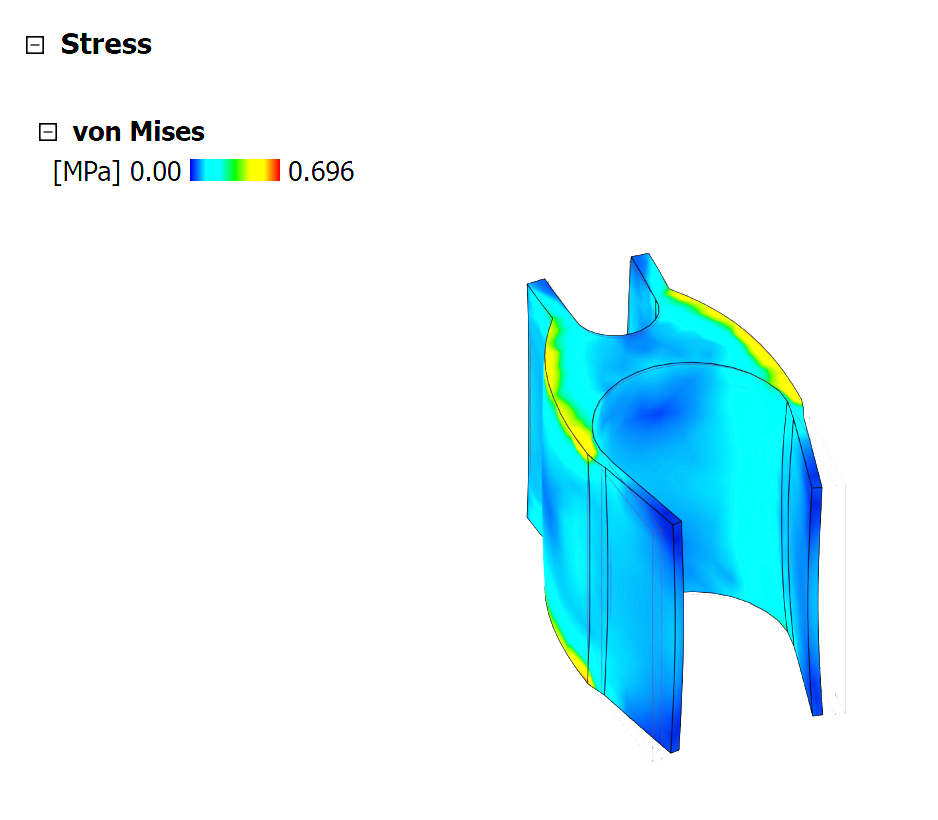
Stress analysis of 5N of compressive force applied in Z-direction. This simulated an excessive force pushing downwards onto the glasses which would then press onto the hearing aids, respectively.
Engineering Analysis 2
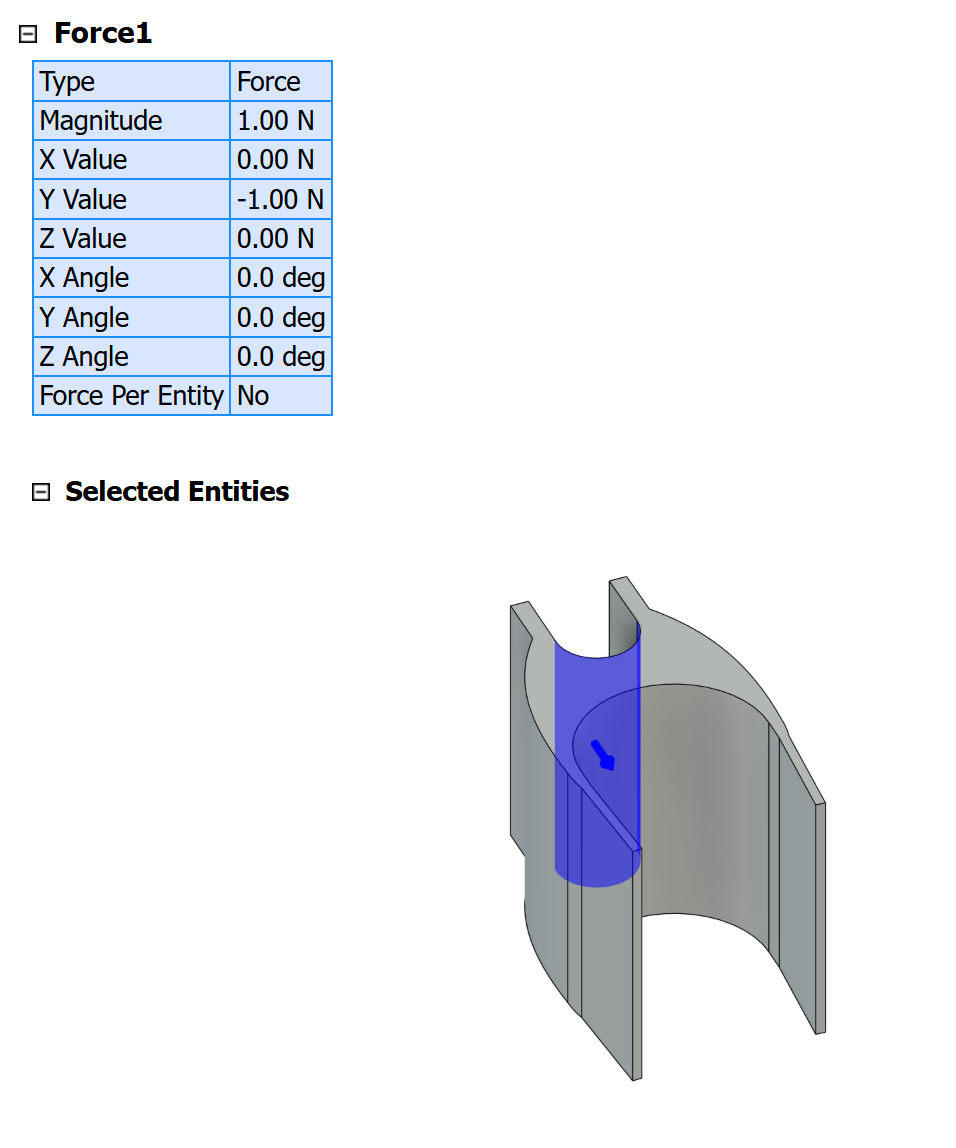
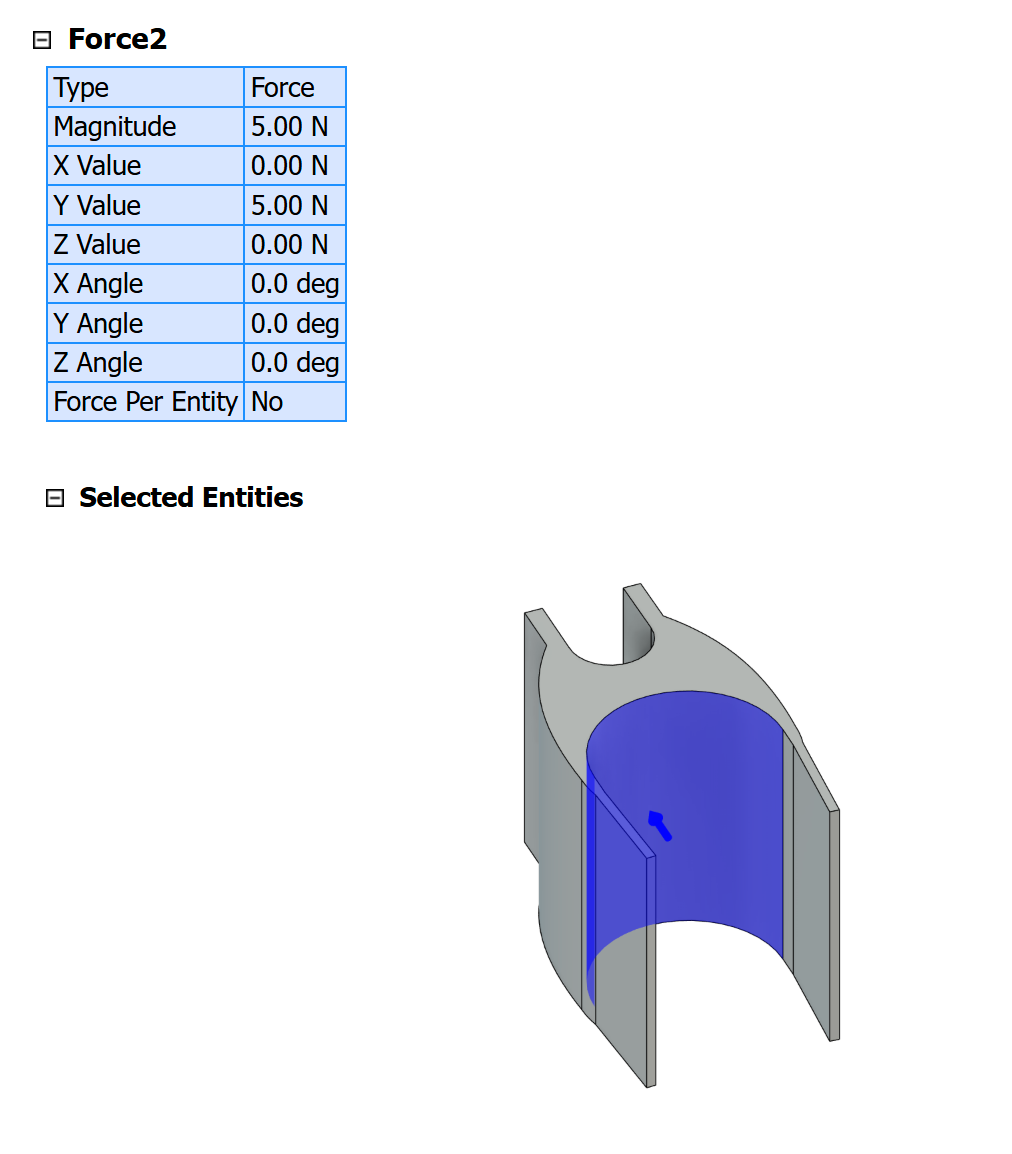
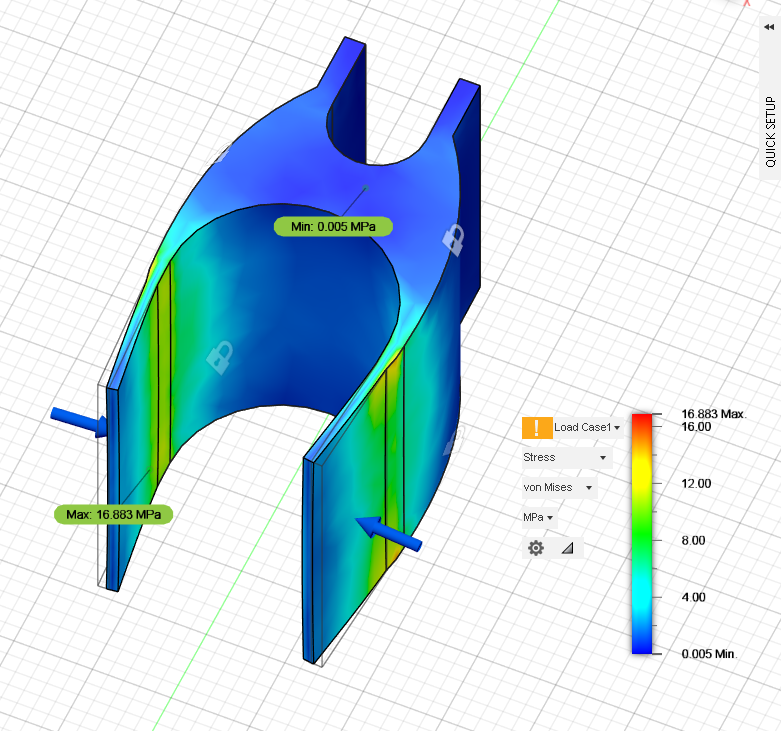
We also analyzed a compressive force on the side of the printed bracket and found that the weakest point is the long arms of the eyeglass portion of the bracket. Per the von mises stress analysis, it should hold but we will be improving the strength while keeping the maximum width to a minimum.
Engineering Analysis 3
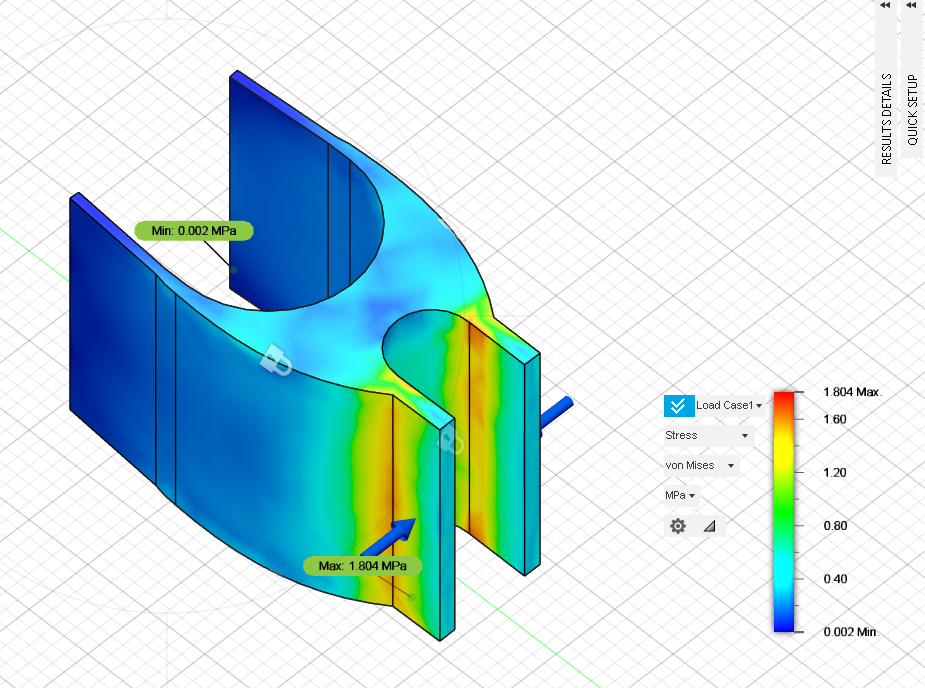
With a horizontal compressive load on the hearing aid section, the max stress was located at the stress riser where it joined the body of the bracket itself. We will be updating the shape to reduce the stress concentration at this point. The maximum width point is more critical here than on the eyeglass section. This bracket is designed to be very easily and quickly printed and so the child can have spares available at any given moment.
Group 03b was merged with Group 03a. Since both groups were working on the same project using different solutions, the better solution was chosen, and the work of both groups was redirected to that project.