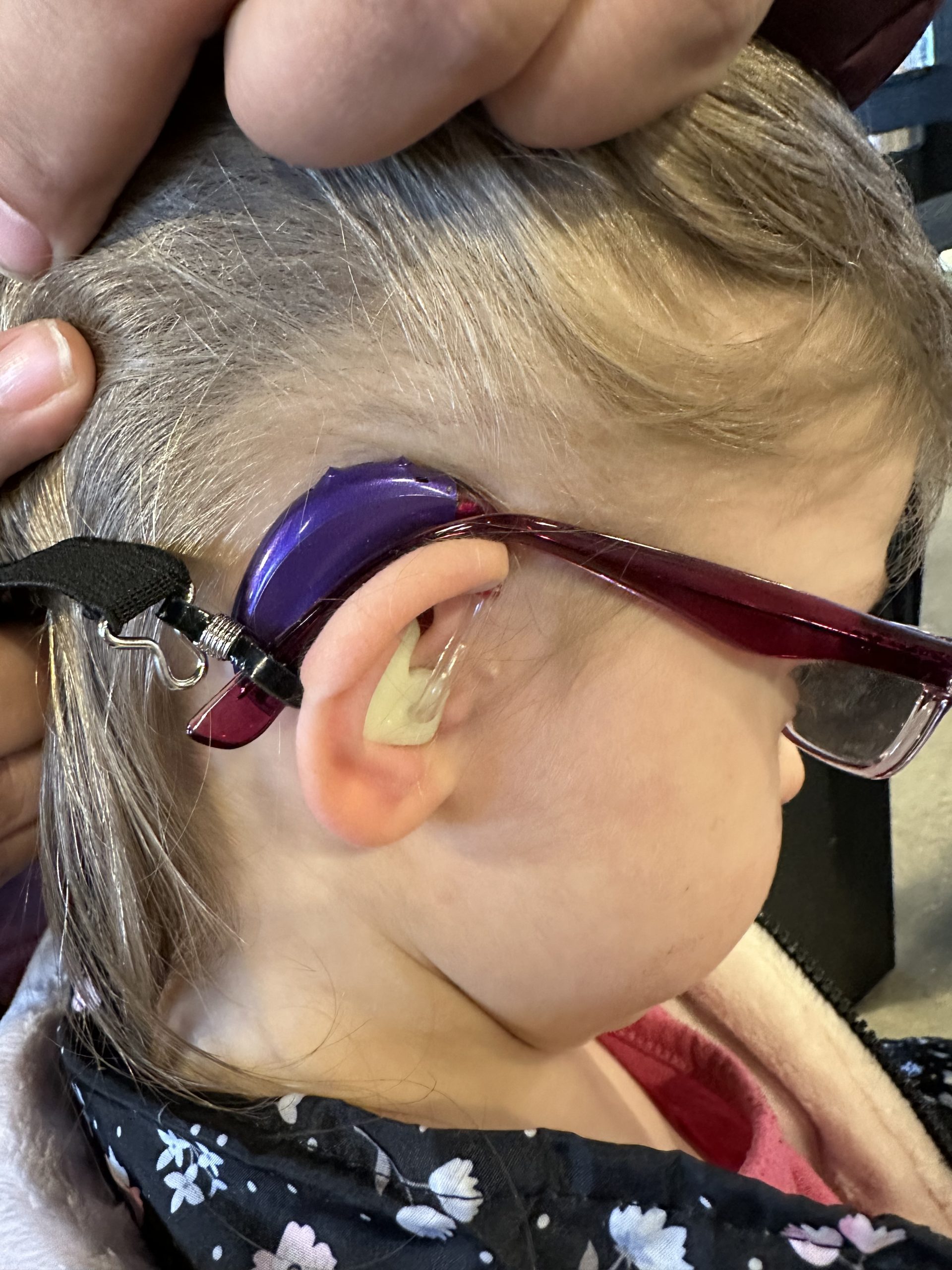
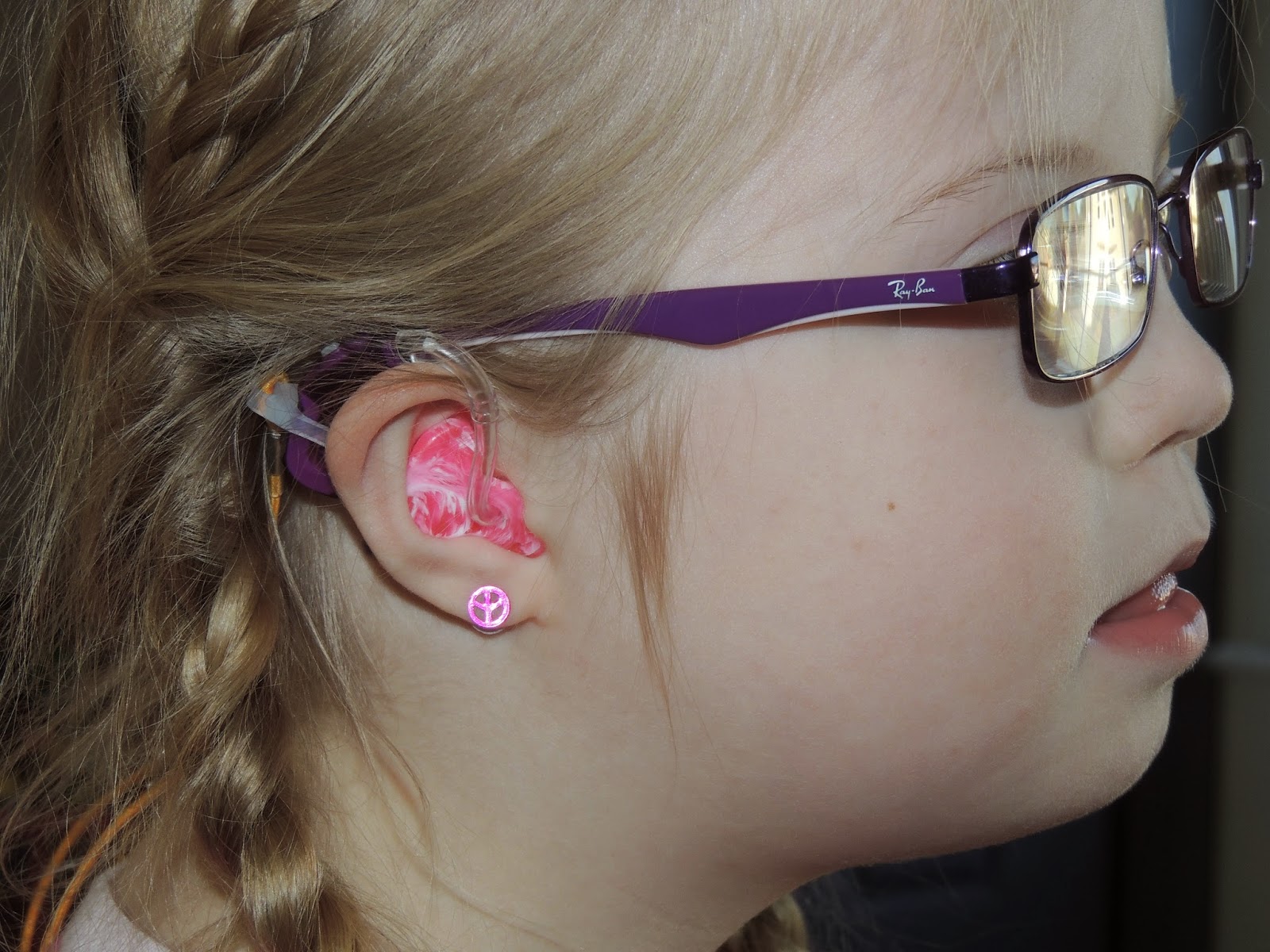
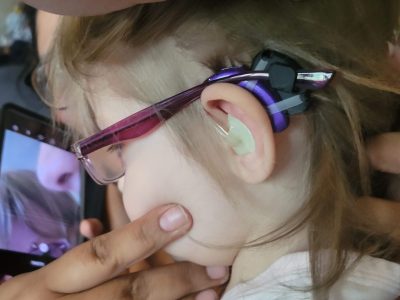
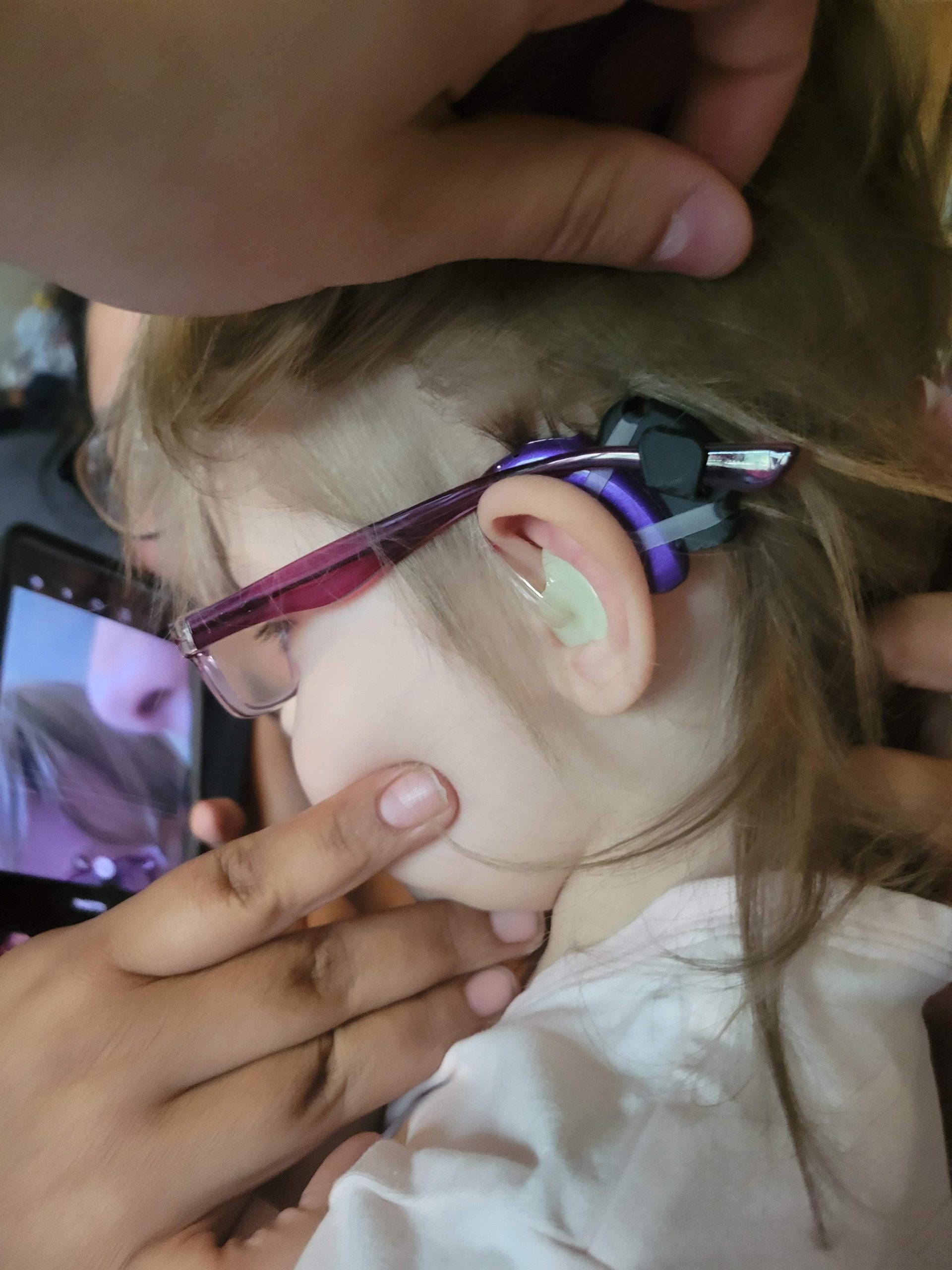
Lilly’s glasses and hearing aids, when worn together, cause discomfort since they press against her small ears. The glasses cause the hearing aids to fall off. Our goal is to relieve the discomfort by shifting the position of the glasses and/or hearing aids.
(from left to right) William Monk, Mallary McKaskle, Ethan Grossman, Bailey Steger, Hayden Milligan, Fady Rezk, Francisco Huipe, Gavin Slone, Julian Capistran, Zailet Ningnye, Nicholas Chamberlain
Problem Statement
The hearing aids and glasses are too wide when worn together, causing discomfort. They also fall off sometimes. The design needs to provide better security and comfort.
Design Specifications
Comfortable and lightweight to allow for long term use
Secure fitment so the hearing aid does not fall off the ear
Slim and small to reduce redness and irritation
Background Research
When researching possible solutions for wearing hearing aids an glasses simultaneously, not much can be found. Our case is unique, as we are dealing with a 5-year-old girl with small ears and not much room to work with. Some cases with a similar issue can be found, and most are solved by elevating the glasses out of the way of the hearing aids and affixing the two together. The concept designs below illustrate the possible solutions.
Concept Design 1
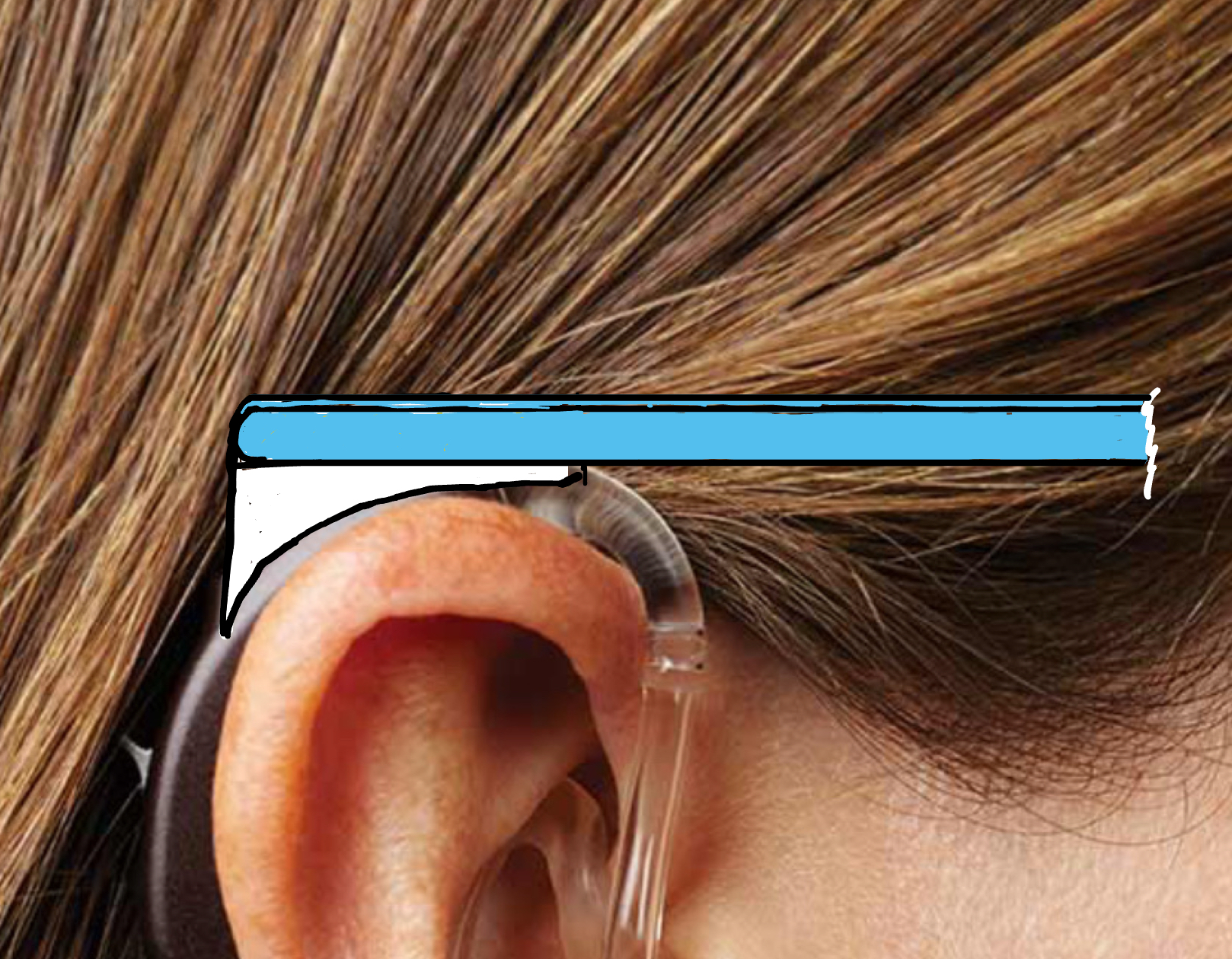
This design includes a small plastic component that securely holds the glasses on top of the hearing aids. It is lightweight and adjustable to accommodate the girl’s growth, allowing for changes in both her glasses and hearing aids over time. Additionally, the piece is easily removable.
Key selling points for this design include its slim profile, as it avoids adding bulk. Since the girl is very small, the pressure on her ears from wearing both glasses and hearing aids is noticeable. This design minimizes the weight on the devices, helping to alleviate that pressure.
Concept Design 2
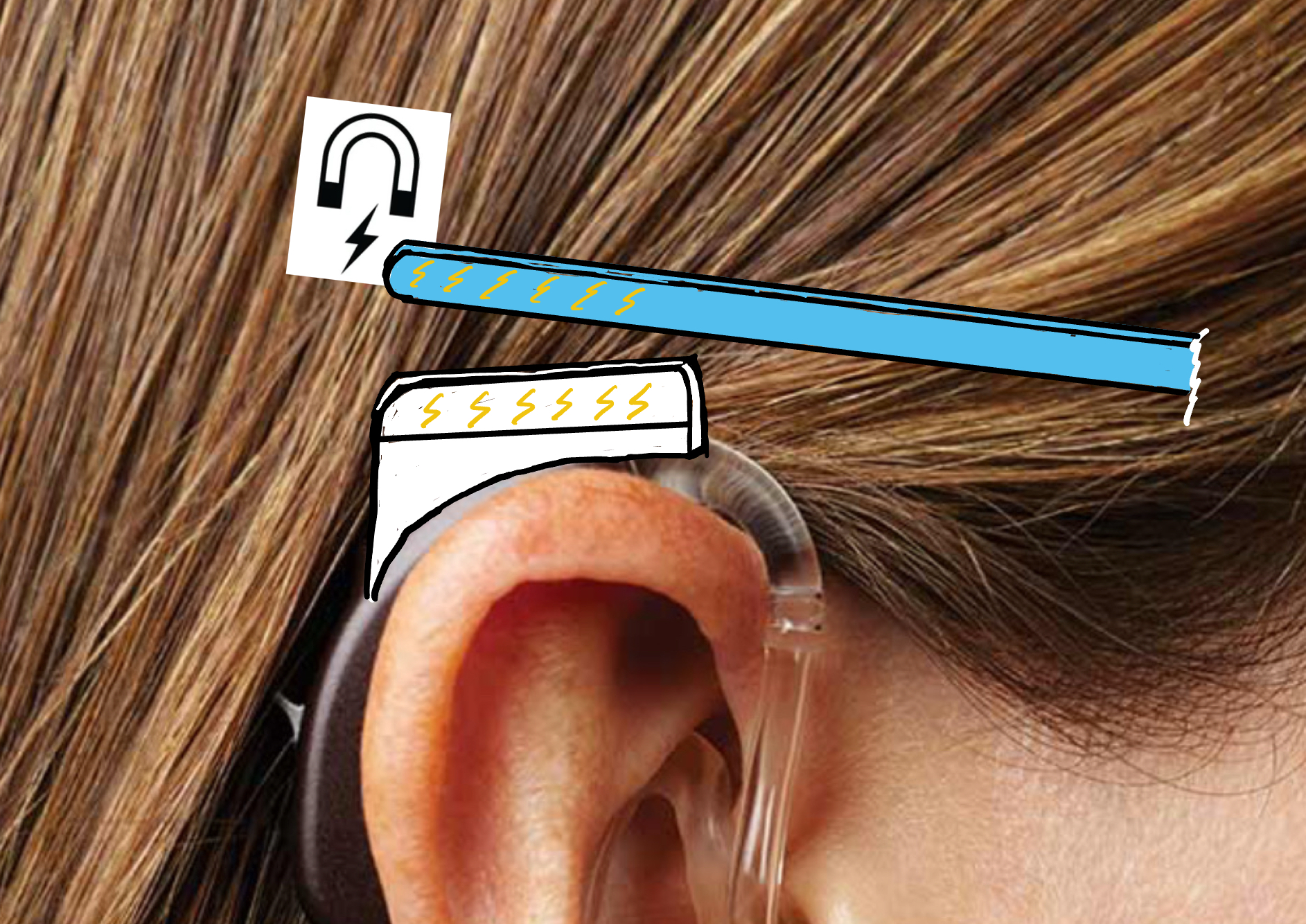
The goal of this design is to streamline the current overlapping hearing aid/ glasses arrangement, utilizing the hearing aid as the attachment point.
The glasses’ current plastic arms will be replaced with thin metal off-the-shelf arms that can be easily bent and cut as desired. Plastic mounts will be secured to the hearing aids, featuring built-in magnets. If the arms are ferromagnetic they can easily click in place to the mount. Magnets may be added to the arms in a future design iteration if they are non-magnetic or weakly attracted.
This design should allow the user to easily take off and put on the glasses without removing and/or breaking the hearing aids. The glasses could be replaced in the future if they are compatible with the arms. As the user grows, the arms can slide forward to a new position on the mounts.
Concept Design 3
The last iteration of this design would bring more ease of use and a sleeker appearance for everyday wear.
Instead of the hearing aid and the glasses being two separate entities, the hearing aids will be adapted as part of the glasses. The electronics and battery are stored inside the arms of the glasses with the earpiece connecting at the end. There is no longer two hearing aids and a pair of glasses, they are all one body.
This will be more compact, require no adjusting to find a “sweet spot” for comfort, and less components to keep up with.
Selected Concept Design
We still start with concept 2, modifying and refining the design.
Decision Matrix
Overview of Selected Design
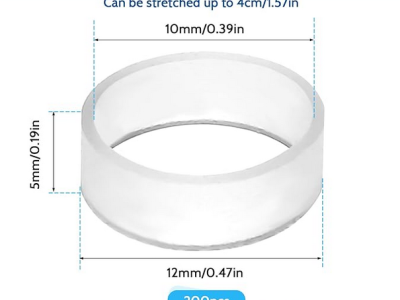
Our selected design is a combination of concepts 1 and 2, opting for elastic bands to fasten it to the hearing aid, and a channel for the glasses to sit, instead of a magnet or loop.
Describe Design Details
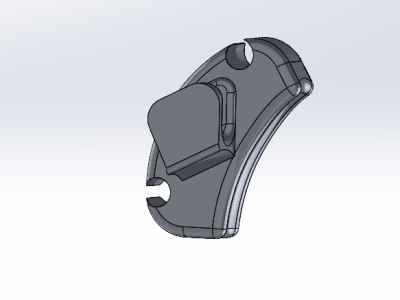
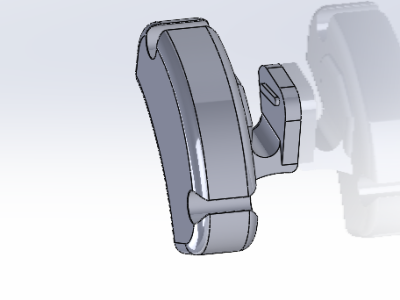
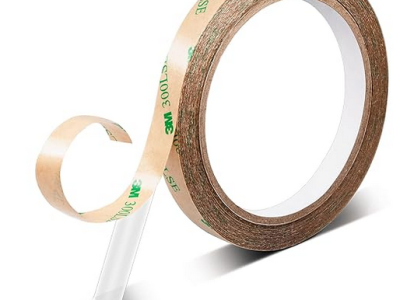
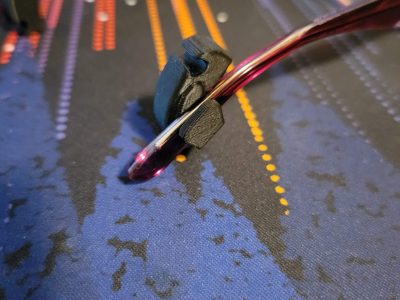
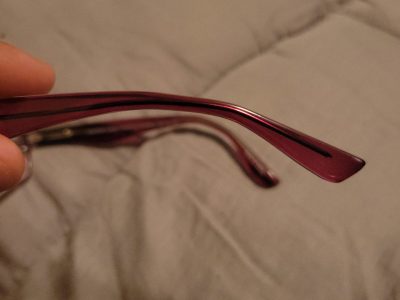
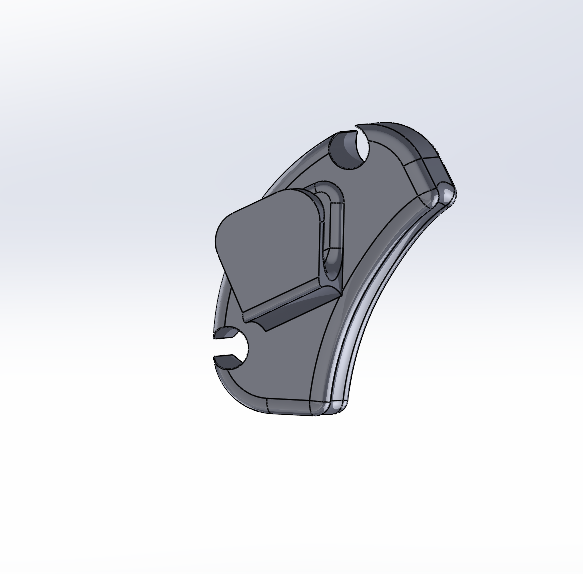
With this design, the glasses holder is attached to the back of the hearing aid. This will elevate the glasses above the ear to eliminate the pressure on the ear. The holder is attached to the hearing aid with elastic bands, allowing for quick and easy adjustment. For a more secure attachment, double sided tape is applied at the interface. We chose to put the arm position on the side of the hearing aid instead of on top to reduce the tilting of the frame, which would otherwise make the glasses uncomfortable to wear and might affect the focal point of the lenses. The current glasses arms will be modified to bend them upwards so they sit in the channel. The channel features a retaining bump to secure the arm.
Engineering Analysis 1
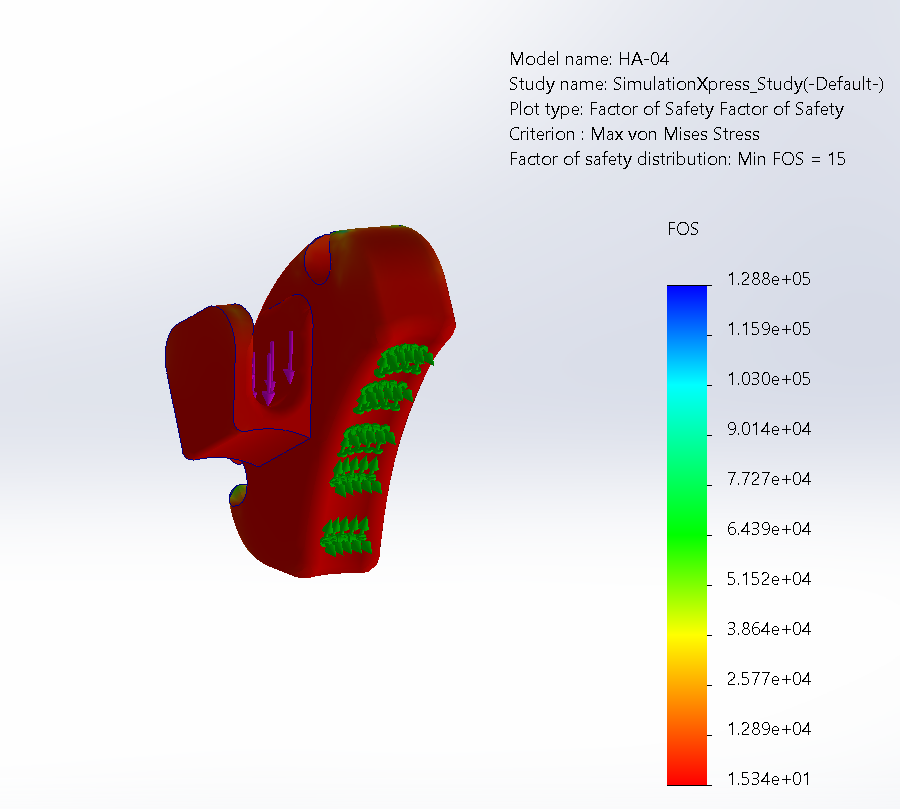
This first analysis considers a downward force of 10 N in the channel, as this is the expected location to be handling load on a regular basis.
This amount of force is well above what the glasses or user would apply. Even so, the von Mises are kept at a minimum and there are no major stress concentrations.
FOS: 15
Engineering Analysis 2
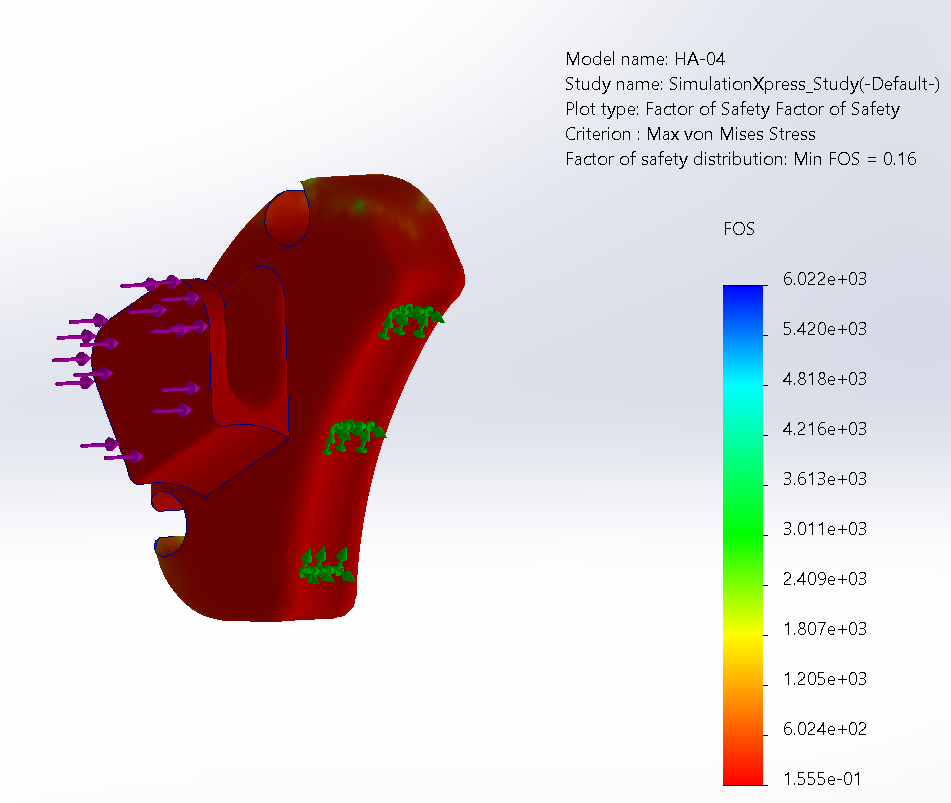
This analysis considers the situation where the bracket is stepped on, an applied force of 150 N.
This will break the holder, but that was expected for a small plastic part.
FOS: 0.16
Engineering Analysis 3
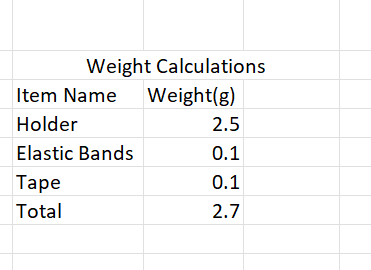
This analysis shows to total weight of the attachment, including the tape and elastic bands.
The double sided tape is cut to length and adhered to the interface side.
The holder is printed in PETG plastic for its environmental resistance and toughness.
Testing Results
The design successfully elevates the glasses arms above the ear, relieving the discomfort caused by the arms sitting on the ear.
Completed Design Photos
Instructions for Safe Use
This attachment piece is very small and should not be ingested. When snapping the attachment to the glass, caution should be taken to not get hair caught in between the piece and the glasses. When attaching the piece to the hearing aids, the rubber bands should be checked to confirm they are secure.
Project Summary/Reflection
In the first meeting, we took preliminary images and dimensions of the hearing aids and glasses to build a prototype.
In our second meeting, we tested a prototype to refine the design. We fit the prototype on the hearing aid and tested the security of fitment, and took pictures to better align the angle of the attachment. The family allowed us to take the glasses and bend them to shape.
After a third meeting with the family, we were able to provide a completed design model to be tested for a few days. After further communication with the mother, it seems that Lilly struggles to wear her hearing aids in general, which might be an issue. She does seem to be able to wear them longer as time goes on. We think that as she gets older and gets used to wearing her hearing aids, this problem will be solved. Overall, the mother is happy with our design and we hope that this was beneficial for her and Lilly.
This design could be edited for use by others with similar issues wearing glasses and hearing aids at the same time. Small changes to the curvature and slot for the glasses could allow this design to be used with different hearing aids and glasses. This project was a great learning experience and we are glad to have been able to put our engineering skills to use in a way that helps others.