Fall 2026 Project 9: Adapting WOW (Words on Wheels) for Improved Accessibility
Abstract
Book buses are popular with many school systems, as it is a fun way to encourage children to read. However, many school buses are inaccessible to small children and individuals with disabilities that cannot easily climb stairs. The goal of this project is to design a ramp that is sturdy, lightweight, and portable so all children can access the book bus.
The team members are Summer Morris, Brendan Biehusen, Kiefer Salak, and Johnnie Williams.
Problem Statement
The client is a school system with a bus that transports books for children. The bus is currently inaccessible to many younger children and individuals with disabilities. The only entrance onto the bus is a narrow and step set of stairs that many individuals struggle to climb. A ramp designed to attach to the rear entrance of the bus will allow younger children and individuals with disabilities to easily enter the bus. This will allow all children access to books, which will help further promote literacy in younger children. Since the bus is driven by one person, the ramp must be transportable, lightweight, and sturdy.
Design Specifications
The ramp must satisfy several design specifications to ensure the ramp is able to be safely used and is functional.
ADA:
According to the ADA, a ramp must have a maximum running slope of 1:12, or 12 feet of length for every 1 foot of height, in order to safely be used.
Lightweight:
The ramp should be lightweight such that one person can move the ramp.
Transportable:
The ramp shall be transportable such that the ramp can travel on the bus to different locations. The ramp shall also be separated from the bus, such that no permanent modifications are made that can damage the bus.
Structural:
The ramp must be sturdy enough to hold the weight of children and individuals in wheelchairs.
Safety rails:
The ramp shall also have rails attached to keep individuals from falling off.
Background Research
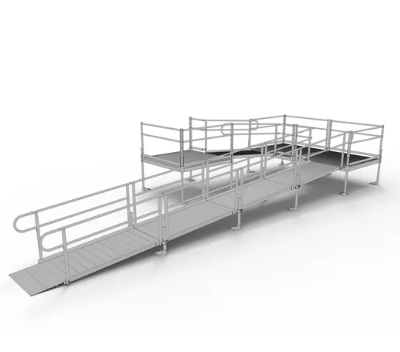
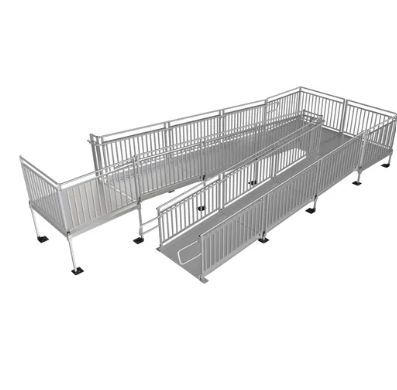
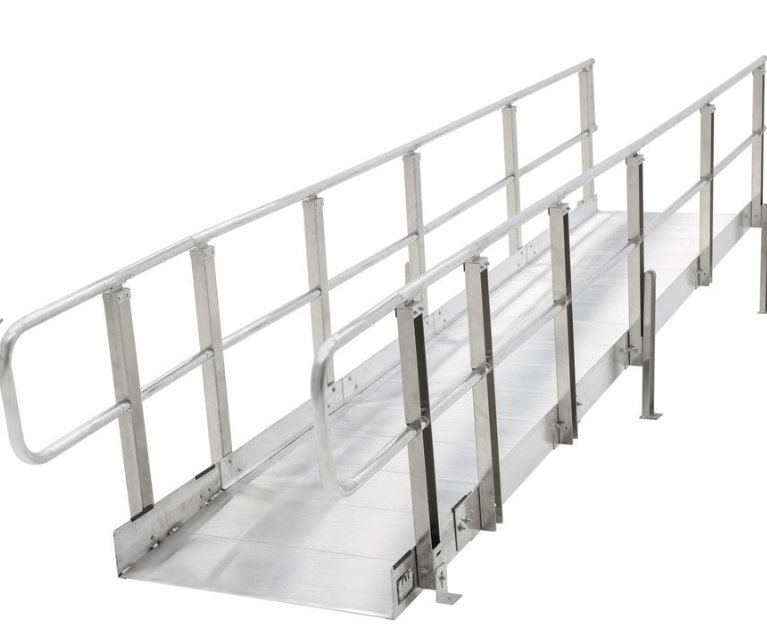
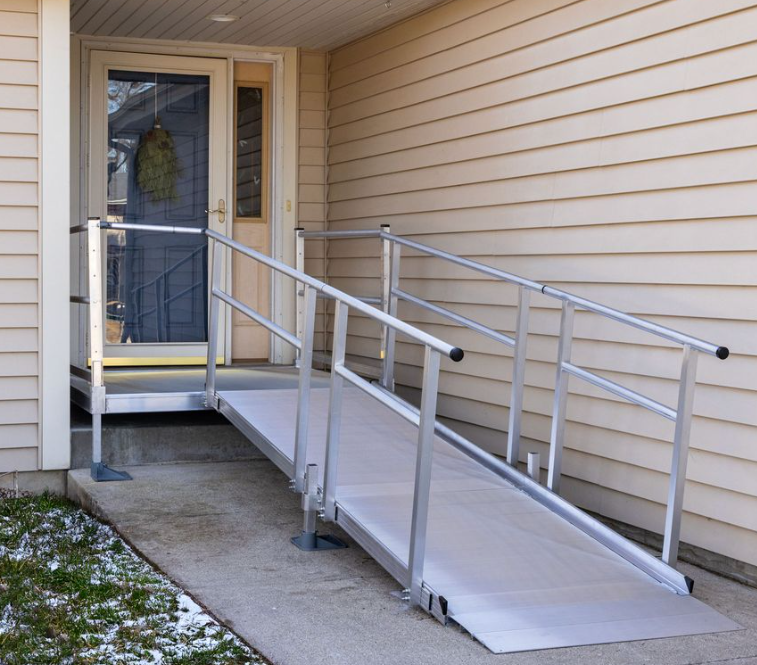
While there are many ramps that do exist, they are expensive and many are not that transportable. While researching ramps, it can be seen that many tend to be made with wood, aluminum, or other metals. Many ramps include some kind of textured material to ensure individuals do not slip on the ramp. The team will try to incorporate a textured material in the design of the ramp to ensure the ramp is safe to use, even in the rain.
Although some ramps are one continuous piece, longer ramps tend to have platforms that change the direction of the ramp. These platforms allow the ramp to become more compact. Due to the height of the bus, the team will likely incorporate at least one platform to ensure the ramp is not too long.
Though some ramps are one continuous and rigid piece; other ramps are foldable for compact traveling. The team will try to incorporate some kind of collapsable structure to ensure the ramp can fit on the bus while traveling.
Note: All background images were taken from discountramps.com.
Concept Design 1
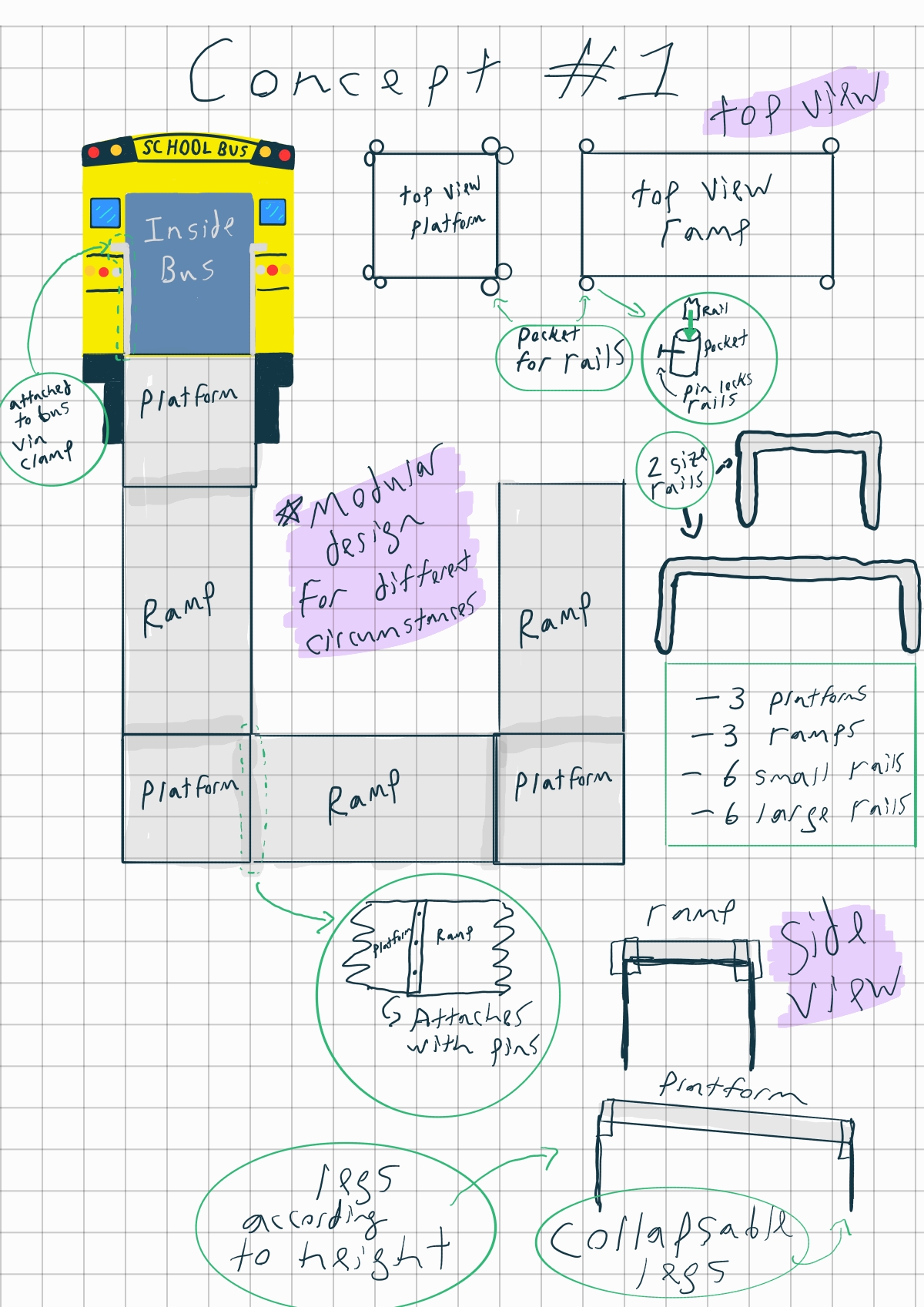
The first concept is a modular design with platforms that allow the ramps to connect in many different layouts. The detachable rails allow for ease of transportation while still being modular. The rails attach to the platform and ramp with cylinders that hold the rails in place with pins. This design will allow the ramp to be used in many different locations. The legs are collapsable, so the ramp can fold up into a compact shape. Each ramp includes a lip that can attach to the platform with pins. This design ensures the structure will not come apart while people are traveling on the ramp. The ramp is attached with either a clamp or some kind of locking mechanism to the bus. This will ensure the ramp is not permanent and can be taken down without damaging the bus.
Concept Design 2
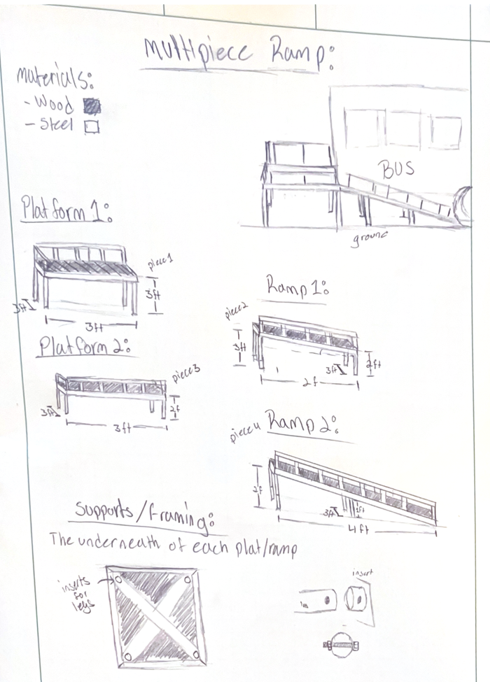
The second concept is a design with 2 platforms and 2 ramps that feature removable legs. The legs are secured with a screw clamp like component to the ramp or platform. This will allow the ramp to fit on the bus while traveling. Supports underneath the platform and ramp will help strength and stabilize the structure. The frame is made of steel while the ramp is made of wood. By using a mixture of materials, the weight is able to be minimized without risking the integrity of the structure. Rails are added to the structure for added safety.
Concept Design 3
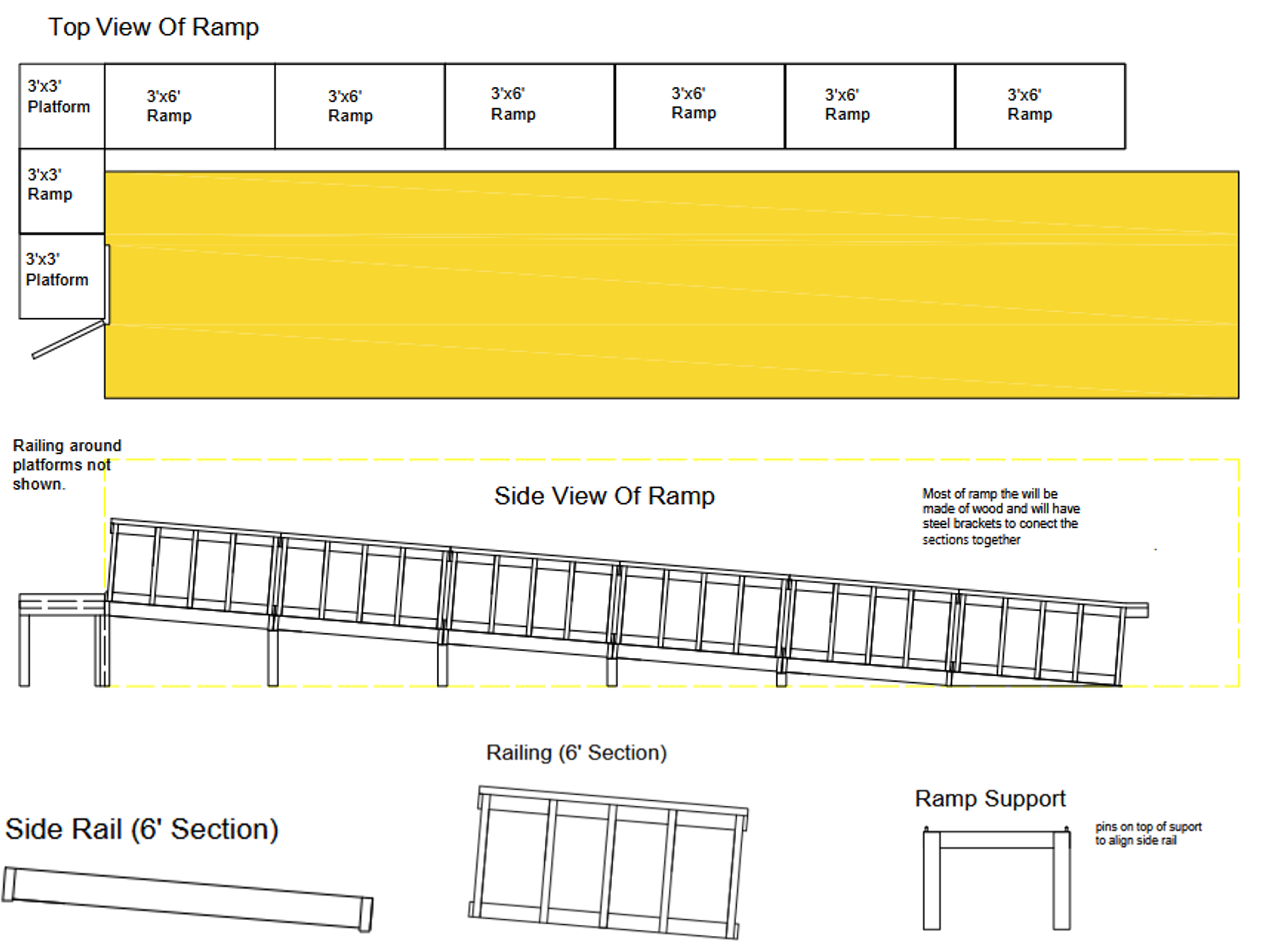
The third concept utilizes compact modular pieces to reduce weight and make setting up the ramp easier. Pieces such as the side rail and railings are all identical so they can be installed anywhere in the ramp to make setting up the ramp simpler. This concept has the ramp go around to the driver’s side of the bus to avoid going out and around the rear door, which also keeps the ramp close to the bus. The ramp will be primarily made of pressure treated lumber instead of aluminum or steel to reduce the cost, but it will have steel brackets on all the mounting surfaces to prevent damage to the wood portions of the ramp when being assembled and disassembled.