
Spring 2025 Project 15: Safety Bed

Abstract

Our team has been given the task of designing and building a sensory bed for a four-year-old child with autism. Sensory beds create a personalized, calming space that helps prevent sensory overload while ensuring safety and comfort. Our design will incorporate features like a gate to make removing the mattress easier, and cushioned surfaces to reduce the risk of injury. Beyond just a bed, this will be a secure and relaxing retreat tailored to the child’s needs. Over the next couple of months, we’ll work closely with the caregivers, research effective designs, and bring our ideas to life to create a space where rest and relaxation come naturally.

Kain Vail, Will Marler, Minh Tran, Chase Schwartz

Problem Statement

The family shared that their child with autism has been struggling with sleep and needs a space that promotes relaxation and calmness. Our goal is to design and build a sensory bed that creates a soothing environment, minimizing disruptive stimuli to help them drift off more easily. By incorporating features that cater to the child’s sensory needs, we aim to provide a safe, comfortable retreat that encourages restful sleep.

Design Specifications

The caregiver for this child has asked for a few modifications to best suit their needs. The bed must be elevated off the floor but kept at a safe height to ensure easy access and prevent falls. It should be designed for an easy mattress removal and cleaning. Additionally, a durable safety net will surround the bed, providing a secure barrier that is both sturdy and comfortable, ensuring the child’s safety while maintaining a sense of openness. The child’s previous bed lacked durability and would wobble with use, so we need to reinforce the joints to ensure stability and prevent movement.

Background Research

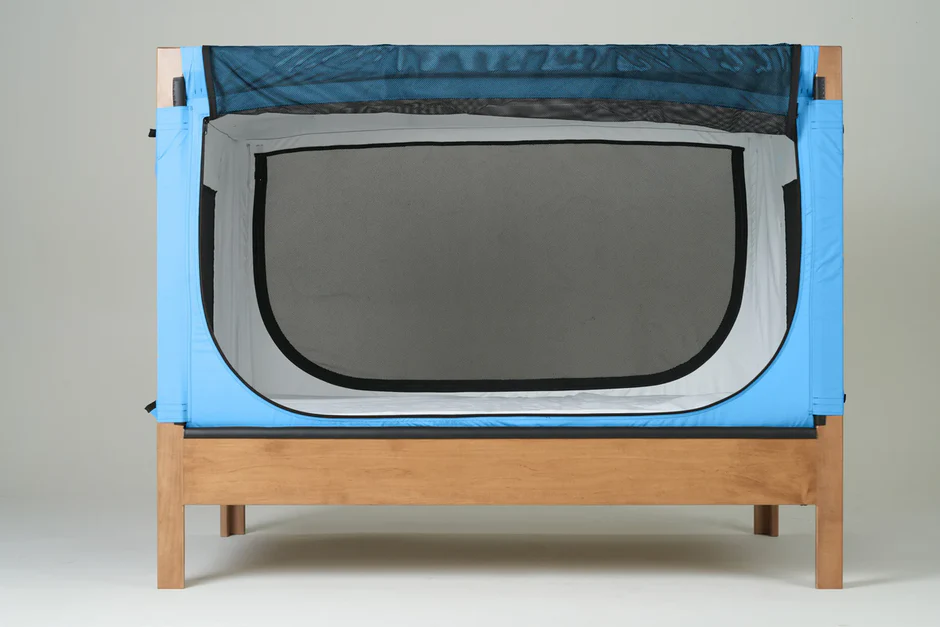
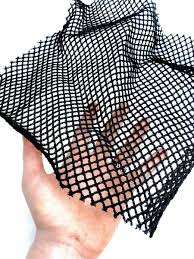
We are basing our design from the family’s preexisting bed and modifying it based on the family’s requests. The bed is to accommodate a twin-size mattress, which we found the dimensions for online. We looked for what materials other people use to make safety nets for beds. We found rope bouncy house mesh, fishing nets, trampoline nets, and other various tentlike designs using polyester and nylon fabric. We also found many types of hooks used to connect the material to the frame of the bed.

Concept Design 1

The first design uses a bounce house net instead of a mesh/canvas material for the walls of the bed. It would be connected by rope and hooks to be suspended off the wall for safety. A net would be better suited for the durability of the bed. We are also considering using hinges on the front side of the bed to be able to more easily remove the mattress and sheets for cleaning.

Concept Design 2

The second design would use the same frame as the first design. The only difference is the use of a trampoline net instead of a fishing net. They are more durable than mesh/canvas and would have a zipper. The only problem is we would have to sow the net or connect it to the bed in pieces. Sowing the net together, especially if we have to sow the zipper, would likely cause the net to be uneven and less durable. also the functionality of the zipper might be jeopardized.

Concept Design 3

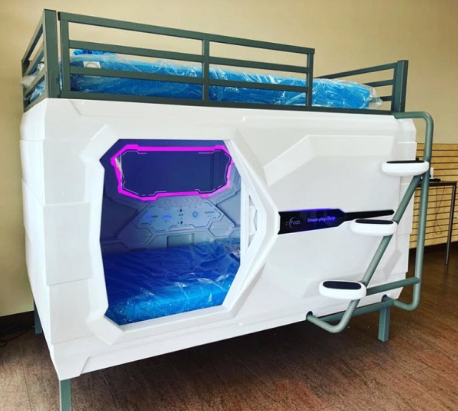
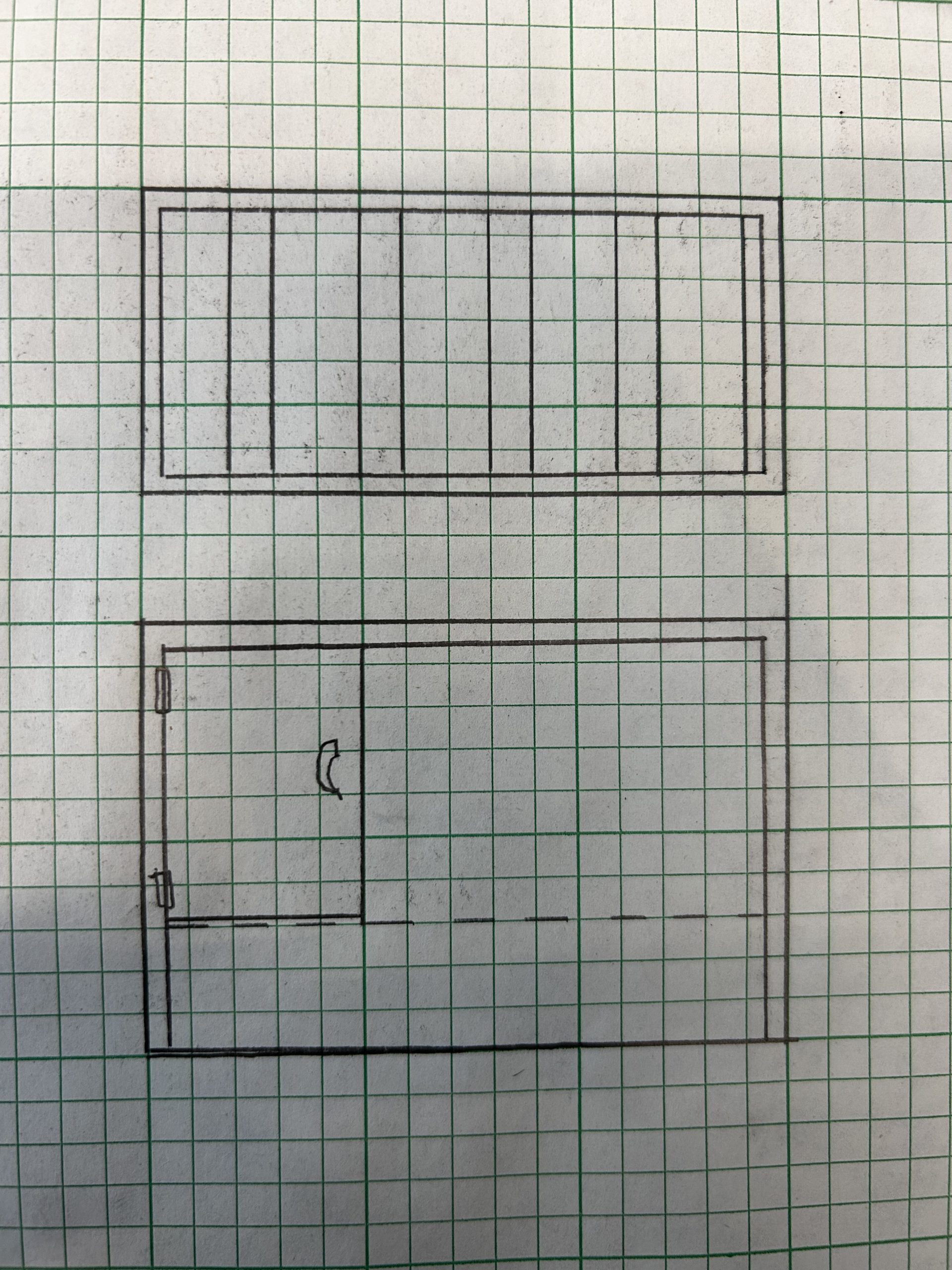
Our third concept design is somewhat of a isolation pod with solid walls all the way around. This bed would have an open top so it does not feel trapped. Another option with this is design is to use plexiglass walls instead of plywood  so it retains its solidness but feels more open.  This is an option because of the sturdiness and durability of the structure.  We could also make the door go all the way across the length for more easy access.

Selected Concept Design

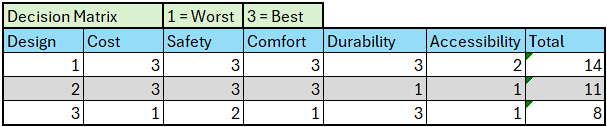
The design that we think would work best is the first one. It meets all the requirements the family provided for the design of the bed and requires the least amount of labor when putting it together.

Decision Matrix

Overview of Selected Design

The design effectively meets the family’s needs for the sensory bed while prioritizing the child’s comfort, safety, and sensory preferences. The structure is sturdy, stable, and provides enough space for the child to move freely inside an enclosed environment that promotes relaxation.

A key feature of our design is its accessibility and ease of use for both the child and parents. The bed includes a gate that opens for ease of bed removal for cleaning. Additionally, we have minimized potential hazards by reducing pinch points, sharp edges, and unnecessary gaps between components.

The constraints we addressed include:

  • Durability and strength: Given the child’s high energy levels, the bed is reinforced to support jumping and other active movements without compromising its structural integrity.

  • Ease of Maintanence: One of the problems with the old bed they had was it was hard to clean. With the gate mechanism, the bed should come out with relative ease.

Our ultimate goal is to create a safe, engaging, and comfortable bedtime experience that caters to the child’s sensory needs while providing parents with a practical, low-maintenance solution.

Describe Design Details

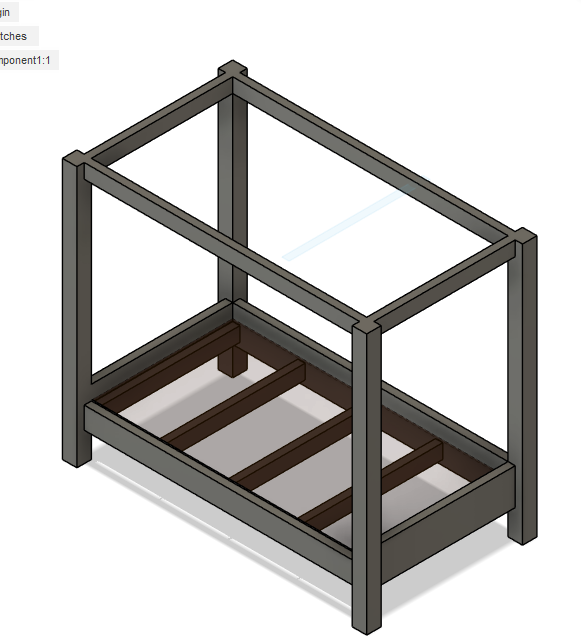
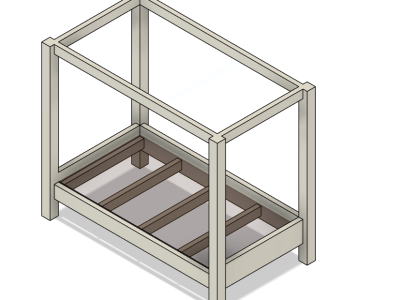
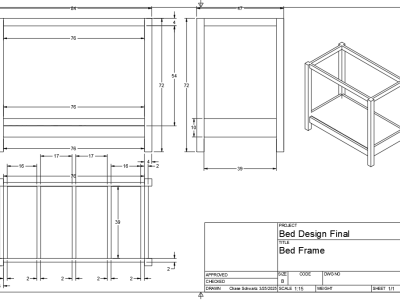
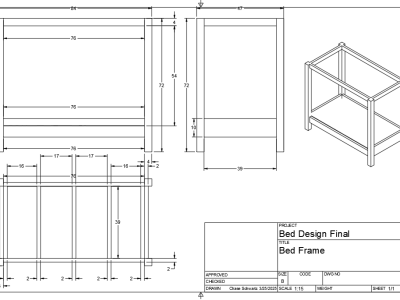
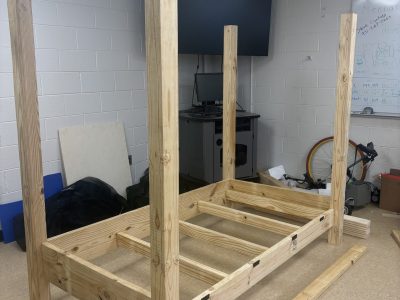
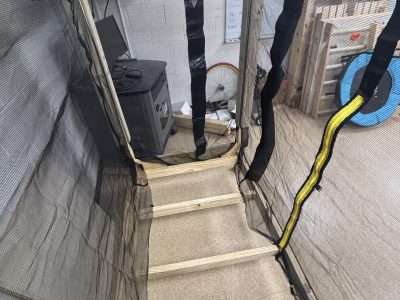
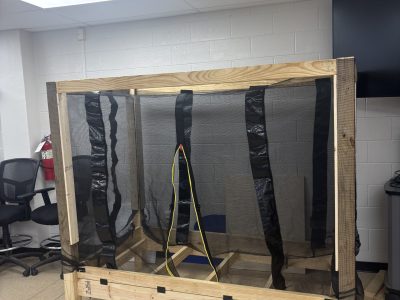
Frame: The bed frame will be made out of wood. The bed is supported by (4) 6′ tall 4″x4″ posts. (3) pine 2″x10″ beam is fastened to the bedposts with bolts. (1) 2″x6″ as the base of the gate. (1) 2″x4″ as the top of the gate. (4)  2″x4″ boards will be attatched to the top of the frame for extra support. (5) Wooden slats will be connected to the frame to hold the majority of the weight. The bed features a slide, allowing the mattress to be removed from the bed.

Bed: The basis of design for this sensory bed will be a standard 8″ tall twin-sized mattress.

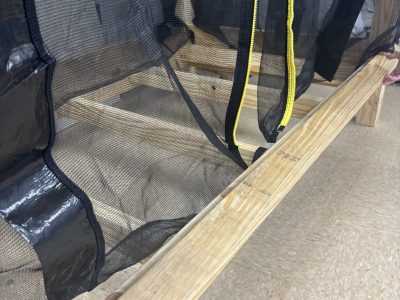
Gate: The folding gate will have two latches on each side that keep the 2″x4″ up until it is time to clean

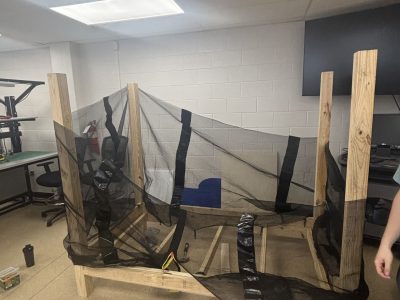
Netting: We are going to use trampoline netting to surround the outside the bed for extra security to keep them inside.

Engineering Analysis 1

Our calculated value was 3.29 psi, which is far below the critical stress threshold for wood. By incorporating conservative estimates for a factor of safety, we further ensured that the normal stress in the y-direction remains well within safe limits. This approach accounts for uncertainties in material properties, loading conditions, and potential imperfections in the structure, providing confidence in the safety and reliability of the design.

Engineering Analysis 2

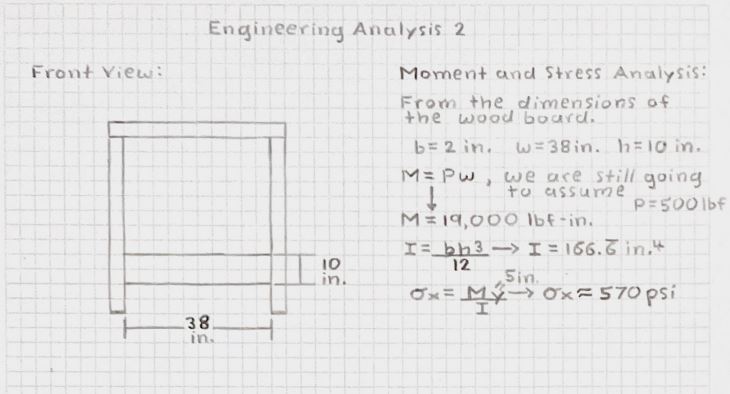
Assuming a generous applied pressure of 500 lbf, we calculated the normal stress in the x-direction between the wood boards is about 570PSI. By incorporating conservative estimates for a factor of safety, we ensured that this stress remains significantly below the critical threshold for wood. This conservative approach accounts for uncertainties in material properties, load distributions, and structural imperfections, reinforcing the reliability of our design.

Engineering Analysis 3

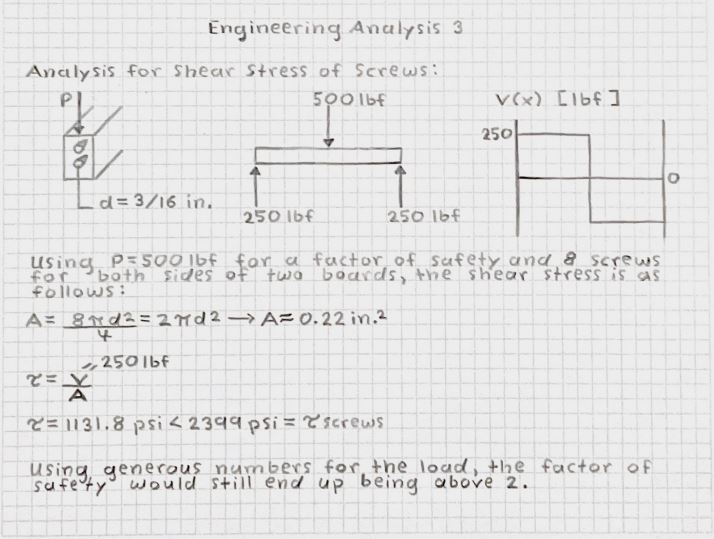
For the shear stress analysis of the screws, we assumed an applied load of 500 lbf and considered 8 screws on both sides of the two boards. Our calculations yielded a shear stress of 1131.8 psi per screw. Given the material properties of the screws, this results in a factor of safety still above 2, ensuring that the connection remains secure under loading conditions. By incorporating a conservative factor of safety, we account for potential variations in loading, material strength, and long-term wear, reinforcing the reliability of the joint.

CAD Drawings

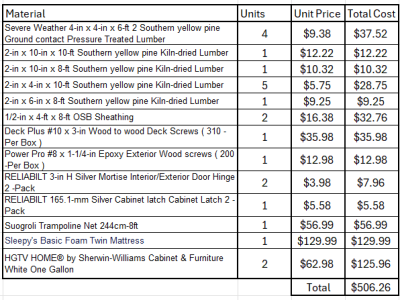
Bill of Materials

Document Fabrication Process

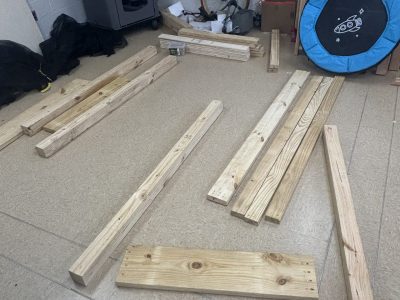
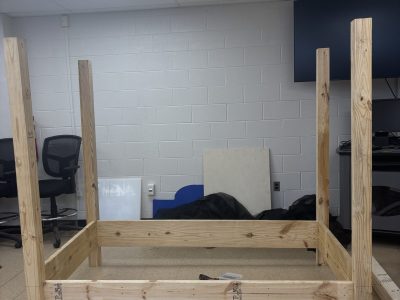
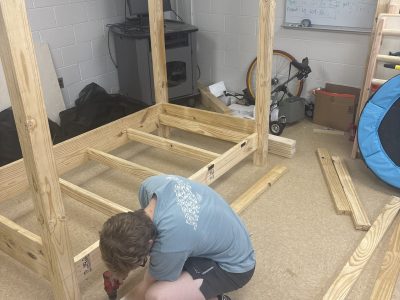
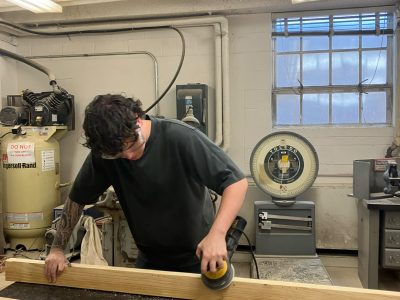
For our fabrication process, we assembled the bed frame based off of the CAD blueprint.

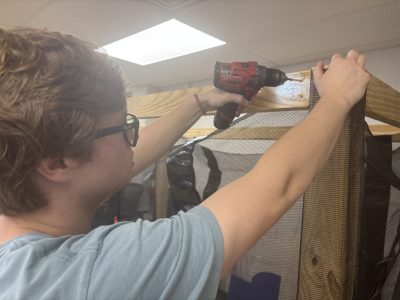
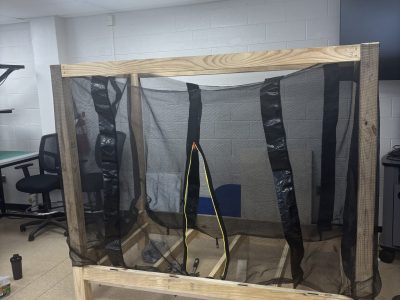
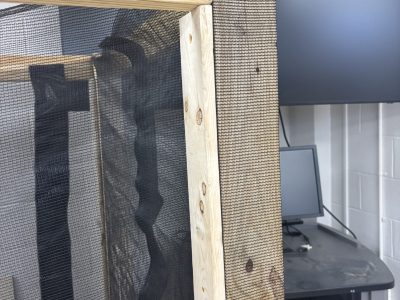
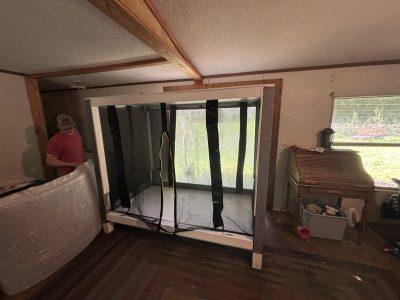
When we got to the portion of the assembly where we needed to apply the net, we made some modifications in the design by adding small trim over the posts to hold the net instead of hooks. This gives a clean look, as well as it makes the edges smooth. It also makes it more durable where its almost impossible to pull the net out from under the wood.

We also installed hooks on the bottom of the bed on the zipper side to hold the net in place, which provides a tight seal in the front of the bed.

Testing Results

Once the bed was completed, we did stress tests by standing and hanging on certain points of the bed. We stood on each slat, jumped, and hung from the completed frame. The net we pulled on with almost half our body weight and they were good. The latch on the front was also tested by slamming it. All tests are complete, performed well, and caused no damage to the bed

Completed Design Photos

Instructions for Safe Use

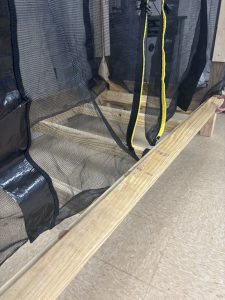
The bed will remain stationary. To enter the bed you will enter through the front via the zipper with the latch closed. The latch should only be open when you are removing the mattress for cleaning. To remove the mattress from the bedframe, you will need to unhook the net from the bottom, then undo the latch on each side of the front. The wood will drop down and you can slide the mattress out. below is where the board is located to remove the mattress.
For your safety while sleeping in the bed, please refrain from


  • jumping on the bed
  • climbing the net
  • laying in between the bed and the frame
  • do not lean on the net
  • hitting your head on posts


Project Summary/Reflection

Overall our bed was an improvement over the previous bed that the family received last year. From the previous design we implemented a few new features while improving the existing design. What we did will be listed below

  • created a stronger frame that is lower to the floor
  • implemented a stronger net with a sturdy zipper
  • created a way for the mattress to be removed via a front latch gate on the frame
  • enclosed the bed further by adding plywood covering the slats and roof (this also makes the bed more sturdy)
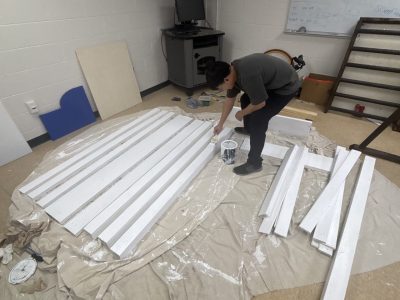
  • added a white paint finish to the bed to make it look more complete

We got these ideas for the changes directly from the family where they presented most of the problems to us. This means the bed is catered DIRECTLY towards their needs

Semester

2025 Spring